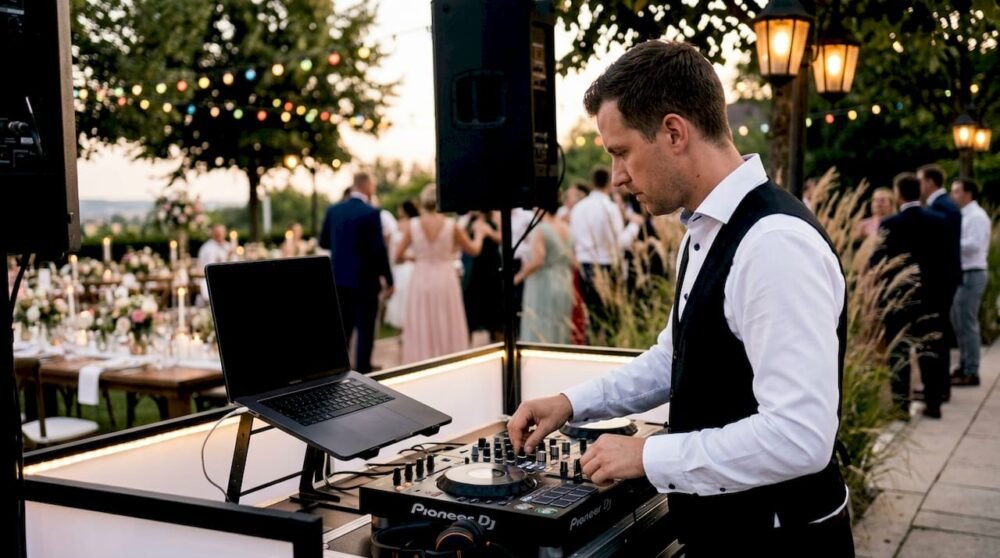
A wedding DJ is defined as the central orchestrator of your reception’s atmosphere, timing, and entertainment flow. The role extends far beyond pressing play on a playlist. A professional wedding DJ manages audio across multiple event zones, serves as Master of Ceremonies, coordinates with vendors, reads the crowd in real time, and keeps your celebration on schedule. Professional wedding DJs provide 5–6 hours of continuous entertainment that spans consultations, timeline planning, sound setup, MC duties, and crowd management. That scope places the DJ at the operational centre of your entire reception.
What does a wedding DJ do before and during your event?
A wedding DJ’s work begins weeks before the reception, not the moment they walk through the venue door. The pre-event phase is where the real architecture of your celebration is built.
Pre-event consultations and planning
Every professional DJ starts with a detailed consultation. You discuss your music preferences, the order of events, special song requests, and any cultural or generational considerations your guest list demands. The DJ maps this into a working timeline that accounts for cocktail hour, dinner service, first dance, speeches, and open dancing. This document becomes the backbone of the entire evening.
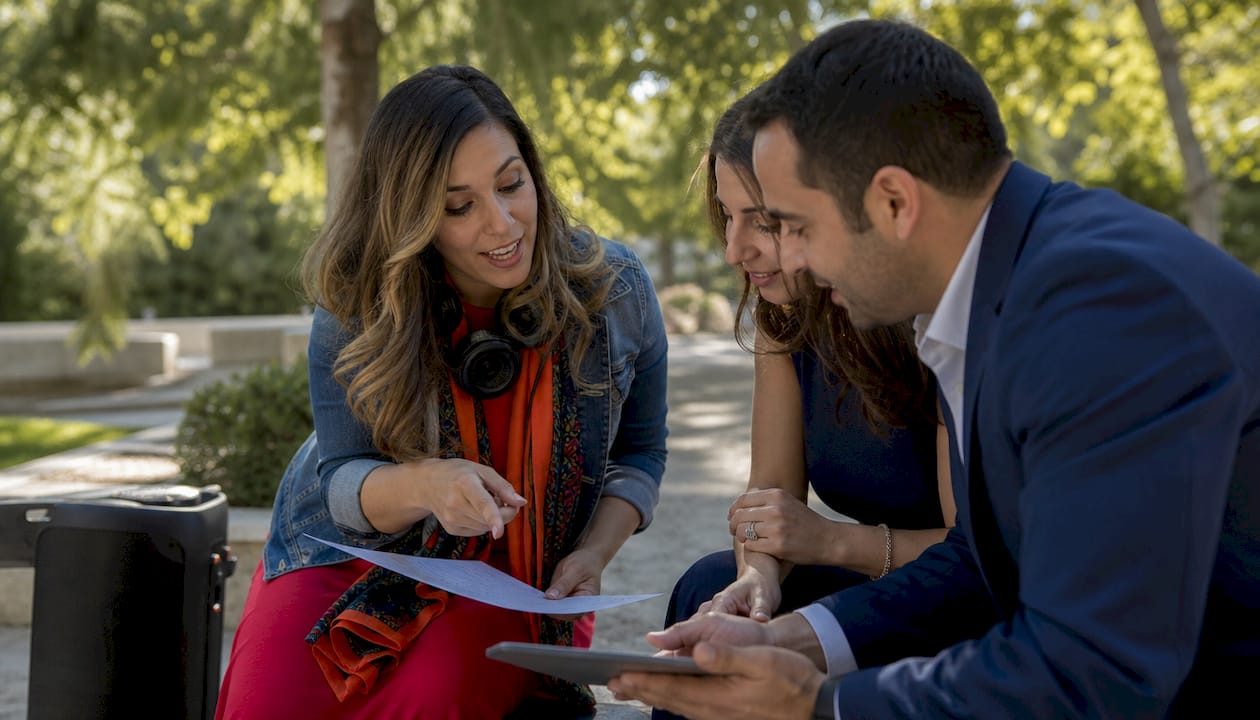
Curating playlists for each event segment
A skilled DJ does not build one playlist and let it run. Effective DJs build sets tailored to each event phase, ensuring mood and energy shift appropriately from the soft ambience of cocktail hour through the warmth of dinner to the high energy of the dance floor. Each segment has its own sonic identity, and the transitions between them are deliberate.
Equipment setup and sound system management
The wedding DJ setup typically includes professional speakers, subwoofers, mixers, microphones, and lighting rigs positioned across multiple zones. Setup begins one to three hours before guests arrive. The DJ tests every channel, checks microphone levels for speeches, and troubleshoots any acoustic issues specific to the venue. A ballroom with high ceilings behaves very differently from an outdoor garden, and a professional adjusts accordingly.
MC duties and guest direction
The DJ’s MC responsibilities ensure the evening flows coherently through announcements and guest direction. This includes introducing the wedding party, cueing the first dance, prompting guests to find their seats for dinner, and signalling key moments like the cake cutting and bouquet toss. Without a skilled MC voice guiding the room, receptions lose momentum and guests grow uncertain about what comes next.
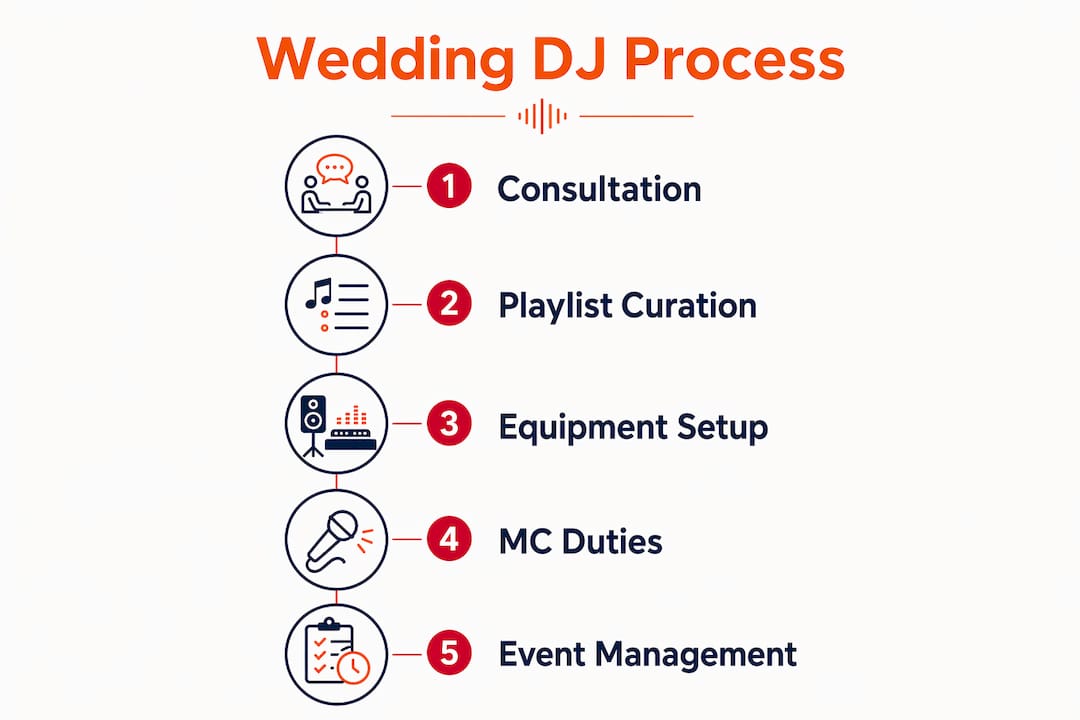
Real-time event management
Schedules shift. Speeches run long. The caterer needs an extra ten minutes. A professional DJ absorbs these changes and adjusts the programme without guests ever noticing. This is the wedding DJ timeline management skill that separates elite performers from casual operators.
Pro Tip: Share your full vendor contact list with your DJ at least two weeks before the wedding. When the photographer needs five more minutes for portraits, your DJ can fill the room with music and keep energy high without missing a beat.
How does a wedding DJ read and influence the crowd?
Reading a crowd is a skill that cannot be automated. It is the single greatest advantage a professional DJ holds over any playlist or streaming service.
A professional DJ watches the dance floor continuously. When energy drops, they shift tempo, drop a recognisable hook, or call the room’s attention with a brief announcement. When the floor is packed and the crowd is locked in, they sustain that momentum by choosing tracks that build on each other rather than interrupt the flow. Live mixing and beatmatching create continuous dance floor momentum and prevent the energy lulls that happen with automated playlists or unskilled operators. That distinction is audible within minutes.
Balancing music across generations
A wedding guest list rarely shares a single musical era. You may have grandparents who love Motown, parents who grew up on 80s pop, and friends who want current chart hits. A skilled DJ balances music for multiple generations and adjusts quickly to changing plans, maintaining energy throughout the event. The art is in the sequencing: a Motown classic followed by a disco track followed by a current hit can satisfy three generations in under ten minutes without clearing the floor.
Managing mood arcs across the evening
The emotional arc of a wedding reception is not flat. Cocktail hour calls for relaxed, conversational background music. Dinner service shifts to something warmer and more melodic. The dance floor demands progressive energy that peaks and sustains. A professional DJ engineers this arc deliberately, using tempo, key, and genre as tools rather than afterthoughts.
Pro Tip: Ask your DJ to share their approach to crowd reading during your initial consultation. A confident, specific answer tells you they have genuine experience. A vague answer is a warning sign.
- Tempo control: slowing or accelerating BPM to shift crowd energy
- Genre bridging: connecting different musical eras through shared rhythmic or melodic elements
- Announcement timing: using MC moments to reset attention and rebuild anticipation
- Floor monitoring: watching body language and density to gauge engagement in real time
Why hire a professional wedding DJ instead of a DIY playlist?
The evidence on this question is direct. 72% of couples who hired a professional wedding DJ reported packed dance floors all night, compared to only 34% using DIY playlists. That gap reflects the difference between passive music delivery and active crowd management.
Cost and coverage compared to live bands
Live bands typically cost between $4,000 and $10,000+, while professional DJs offer more flexible pricing and continuous music coverage. A band takes breaks, has a fixed setlist, and cannot pivot instantly when the crowd’s energy shifts. A DJ plays continuously, adapts in real time, and covers every genre without the logistical complexity of a full ensemble.
Professional reliability and problem-solving
Equipment failures, venue power issues, and last-minute schedule changes are realities of live events. A professional DJ arrives with backup gear, contingency plans, and the experience to resolve problems before guests notice them. A DIY playlist on a laptop has none of those safeguards.
The risks of DIY music approaches
- Awkward silences between tracks when a playlist ends unexpectedly
- Energy drop-off when automated shuffle selects a slow song at peak dancing time
- No MC to guide guests through key moments
- No one monitoring the room or adjusting to crowd response
- Technical failures with no professional on hand to resolve them
A professional DJ eliminates each of these risks. For couples weighing affordable DJ options, the value calculation becomes clear when you consider what is at stake: the atmosphere of the most significant celebration of your life.
How can couples collaborate with their wedding DJ for the best results?
The quality of your collaboration with your DJ directly shapes the quality of your reception. A DJ who knows your preferences, your timeline, and your guest profile performs at a fundamentally higher level than one working from a brief email.
Start communication early
Book your DJ as early as possible, ideally six to twelve months before the wedding. Use that lead time to share your music preferences, your must-play list, and your do-not-play list. The do-not-play list is often more valuable than the must-play list because it defines the boundaries of the evening’s sound.
Share your full event timeline and vendor contacts
Your DJ needs to know when the caterer plans to serve each course, when the photographer wants to capture the first dance, and when speeches are scheduled. Professional DJs coordinate closely with photographers, planners, and caterers to keep the event on track. That coordination only works when the DJ has the information they need in advance.
Understand your wedding DJ contract
A professional wedding DJ contract covers the event date, venue, hours of service, equipment provided, setup and breakdown times, payment schedule, and contingency clauses for equipment failure or illness. Understanding the types of wedding DJ contracts helps you ask the right questions before signing. Confirm whether the contract includes MC services, lighting, and overtime rates.
- Confirm setup time requirements with your venue coordinator
- Clarify whether the DJ handles their own sound permits if required
- Ask about the backup plan if the primary DJ is unavailable
- Discuss overtime rates before the event, not during it
Trust the DJ’s expertise on the night
You have communicated your preferences. You have shared the timeline. On the night itself, trust your DJ to manage the room. Reception management is a critical and often unseen skill. The DJ acts as the event’s quarterback, adjusting the timeline in real time while collaborating with all vendors. Micromanaging the DJ during the reception pulls their attention away from the room and reduces the quality of the experience for your guests.
Pro Tip: Schedule a final call with your DJ one week before the wedding to confirm all details. This is the moment to flag any last-minute changes to the timeline, confirm the MC script for key announcements, and verify that all vendor contacts are current.
Key takeaways
A wedding DJ is the operational centre of your reception, managing music, timing, MC duties, and vendor coordination across the entire event.
| Point | Details |
|---|---|
| Role extends beyond music | A professional DJ manages timelines, MC duties, sound setup, and real-time crowd engagement. |
| Crowd reading drives results | Live mixing and beatmatching sustain dance floor energy in ways automated playlists cannot replicate. |
| Professional DJs outperform DIY | 72% of couples with a professional DJ reported packed dance floors, versus 34% with DIY playlists. |
| Early collaboration is critical | Share your timeline, vendor contacts, and music preferences at least two weeks before the event. |
| The contract defines the scope | Confirm MC services, equipment, overtime rates, and contingency plans before signing any agreement. |
What I have learned about the DJ’s invisible role at weddings
After years of performing at weddings across Toronto, Montreal, and Ottawa, the pattern I see most consistently is this: couples spend months choosing their flowers, their venue, and their catering, and then underestimate how much the DJ shapes the actual experience of the day.
The DJ is not a background service. The DJ is the person who decides when the room laughs, when it cries, and when it dances. Every announcement, every transition, every tempo shift is a decision that affects how your guests feel in that moment. Most guests cannot name the florist after the wedding. Nearly all of them remember whether the dance floor was alive.
What surprises many couples is how much of the DJ’s work happens in the background, coordinating with the photographer to hold the first dance until the lighting is right, signalling the caterer that speeches are running long, adjusting the timeline so the cake cutting lands at the emotional peak of the evening. A great DJ acts as an invisible planner, coordinating with vendors so schedule shifts are unnoticed by guests. That is the work that never appears on a setlist but defines whether a reception feels effortless or disjointed.
My advice to every couple is to treat the DJ consultation as seriously as the venue walkthrough. Come with questions, share your vision, and listen carefully to how the DJ responds. The depth of that conversation tells you everything about the calibre of the experience they will deliver.
— Reza
Dj-phoenix: professional wedding DJ services in Toronto, Montreal, and Ottawa
Dj-phoenix brings years of elite wedding entertainment experience to couples across Toronto, Montreal, and Ottawa, with a specialisation in multicultural celebrations that demand both artistry and cultural fluency. Every wedding package is tailored to the couple’s vision, from intimate ceremonies to grand receptions with hundreds of guests.
You can explore Dj-phoenix’s wedding DJ packages to understand the full scope of services available, from ceremony sound to late-night dancing. For couples still in the planning phase, the right DJ guide walks you through every question worth asking before you book. To see the calibre of performance Dj-phoenix delivers, the DJ performance gallery offers a direct look at real events. Contact Dj-phoenix to discuss your date and begin building the soundtrack to your celebration.
FAQ
What does a wedding DJ do during the reception?
A wedding DJ manages music playback, live mixing, MC announcements, and real-time timeline adjustments throughout the reception. They coordinate with vendors and guide guests through every key moment of the evening.
How many hours does a wedding DJ typically work?
Professional wedding DJs provide 5–6 hours of continuous entertainment, which includes pre-event setup, ceremony coverage, cocktail hour, dinner service, and open dancing.
What is included in a wedding DJ contract?
A standard wedding DJ contract covers the event date, venue, hours of service, equipment provided, setup and breakdown times, payment terms, and contingency clauses for equipment failure or DJ unavailability.
Is a professional DJ better than a DIY playlist for a wedding?
A professional DJ delivers significantly better results. Research shows 72% of couples with a professional DJ reported packed dance floors all night, compared to only 34% using DIY playlists.
How early should couples book their wedding DJ?
Booking six to twelve months in advance is the professional standard. Early booking secures your date and allows sufficient time for detailed consultations, playlist planning, and timeline coordination.