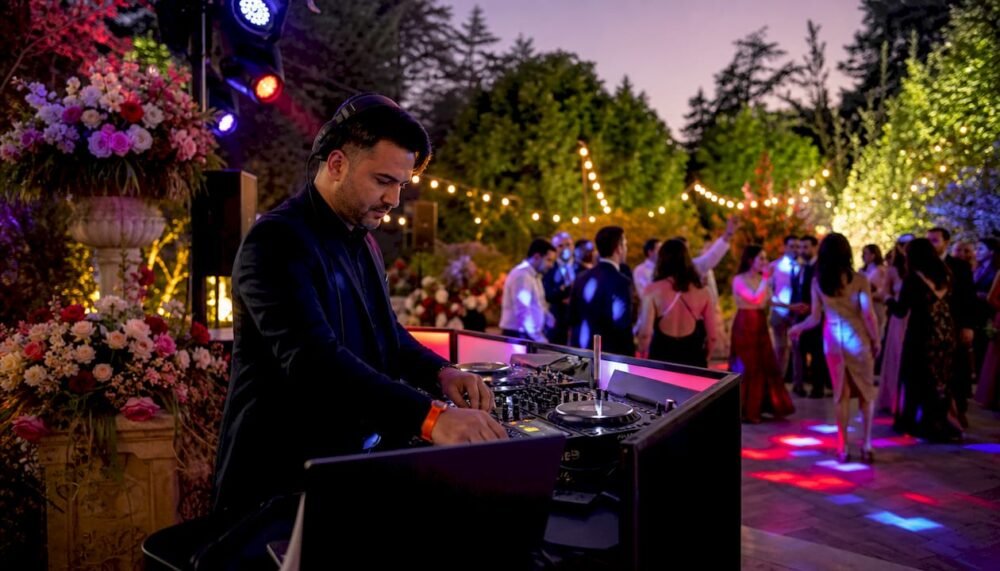
Lighting is the single most powerful tool for shaping atmosphere at a wedding reception. The role of lighting in wedding DJ sets goes far beyond decoration. It directs guest emotion, signals event transitions, and synchronises with music to build energy on the dance floor. Professional lighting design uses colour psychology, fixture layering, and precise timing to create experiences that feel cohesive and memorable. When done well, guests feel the difference without ever knowing why.
How lighting effects shape the mood and flow of a wedding reception
Lighting controls how guests feel at every stage of your reception. Colour and movement in lighting sync crowd movement with music through rapid colour shifts, rotating beams, and precisely timed strobes. That synchronisation deepens the emotional connection between your guests and the music, making the dance floor feel alive rather than staged.
Colour psychology is the foundation of effective wedding DJ lighting design. Cool tones like blue and violet create calm, intimate moods during dinner and speeches. Warm tones like amber, red, and gold build energy and signal celebration as the evening progresses toward open dancing. Progressive colour storytelling from cool dinner tones to warm dance-floor colours is directly linked to longer guest stay-times. Guests who feel the energy rise naturally tend to stay on the floor longer.
Timing matters as much as colour choice. A skilled DJ shifts lighting intensity and hue to match the emotional weight of each moment, from the quiet reverence of a first dance to the full-energy peak of an open floor. Abrupt or poorly timed changes break the spell and remind guests they are watching a production rather than living an experience.
- Cool tones (blue, violet, white): Ideal for cocktail hour, dinner, and speeches. They create a refined, relaxed atmosphere.
- Warm tones (amber, red, gold): Best for first dance and open dancing. They signal celebration and build physical energy.
- Colour transitions: Gradual shifts feel natural. Sudden jumps feel jarring and amateur.
- Intensity control: Lower intensity during intimate moments, higher during peak dancing, creates contrast that guests feel subconsciously.
Pro Tip: Ask your DJ to programme a slow colour fade from cool to warm tones starting 20 minutes before the first dance. Guests will feel the energy shift without noticing the mechanics behind it.
What types of lighting equipment do wedding DJs use?
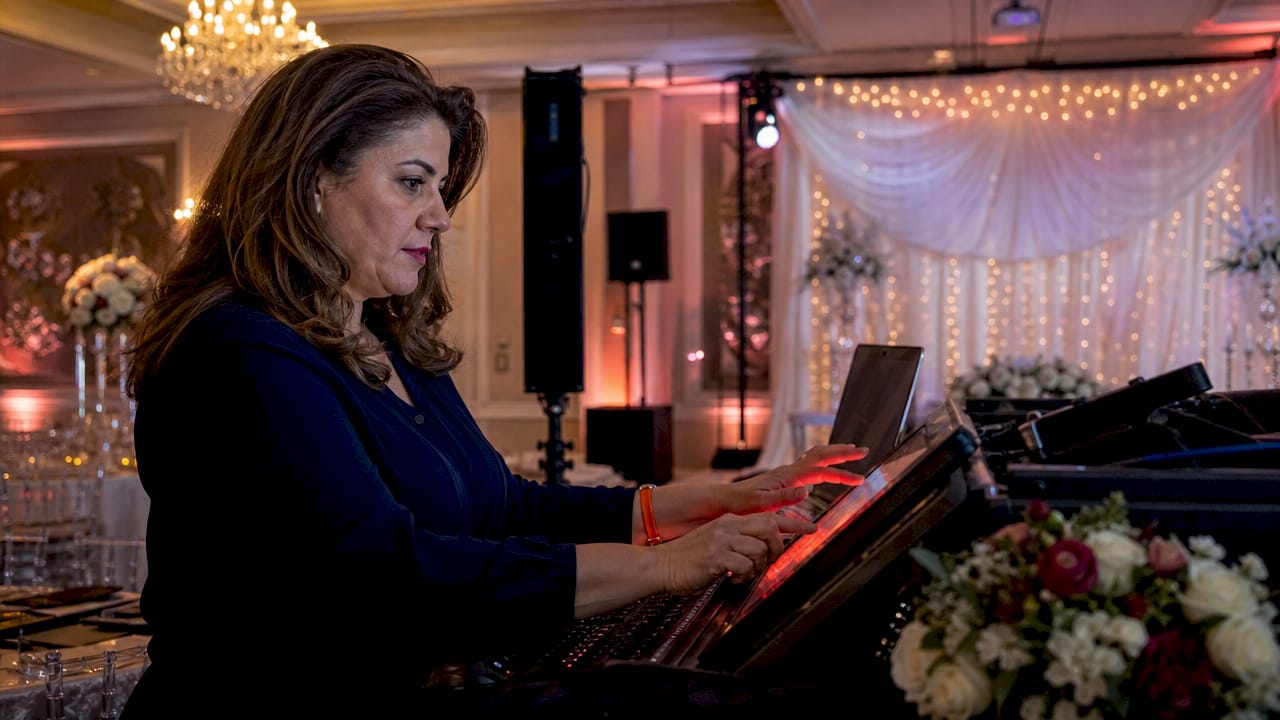
Standard wedding DJ fixtures include moving heads, beam lights, wash lights, and PAR lights, each serving a distinct mood and energy role. Understanding what each fixture does helps you ask the right questions when reviewing a DJ’s package.
| Fixture type | Primary role | Best used for |
|---|---|---|
| Moving head | Dynamic movement and colour sweeps | Peak dancing, high-energy moments |
| Beam light | Narrow, sharp light columns | Drama, first dance, entrances |
| Wash light | Broad, even colour coverage | Ambient fill, dinner, speeches |
| PAR light (uplighting) | Coloured wall and venue wash | Venue ambiance, décor enhancement |
| Strobe | Rapid flash for intensity | Peak dance floor moments only |
Uplighting for weddings is one of the most requested effects because it transforms a plain venue wall into a canvas of colour. PAR lights placed at floor level and aimed upward create depth and warmth that no overhead fixture can replicate. The effect is particularly striking in ballrooms and barn venues where architectural features catch the light.
Haze machines enhance moving head beam visibility, transforming flat washes into dynamic, three-dimensional light shows. Without haze, beam lights are nearly invisible in the air above the dance floor. With haze, those beams become dramatic columns of light that guests photograph and remember.
A basic wedding lighting setup starts at approximately $200 for LED uplights and a dance-floor effect light. That entry point covers the essentials. Advanced setups with moving heads, haze, and intelligent control systems represent a significant step up in both cost and visual impact.
- Uplights: Affordable, high-impact, and versatile for any venue size.
- Moving heads: The workhorse of a professional dance floor setup.
- Haze machines: Not optional for beam-light setups. Without haze, beam effects disappear.
- Strobes: Powerful but require restraint. Reserve them for specific peak moments only.
Pro Tip: If your venue has high ceilings or exposed beams, ask your DJ about cold spark effects for the first dance. The combination of sparks, haze, and beam lighting creates a cinematic moment that photographs beautifully.
How to design a lighting timeline for your wedding reception
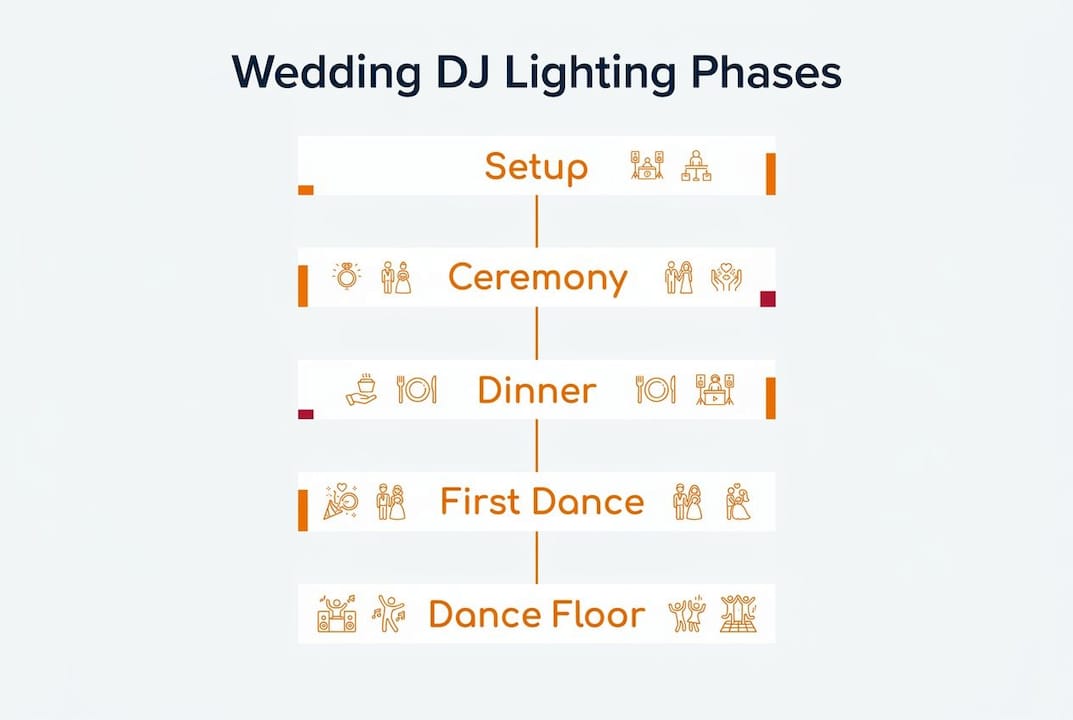
Professional wedding lighting follows a standard seven-moment cycle: ceremony, cocktail hour, dinner, speeches, first dance, open dancing, and exit. Each phase has its own preset that shifts colour, intensity, and movement to match the emotional tone of that moment. Couples who understand this structure can have much more productive conversations with their DJ about personalising each phase.
A well-designed lighting timeline works like this:
- Ceremony: Soft white or warm gold wash. No movement, no effects. The focus is on the couple, not the lighting.
- Cocktail hour: Warm ambient uplighting at low intensity. Encourages conversation and relaxed mingling.
- Dinner: Cool to neutral tones at medium intensity. Flattering for photography and comfortable for extended seating.
- Speeches: Focused warm wash on the speaker. Reduce ambient lighting slightly to draw attention to the front of the room.
- First dance: Spotlight on the couple with a slow colour fade. Haze and beam lights add drama without overwhelming the moment.
- Open dancing: Full fixture activation. Warm and energetic colours, moving heads, strobes used sparingly at peaks.
- Exit: A final dramatic effect, whether a cold spark tunnel, confetti burst, or beam light farewell, marks the close of the celebration.
Aligning your wedding DJ timeline with these lighting phases ensures every moment feels intentional. The lighting does not just react to the event. It leads it. Guests follow the energy cues without realising they are being guided.
What are the most common wedding DJ lighting mistakes?
Excessive, uncontrolled lighting effects cause visual fatigue and reduce the perceived quality of the event space. Running every fixture at full intensity for the entire reception is the most common error in amateur wedding lighting setups. It exhausts guests visually and flattens the emotional arc of the evening.
Lighting loses its power without contrast. The interplay of light and shadow is what gives a room depth and polish. A room bathed in uniform brightness at all times feels like a gymnasium, not a celebration. Negative space, meaning areas of relative darkness, makes the lit areas feel more dramatic and intentional.
Common mistakes to watch for when reviewing a DJ’s lighting approach:
- Constant full intensity: No contrast, no arc, no atmosphere. Every moment feels the same.
- Strobes during dinner or speeches: Strobes belong on the dance floor at peak moments only. Anywhere else, they are disruptive and uncomfortable.
- No synchronisation with music: Lighting that ignores the music’s dynamics feels disconnected and amateurish.
- Ignoring the venue’s architecture: Uplighting placed without regard for walls, ceilings, or focal points wastes the effect entirely.
- Overuse of colour changes: Rapid, random colour cycling without musical logic creates visual noise rather than atmosphere.
Layered and timed lighting effects create premium, professional event experiences. The goal is a lighting show that builds, peaks, and breathes with the music and the crowd. Couples should ask any prospective DJ how they manage lighting intensity across the full reception arc, not just the dance floor.
Key takeaways
Lighting design is the invisible architecture of a wedding reception, shaping guest emotion, energy, and memory through colour, contrast, and timing.
| Point | Details |
|---|---|
| Colour psychology drives mood | Cool tones calm, warm tones energise. Transition gradually from dinner to dance floor. |
| Seven-moment lighting cycle | Professional setups follow ceremony through exit with distinct presets for each phase. |
| Haze makes beams visible | Without haze, beam and moving head effects disappear in the air above the dance floor. |
| Contrast is non-negotiable | Uniform full-intensity lighting flattens atmosphere. Negative space creates depth and drama. |
| Budget entry point | A basic uplighting and dance-floor effect setup starts at approximately $200. |
Why lighting is the most underrated decision you will make for your wedding
Couples spend months selecting flowers, table linens, and centrepieces. Most spend less than ten minutes discussing lighting with their DJ. That imbalance surprises me every time, because lighting is the one element that touches every single guest simultaneously, all night long.
What I have observed across hundreds of events is that lighting does not just set a mood. It manages subconscious audience response through contrast. A room with thoughtful shadow and light feels luxurious. A room blasted with uniform brightness feels like a conference hall. The difference is not about spending more money. It is about restraint and timing.
Haze is the single most underused tool in wedding lighting. Couples sometimes hesitate because they associate it with smoke machines and fire alarms. Professional haze is different. It is a fine, dry mist that dissipates quickly and makes beam lights visible in three dimensions. When I use haze alongside moving heads during a first dance, the effect is cinematic. Guests reach for their phones immediately.
My strongest advice is to choose a DJ who treats lighting as a performance art, not an add-on. The artistry of wedding lighting lies in knowing when to hold back. The moments of restraint are what make the peak moments feel earned. If your DJ cannot articulate how they manage lighting across the full reception arc, that is a signal worth heeding.
— Reza
Elevate your wedding reception with Dj-phoenix
Dj-phoenix brings the same calibre of lighting artistry to every wedding that has earned the trust of prestigious clients like Mercedes-Benz and FW Sports. Every package is built around the specific phases of your reception, from the ceremony’s soft warmth to the full-energy spectacle of open dancing.
Dj-phoenix’s wedding packages include custom lighting setups designed around your venue, your timeline, and your vision. Whether you are planning an intimate gathering or a grand multicultural celebration, the lighting programme is tailored to your moments, not a generic template. Explore the DJ performance gallery to see how professional lighting transforms real wedding receptions, and connect with Dj-phoenix to discuss a package that honours the pedigree your celebration deserves.
FAQ
What is the role of lighting in wedding DJ sets?
Lighting shapes guest emotion, signals event transitions, and synchronises with music to build energy throughout the reception. A professional DJ uses colour, movement, and intensity to guide the atmosphere from ceremony through to the final dance.
How much does wedding DJ lighting cost?
A basic setup with LED uplights and a dance-floor effect light starts at approximately $200. Advanced setups with moving heads, haze, and intelligent control systems carry a higher investment reflecting their visual impact.
What is uplighting and why do couples use it?
Uplighting places PAR lights at floor level aimed upward to wash venue walls in colour, adding depth and warmth that overhead fixtures cannot achieve. It is one of the most cost-effective ways to transform a plain venue into an elegant space.
Do I need haze for my wedding lighting?
Haze is necessary if your DJ is using beam or moving head lights. Without it, those beams are invisible in the air and the three-dimensional effect is lost entirely.
How does lighting synchronise with the wedding DJ timeline?
Professional lighting follows a seven-moment cycle covering ceremony, cocktail hour, dinner, speeches, first dance, open dancing, and exit, with distinct colour and intensity presets for each phase.