A sports event DJ checklist is the planning and execution framework that separates a flawless game-day atmosphere from a chaotic one. Professional sports DJs, including figures like Grayson Repp who has worked the NFL, NBA, and World Cup, treat preparation as the single most critical factor in their performance. This guide gives event coordinators and sports organizers every checklist item needed to plan, brief, and execute DJ services with the calibre and artistry those high-stakes environments demand. From pre-event briefings to post-game crowd exits, the following sections cover every phase of the role.
1. What must be on a sports event DJ checklist for preparation
Preparation is the defining factor for success in sports DJing, surpassing even technical skill, because the live event environment is highly unpredictable. A coordinator who builds a thorough pre-event checklist removes the conditions that cause failures.
Pre-event briefing and production meeting
Schedule a formal briefing between the DJ, event coordinator, production team, and venue manager at least one week before the event. This meeting should confirm the event timeline, cue sheets, announcer protocols, and any sponsor or brand requirements. Without this alignment, even the most talented DJ will face avoidable conflicts on the day.
Music library preparation
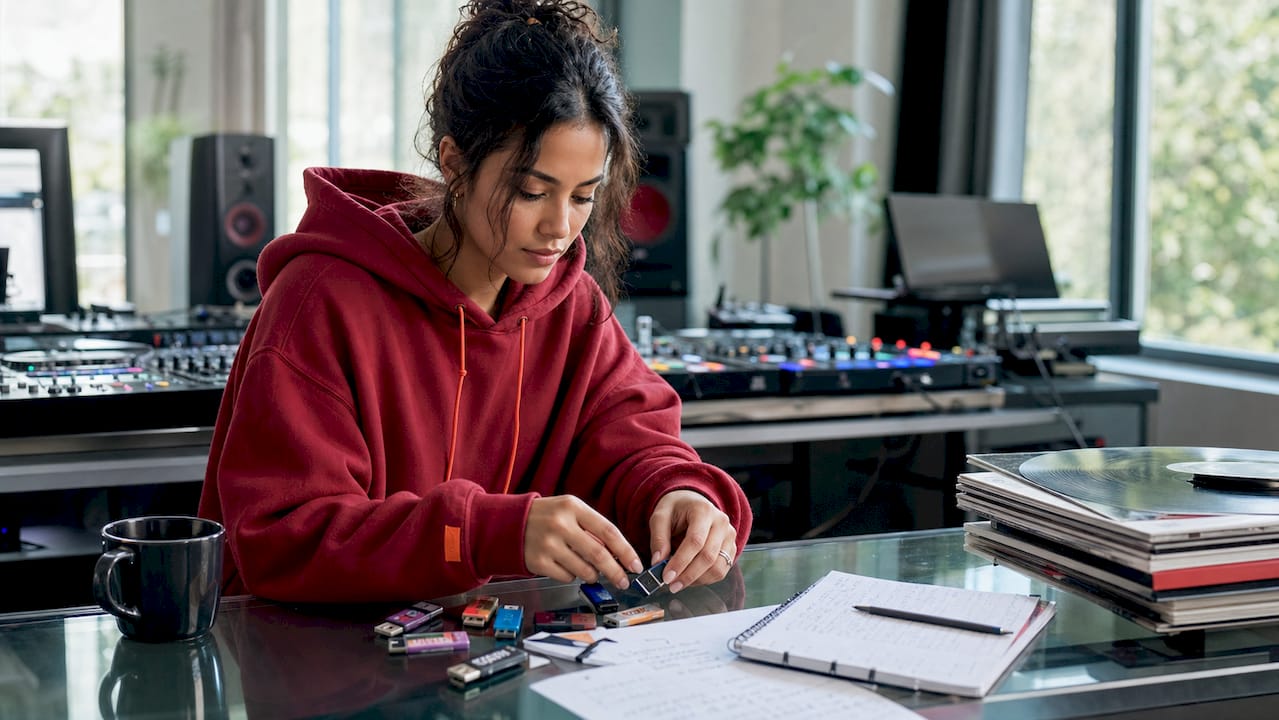
Experienced sports DJs spend months building extensive music libraries before major events. Grayson Repp curated a playlist of around 5,000 songs before the 2026 World Cup to cover all contingencies and cultural sensitivities. Your checklist should confirm the DJ has prepared genre categories, team anthems, regional tracks, and clean edits of all songs.
Venue and power logistics review
Confirm the DJ’s booth location, power supply capacity, and cable routing with the venue’s technical team in advance. Verify that the audio system is compatible with the DJ’s equipment before the day of the event.
Soundcheck scheduling
Book a dedicated soundcheck window at least two hours before doors open. This is non-negotiable for large venues where acoustics vary significantly between an empty and a full arena.
Pro Tip: Prepare a written cue sheet that lists every music moment by event phase, from staff arrival through post-game exit, and share it with the production team and announcer before the event.
2. How to coordinate DJ activities across all phases of a sports event
The sports event DJ briefing workflow follows a clear arc from arrival to post-game. Coordinators who map this arc in advance give the DJ the structure needed to perform at the highest level.
- Staff arrival (3 hours before game time): The DJ begins with low-energy background music suited to crew setup. DJ sets at major sports events often start three hours before game time with this low-key phase.
- Doors open (90 minutes before game time): Music shifts to mid-energy tracks as fans enter. The goal is to build anticipation without peaking too early.
- Pre-game warm-up (30 minutes before game time): The role of the DJ in pre-game warmups is to drive energy progressively upward. Tempo and volume increase with each set, culminating in a power hour of high-energy tracks.
- Player introductions: The DJ cues specific entrance tracks for each player or team, coordinated precisely with the announcer. Professional sports DJs follow detailed cue sheets with real-time calls for timeouts, scores, and player intros.
- In-game cues: Timeouts, scoring moments, and penalty announcements each require a specific music response. The DJ must be ready to trigger tracks instantly on the production team’s signal.
- Halftime show coordination: Halftime show DJ coordination requires the tightest timing of the entire event. Confirm the exact duration of the halftime window, any live performance elements, and the cue to resume game music.
- Intermissions: Shorter breaks between periods use mid-energy tracks to keep fans engaged without exhausting the crowd’s energy reserves.
- Post-game exit music: The role of the DJ at sports events does not end at the final whistle. A well-curated exit playlist maintains a positive atmosphere and encourages an orderly crowd departure.
Communication protocols are the connective tissue of this entire timeline. The best arena DJs develop chemistry with announcers to fade music during announcements and cue up post-announcement music without overlap. Establish clear hand signals or radio cues between the DJ, announcer, and production director before the event begins.
3. Technical and audio equipment checklist for sports event DJs
Reliable equipment is the foundation of every professional sports DJ performance. DJs bring backup gear and verify power sources and audio systems during advance soundchecks to prevent technical failures during live events.
Core DJ hardware
The DJ’s primary console, whether a controller, CDJ setup, or turntable configuration, must be confirmed as compatible with the venue’s audio infrastructure. Coordinators should request a full equipment list from the DJ at least two weeks before the event.
Audio system compatibility
Confirm that the venue’s main PA system, monitor speakers, and any delay speakers are compatible with the DJ’s output signal. Mismatched impedance or connector types are among the most common causes of soundcheck delays.
Backup devices and cables
| Equipment item | Primary | Backup required |
|---|---|---|
| DJ controller or CDJs | Yes | Yes |
| Laptop or media player | Yes | Yes |
| XLR and RCA cables | Yes | Minimum 2 spares |
| Power cables and adapters | Yes | Yes |
| Microphone | Yes | Yes |
| USB drives with full playlist | Yes | Minimum 2 copies |
Microphone setup
Confirm whether the DJ will handle announcements or whether a separate MC covers that role. If the DJ manages both, a dedicated microphone channel separate from the music output is required.
Software and playlist management
The DJ’s playlist management software must be loaded, updated, and tested before the soundcheck. All tracks should be pre-analysed for BPM and key to allow fast, accurate cueing during live game moments.
Pro Tip: Request that the DJ provide a backup USB drive with the full playlist pre-loaded on a standalone media player, independent of any laptop, to guard against software crashes during the event.
4. How to manage music selection, content sensitivity, and audience engagement
Music curation for sports events carries a higher standard of care than most entertainment contexts. Certain songs have been banned during international sports events due to racist chants or offensive lyrics, which means DJs must conduct extensive vetting of every track on the playlist. That vetting process belongs on your checklist.
Playlist diversity and cultural relevance
Your checklist should confirm that the DJ has researched the team’s fan base, the host city’s cultural profile, and any international attendees. Top DJs consult team members on favourite songs and fan preferences to tailor playlists that energise and connect with the audience. This level of personalisation is one of the core benefits of professional sports DJs over generic playlist services.
Content sensitivity review
Every track on the playlist must be a clean edit, free of explicit language. Beyond lyrics, coordinators should ask the DJ to flag any artist whose public profile may conflict with the event’s sponsors or the team’s brand values. This review should happen during the pre-event briefing, not on the day.
Sponsor and brand alignment
Sponsors often have music preferences or restrictions written into their event contracts. Collect these requirements from your sponsorship team and pass them to the DJ during the briefing. Aligning the music with sponsor expectations protects both the event’s commercial relationships and the DJ’s professional reputation.
Live crowd interaction and energy building
High-energy sports DJ qualities include the ability to read crowd response in real time and adjust the playlist accordingly. Strategies for audience engagement include call-and-response moments during timeouts, sing-along tracks during intermissions, and victory anthems queued for immediate post-score deployment.
Key takeaways
A thorough sports event DJ checklist covering preparation, equipment, scheduling, and music curation is the single most reliable way to guarantee a professional game-day atmosphere.
| Point | Details |
|---|---|
| Pre-event briefing is non-negotiable | Align the DJ, production team, and announcer on cue sheets and timelines at least one week before the event. |
| Music libraries require months of preparation | A professional sports DJ should have thousands of vetted, categorised tracks ready before event day. |
| Backup equipment prevents live failures | Every critical piece of hardware and every cable must have a tested spare on-site. |
| Content vetting protects sponsors and fans | All tracks must be clean edits, with artist backgrounds reviewed for cultural and brand sensitivity. |
| Communication protocols drive timing | Clear radio or hand-signal cues between the DJ, announcer, and production director keep every phase on schedule. |
What working high-profile sports events taught me about preparation
The first time I worked a large-scale sports event, I was confident in my music selection and my technical setup. What I underestimated was the sheer volume of variables that no amount of talent can compensate for without preparation. The announcer went off-script during a player intro. A power relay tripped thirty minutes before doors opened. A sponsor rep arrived with a last-minute track restriction I had never heard of.
Every one of those situations was resolved because I had a backup plan for each scenario. The backup laptop was loaded and ready. The spare cables were in a labelled case beside the booth. The sponsor requirements had been collected during the briefing, so the restriction was already on my radar even if the timing was inconvenient. Preparation is not a personality trait. It is a system, and that system is what a checklist formalises.
The part of sports DJing that surprises most coordinators is how little of the role resembles traditional club performance. Experienced sports DJs command significant fees per game precisely because the stakes are high and the margin for error is narrow. The artistry is real, but it operates within a structure of cue sheets, radio calls, and production timelines. Coordinators who understand that structure get the best performance from their DJ. Those who treat the DJ as a background service provider get exactly that.
My strongest advice to any coordinator building a sports event programme for the first time: treat the DJ briefing with the same rigour you apply to the AV production meeting. The DJ is part of the production team, not an add-on. When that relationship is built on clear communication and mutual preparation, the result is a game-day atmosphere that fans remember long after the final score.
— Reza
Dj-phoenix brings elite sports event DJ services to your venue
Dj-phoenix has delivered high-calibre entertainment for prestigious clients including Mercedes-Benz and FW Sports, bringing the same pedigree to every sports event engagement. Whether you need a full game-day programme with pre-game warmups, halftime coordination, and post-game exit music, or a focused performance for a single event phase, Dj-phoenix builds a customised approach around your event’s timeline and brand requirements.
Every engagement begins with a structured briefing process, a full soundcheck, and a vetted playlist tailored to your fan base and sponsors. Coordinators can review past event performances to see the calibre of production Dj-phoenix brings to live sports and corporate environments. For coordinators ready to discuss a tailored entertainment solution, the event organizers page is the right starting point.
FAQ
What is a sports event DJ?
A sports event DJ is a professional who manages all music and audio entertainment throughout a sporting event, from pre-game warmups through halftime and post-game exits, working within a structured cue-based production system.
What does a sports DJ do differently from a club DJ?
A sports DJ follows detailed cue sheets and real-time production calls rather than reading a dance floor, requiring rigorous preparation and instant track recall across hundreds of categorised songs.
How early should a sports event DJ arrive?
A sports DJ should arrive at least three hours before game time to complete setup, run a full soundcheck, and align with the production team and announcer on cue protocols.
Why is content sensitivity important for sports event playlists?
Offensive or culturally insensitive tracks can damage sponsor relationships and alienate fans. Professional sports DJs vet every track for explicit content and artist background before adding it to the event playlist.
How many songs should a sports event DJ prepare?
Preparation standards at the elite level are demanding. Grayson Repp prepared around 5,000 songs for the 2026 World Cup to cover every contingency, cultural context, and live game scenario.