A DJ line array system is a loudspeaker configuration built from multiple identical speaker modules stacked vertically to create a single, coherent sound source that throws audio evenly across a large audience with far less volume loss over distance than a conventional point-source cabinet. In professional audio, this configuration is known as a line source array, and the distinction matters: the term “line array” is the industry-standard name, while “speaker array” is the informal shorthand you’ll hear on event floors.
When should you choose one? Two qualifiers define the decision:
- Use a line array when your audience exceeds roughly 300 guests, your venue has the ceiling height to fly or elevate the system properly, and even coverage across a long throw is non-negotiable — think large ballrooms, outdoor festivals, theatres, and stadium-scale events.
- Avoid a line array in small rooms under 200 guests, venues with low ceilings, or intimate settings where a high-calibre point-source system delivers cleaner results at a fraction of the cost and complexity.
What are line array speakers, and why are they important for live sound? The core principle is audience-focused directivity: energy goes where the people are, not into ceilings or empty air.
Key takeaways
A DJ line array system is the right choice for large audiences and long throws, but only when the venue has the height, the budget, and a qualified engineer to deploy it properly.
| Point | Details |
|---|---|
| When to use a line array | Choose a line array for audiences over 300 guests in venues with adequate ceiling height for proper elevation. |
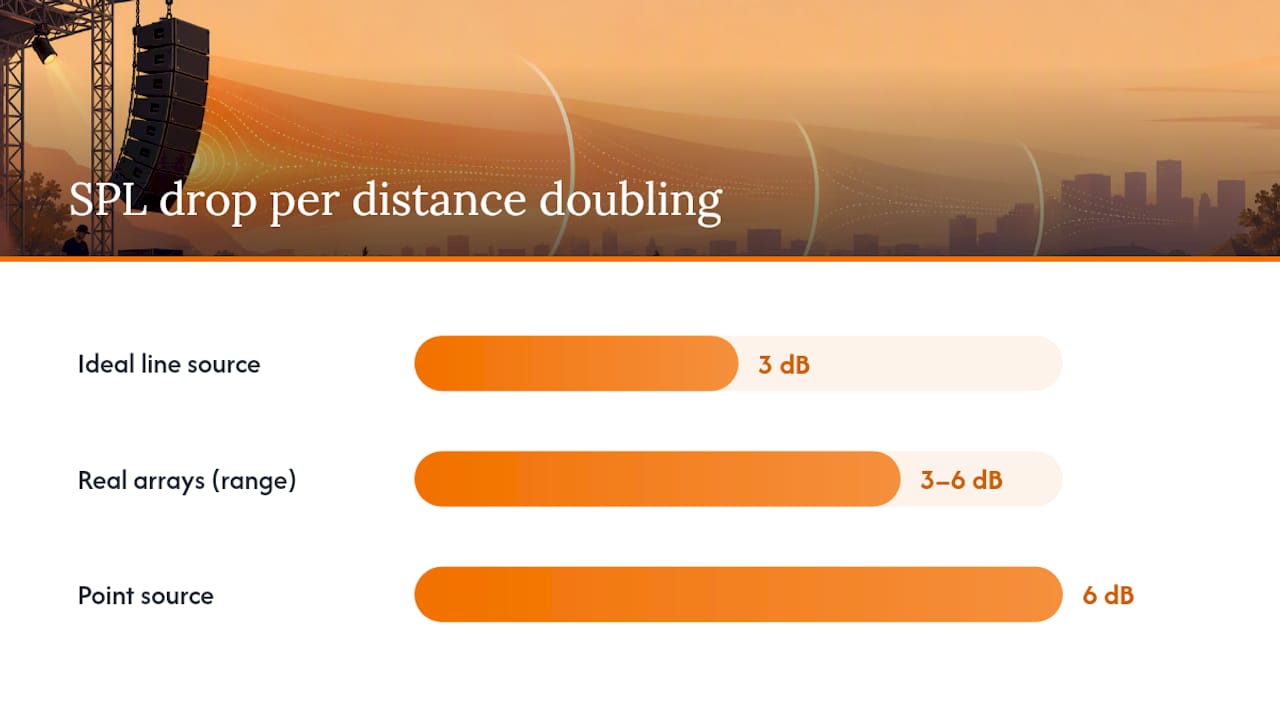
| Distance fall-off advantage | Line arrays drop approximately 3 dB per doubling of distance versus 6 dB for point-source speakers, delivering more even coverage. |
| Confirm before booking | Always request a prediction file, verify certified rigging, and confirm an on-site engineer is included in the rental quote. |
| Small venues need a different approach | For events under 200 guests or rooms with low ceilings, a high-quality point-source system typically outperforms a line array. |
| Dj-phoenix for Canadian events | Dj-phoenix manages line-array rental, DSP tuning, and DJ performance as a single, accountable service across Canada. |
Table of Contents
- How does a DJ line array system actually work?
- What are the core components of a line array system?
- What types of line arrays suit different DJ events?
- What are the real advantages and disadvantages of line arrays for DJ events?
- What should you confirm before and during setup?
- How much does a line array system cost to rent in Canada?
- Questions to ask your rental house before you book
- When does hiring a professional DJ with line-array rental make the difference?
- What the day of a large event actually teaches you
- Dj-phoenix brings the full line-array experience to your event
- Sources
How does a DJ line array system actually work?
The physics behind a line array are what separate it from every other DJ audio equipment choice. When speaker elements are stacked vertically and driven in phase, they behave collectively as a near-line source rather than as individual point sources. A point source radiates sound spherically in all directions; a line source radiates cylindrically, which changes how volume drops off with distance.
According to Sweetwater, an ideal line source falls off at approximately 3 dB per doubling of distance, compared to the 6 dB per doubling that governs a point-source speaker. In practical terms, a guest seated 20 metres from the stage hears a level far closer to what the front row hears. Real-world systems only approximate this ideal, but the improvement over conventional cabinets is audible and measurable.
Statistic callout: Ideal line source: 3 dB drop per doubling of distance. Point source: 6 dB drop per doubling. Real arrays fall between these values depending on array length, frequency, and curvature.
Straight arrays are largely theoretical. In practice, curving the array with progressive splay angles is what allows a single system to cover both the near-field (guests close to the stage) and the far-field (guests at the back of the room). The J-shape you see on large-format rigs is deliberate: tighter splay angles at the top of the array focus energy toward the far field, while wider splay angles near the bottom spread coverage to the near field. Air absorption also affects high-frequency throw, particularly in outdoor environments with variable temperature and humidity, which is why experienced engineers factor environmental conditions into their predictions.
The acoustic consequences of proper line-array design include:
- Reduced SPL fall-off over distance compared to point-source systems
- Narrow vertical dispersion that keeps energy off ceilings and reduces reverberant buildup
- Improved direct-to-reverberant ratio, which sharpens speech intelligibility for emcee segments
- Wide horizontal dispersion that covers the full width of the audience
- Higher gain before feedback, which matters when microphones are in use
Pro Tip: Array length and venue ceiling height are directly linked. A large-format array that cannot be flown high enough will aim its bottom elements into the front rows rather than the mid-field audience. If your venue ceiling is under 6 metres, a shorter column array or a high-quality point-source system will likely outperform a full-scale line array.
What are the core components of a line array system?
Understanding what you are being quoted on — or handed at load-in — is the first step toward asking the right questions of any rental house. A complete DJ line array system comprises several interdependent components, each with a specific function.
| Component | Primary function | What to check at load-in |
|---|---|---|
| Line array modules | Produce the main mid and high-frequency output; stacked vertically to form the array | Confirm all cabinets are from the same manufacturer and model family |
| Subwoofers | Reproduce low frequencies (typically below 100 Hz) | Verify sub count matches the array size and venue |
| Power amplifiers | Drive passive cabinets (not needed for active systems) | Check amp channels, gain structure, and clip indicators |
| DSP / signal processor | Manages crossover, delay, EQ, and array voicing presets | Confirm the correct manufacturer preset is loaded |
| Rigging hardware | Frames, motors, and hardware that fly or support the array | Inspect for certification marks and current inspection dates |
| Cabling and power distribution | Connects all components; distributes mains power safely | Check cable lengths, gauge, and breaker ratings |
| Flight cases | Protect cabinets in transit | Confirm cases are intact and hardware is not damaged |
A few practical terms you will encounter:
- Splay angle: The angle between adjacent cabinets in the array; governs vertical coverage shape.
- Flown array: A system suspended from a motor or truss above the stage.
- Ground-stack: Cabinets stacked on the floor or on stands rather than flown.
- Trim height: The height of the bottom cabinet of a flown array above the stage floor.
- Voicing/voicing presets: Manufacturer-programmed DSP settings that optimise the array’s frequency response for a specific configuration.
Mixing cabinets from different manufacturers almost always fails because of mismatched voicing and phase alignment. A rental house that offers you a hybrid rig of mixed brands is a red flag worth addressing before you sign anything.
What types of line arrays suit different DJ events?
Not every line array is the same, and matching the system type to your venue is as important as choosing the right playlist. The two primary distinctions are active versus passive and flown versus ground-stacked.
Active vs. passive systems
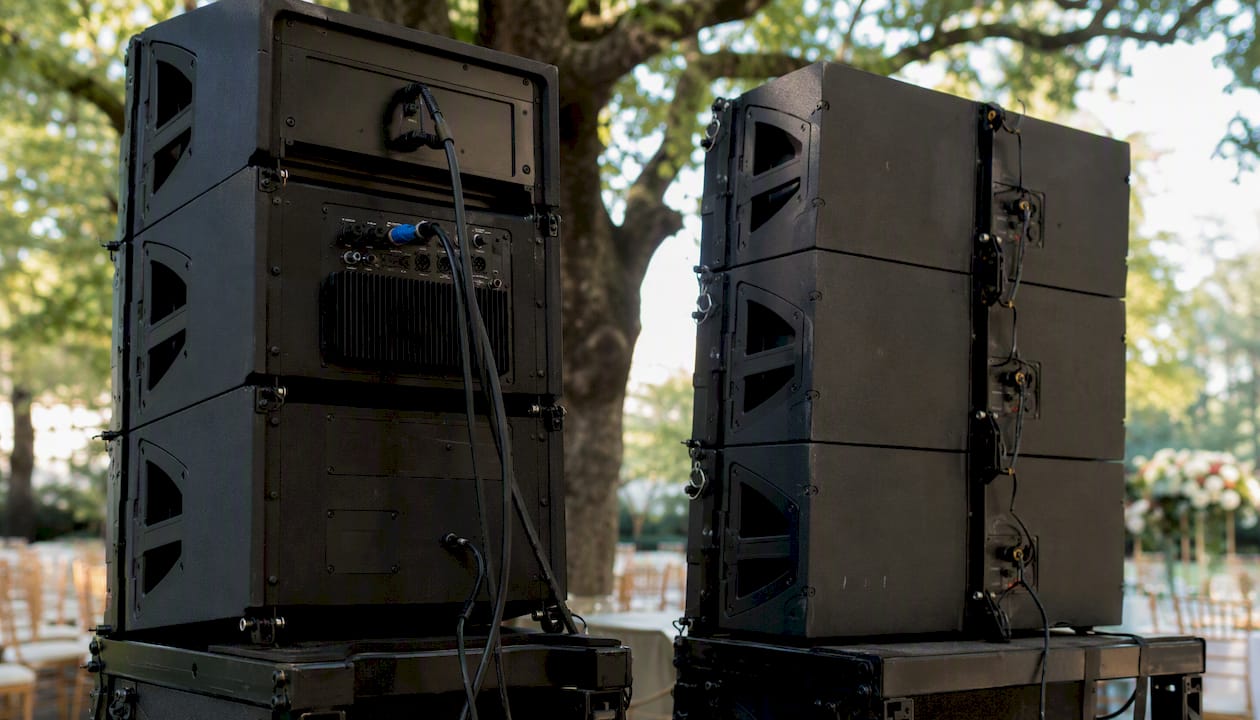
Active (self-powered) line arrays have amplifiers and DSP built into each cabinet. They set up faster, require fewer rack units, and reduce the number of crew members needed at load-in — a genuine logistical advantage for touring and one-off events. Properly designed and flown active systems can occupy significantly less truck space than equivalent passive rigs. Passive systems use external amplifier racks and a separate DSP unit, which adds complexity but gives engineers finer control over gain structure and system redundancy. For most DJ rental scenarios in Canada, active systems are the more practical choice.
Flown vs. ground-stacked
A flown array suspended from a motor or truss achieves the trim height needed for proper coverage and keeps the floor clear. Ground-stacked arrays are faster to deploy but sacrifice the elevation that makes line-array physics work. For venues where flying is impossible, a short column array or a well-placed point-source system often delivers better results than a ground-stacked large-format rig.
Common venue-to-format pairings:
- Outdoor festival (1,000+ guests): Large-format flown array, 8–16 cabinets per side, with delay towers for deep fields
- Hotel ballroom (300–800 guests): Medium-format flown or elevated array, 4–8 cabinets per side
- Theatre or performing arts centre: Medium-format flown array with front-fill and delay speakers
- Corporate event (200–500 guests): Small-to-medium active array, flown or on high stands
- Small club or private party (under 200 guests): Point-source cabinets or a compact column array
For outdoor stadiums and large-field events, the flown large-format array is the standard of the industry. Small-format line arrays — compact column-style systems — are a middle ground, but they require adequate ceiling height to perform as intended. In a room with a 4-metre ceiling, even a small-format array will struggle to achieve the vertical directivity that justifies its cost over a quality point-source cabinet.
What are the real advantages and disadvantages of line arrays for DJ events?
The case for a line array is compelling at scale. The case against it is equally strong in the wrong venue.
Advantages:
- Even SPL across the audience: guests at the back hear a level close to what guests at the front hear
- Pattern control reduces reverberant energy, improving intelligibility for emcees and spoken-word segments — a critical factor at corporate events where speech clarity defines the experience
- Higher SPL capacity for large audiences without distortion
- Logistical efficiency: active flown systems can be smaller, lighter, and faster to deploy than equivalent horizontal clusters
- Reduced feedback risk when microphones are in use, due to improved direct-to-reverberant ratio
Disadvantages:
- Cost: rental rates for a full line array rig with engineer are substantially higher than point-source alternatives
- Complexity: proper deployment requires an experienced engineer, prediction software, and certified rigging
- Minimum height requirements: the system cannot perform as designed if it cannot be elevated adequately
- Not ideal for small or intimate venues, where the physics work against you
Statistic callout: A point-source speaker loses a greater level every time the listening distance doubles than a well-designed line array, which loses less over the same doubling. Over a 40-metre throw, that difference translates to a significantly more consistent listening experience across the audience.
For weddings under 200 guests, a private party in a boutique venue, or any event in a room with ceilings under 5 metres, a high-quality point-source setup is often the more refined and cost-effective choice. The artistry of sound reinforcement lies in matching the tool to the room, not in deploying the largest system available.
What should you confirm before and during setup?
A line array delivers its promise only when every variable is controlled. The following checklist covers what to confirm with your rental house or audio tech before the day and during load-in.
- Trim height: Confirm the bottom cabinet of the flown array will be at least 4–5 metres above the stage floor, and that the venue structure can support the suspended load.
- Array curvature plan: Ask for the splay angle schedule — which cabinets are set to which angles — and verify it matches the venue geometry.
- DSP preset: Confirm the correct manufacturer preset is loaded and that no ad hoc EQ has been applied on top of it without documentation.
- Sub integration: Verify the delay time between the main array and the subwoofers is set correctly; misaligned subs create a muddy low end that no amount of EQ will fix.
- Fill speakers: Confirm front-fill or under-balcony delay speakers are in place for any seating area the main array cannot reach.
- Stage monitors: Verify monitor levels and positions are set before the main system is tuned; monitors affect the room’s acoustic balance.
- Power distribution: Confirm dedicated circuits for the audio system, with appropriate breaker ratings and no shared circuits with lighting rigs.
- Rigging certification: Request documentation that the rigging hardware is rated and that the rigger is certified.
Request system prediction files — exports from tools such as Viewpoint, EASE, or the manufacturer’s own software — before the event. A prediction plot shows you the expected coverage pattern and SPL distribution across the venue. If a rental house cannot provide one for a flown system, that is a meaningful gap in their process.
Safety reminder: A flown line array is a structural load suspended above an audience. Certified rigging hardware, a documented lift plan, and an authorised rigger are not optional courtesies — they are the minimum standard for any flown system in Canada. Confirm these in writing before the event date.
Pro Tip: After the system is tuned, walk the room with a calibrated SPL meter app (such as NIOSH SLM on iOS or a dedicated meter) while playing a single reference track you know well. Record the readings at the front, mid-field, and rear of the audience area. Those numbers become your baseline for every future event in a similar venue.
How much does a line array system cost to rent in Canada?
Rental pricing for line array systems in Canada varies considerably based on system size, configuration, and the services included. The figures below are labelled estimates only and should be verified with local rental houses, as market rates shift with demand, geography, and equipment availability.
Key cost drivers:
- Cabinet count and system size: More cabinets mean higher rental fees and more transport weight.
- Flown vs. ground-stacked: Flying a system adds motor rental, truss, and a certified rigger to the invoice.
- Transport and labour: Long-haul delivery from a rental house in Toronto to an event in Ottawa or Montreal adds freight costs.
- DSP and engineer: A system without an on-site engineer is a liability; engineer fees typically run separately from equipment rental.
- Local taxes and permits: HST applies across most Canadian provinces; some venues require permits for suspended loads.
Approximate rental estimate bands for Canada (equipment only, excluding labour and transport):
- Small-format active array (4–6 cabinets per side, ground-stacked or short fly): Approximately $800–$1,800 per day
- Medium-format active array (6–10 cabinets per side, flown): Approximately $2,000–$5,000 per day
- Large-format flown system with subs and fills: Approximately $5,000–$15,000+ per day
These are estimates. A full production quote from a reputable Canadian rental house will itemise equipment, labour, transport, and rigging separately.
On the buy-versus-rent question: purchasing a line array system makes financial sense only for DJs who perform at large-scale events regularly — at least 20–30 large gigs per year. For most Canadian DJs and event planners, rental remains the more practical path, particularly given the storage, maintenance, and transport demands of a full rig.
Questions to ask your rental house before you book
A brief, direct conversation with your rental house before signing a contract can prevent the most common day-of failures. Use this checklist on your next vendor call:
- What is the maximum certified fly height for this system in our venue? — to confirm the array can achieve adequate trim height.
- Can you provide a prediction file or coverage plot for our room? — to verify even coverage before the day.
- Will an on-site engineer be present for setup, soundcheck, and the event? — to confirm accountability.
- Is the rigging hardware certified, and can you provide documentation? — non-negotiable for flown systems.
- Are the amplifiers and DSP from the same manufacturer as the cabinets? — mixed brands create phase and voicing problems.
- How is the system split between mains, subs, and fills? — to understand the full signal chain.
- What is your contingency plan if a cabinet fails during the event? — a professional rental house has a spare.
- Does your quote include transport, labour, and HST? — to avoid invoice surprises.
For sports events and large-scale coordination, add questions about delay tower placement and coordination with the venue’s in-house production team.
When does hiring a professional DJ with line-array rental make the difference?
The technical calibre of a line array system is only as good as the professional managing it. Three scenarios illustrate where the combination of a skilled DJ and a properly deployed line array produces outcomes that neither element achieves alone.
At a large multicultural wedding — the kind of event where the programme moves from a Persian ceremony to a Western reception to a high-energy dance floor — the sound system must serve radically different acoustic demands within the same evening. A DJ who understands both the musical pedigree of each tradition and the technical requirements of the room can tune the system for speech intelligibility during the ceremony and then reconfigure for maximum dance-floor impact without a gap in the programme.
At a corporate product launch, speech intelligibility is the primary metric. Pattern control from a properly deployed line array raises the direct-to-reverberant ratio, which means the CEO’s remarks land clearly at the back of the room without feedback or echo. A DJ who manages the rental also manages the transition from presentation audio to background music to peak-energy moments — a single point of accountability that corporate planners consistently cite as a priority.
At an outdoor festival or large private event, the logistical advantages of a well-designed active line array become tangible: faster load-in, fewer crew members, and a smaller footprint on the stage plot. Planners working with a live-music and DJ entertainment mix benefit from a DJ who can coordinate the sound system across both formats.
The benefits of hiring a DJ who manages the rental:
- Single point of accountability for equipment, tuning, and performance
- Integrated DSP and EQ decisions made by the person who knows the music
- Crowd-reading ability that informs real-time level and EQ adjustments
- Reduced risk of miscommunication between separate rental and performance vendors
The most expensive mistake at a large event is not choosing the wrong speaker system — it is choosing the right system and deploying it without the expertise to make it perform. A line array that is improperly aimed, under-delayed, or tuned with the wrong preset will sound worse than a well-placed point-source rig at half the cost.
Dj-phoenix has delivered at this calibre for clients including Mercedes-Benz and FW Sports, where the standard of audio and entertainment is set by the brand itself. For corporate event planners and wedding couples across Canada, that pedigree translates directly into confidence on the day.
What the day of a large event actually teaches you
The gap between a prediction file and a live room is where experience earns its place. Prediction software is precise, but rooms breathe differently when they fill with people — bodies absorb high frequencies, crowd noise raises the ambient floor, and the acoustic balance shifts in ways that no model fully anticipates.
My priorities at soundcheck, in order: audibility across the full audience area, speech intelligibility for any microphone segment, and then the tonal character of the music. Hot spots and dead zones are the enemy. A single walk of the room during soundcheck, listening at the front, the mid-field, and the rear, tells you more than any meter reading.
The most common last-minute adjustment is sub delay. Engineers set it in the prediction phase, but the interaction between the flown array and the ground-stacked subs changes slightly when the room fills. A quick listen at the mix position during the first ten minutes of the event, with permission to make a small delay trim, is worth more than an hour of pre-show calibration.
Pro Tip: If you have the option, request that the rental house load the system 90 minutes before doors open rather than 60. That extra half-hour is not for setup — it is for the walk, the trim, and the confidence that comes from knowing the room before the guests arrive.
Dj-phoenix brings the full line-array experience to your event
For events in Canada where the sound system is as much a part of the experience as the music itself, Dj-phoenix offers a complete, professionally managed service that covers every element of the audio chain.

What the service includes: on-site engineer oversight, integrated DSP tuning matched to your venue, certified rigging coordination, and a DJ performance calibrated to the room and the crowd. Whether you are planning a large multicultural wedding, a corporate launch, or a high-profile private event, the artistry of the performance and the precision of the sound system are managed as one. View the event gallery to see the calibre of events we have delivered across Canada. To discuss your event and receive a consultation, contact Dj-phoenix today.
Sources
The following resources are primary technical references for DJs, engineers, and planners who want to go deeper on line-array acoustics, prediction tools, and rigging practice. They are listed as further reading and are not vendor endorsements.
- What are line array speakers, and why are they important for live sound?
- What Exactly Is a Line Array? – InSync (Sweetwater)
- A fresh approach to the line array (Renkus‑Heinz white paper)
- Line arrays explained (Sound on Sound)
- Advances in line array technology for live sound (Martin Audio PDF)