A lively party atmosphere comes down to six elements working in concert: the right guest mix, a clear theme, a music energy arc (warm-up → build → peak → wind-down), layered lighting, accessible food and drink, and a handful of programmed moments that give the night shape. Guests form their impression within the first 20 minutes, so every decision you make before they walk through the door carries outsized weight.
Here is the full party vibe creation step by step at a glance:
- Set your guest anchors and theme at least six to eight weeks out.
- Map your energy arc and build a playlist framework around it.
- Book key vendors (DJ, caterer, rental company) as soon as the date is locked.
- Layer your lighting and define your zones before the day of.
- Prepare food and drink stations for constant, low-friction access.
- Schedule two or three programmed moments to bridge energy dips.
Start right now: open a streaming app, build a five-song arrival playlist, and text three socially confident friends to confirm they are coming. That single ten-minute action seeds the vibe before anything else is in place.
Key takeaways
Party vibe creation step by step works when music, lighting, and guest mix are treated as non-negotiables, and every other element — food, activities, timing — is built to support the energy arc from arrival through to wind-down.
| Point | Details |
|---|---|
| Start with guest anchors | Identify four to six socially energetic guests early; they seed the atmosphere before any décor does. |
| Build the energy arc first | Map warm-up, build, peak, and wind-down phases before choosing a single track or light fixture. |
| Arrivals decide everything | Guests judge the party within the first 20 minutes, so music, lighting, and a greeting must be ready before doors open. |
| Intervene early | If energy stalls in the first 15 minutes of the build phase, adjust music volume, lighting, and food access immediately. |
| Dj-phoenix for the full experience | Dj-phoenix offers playlist curation, crowd-reading, PA rental, and emcee services for private and corporate events across Canada. |
Table of Contents
- What does party vibe creation look like step by step?
- How far in advance should you plan each task?
- How do you design a playlist that controls the energy?
- Which lighting and ambience choices shift the mood instantly?
- What food and drink service keeps guests energised and social?
- Which activities and icebreakers spark interaction without derailing the flow?
- How do you read the room and rescue a flat vibe mid-event?
- When is it worth hiring a professional DJ?
- Your printable day-of checklist
- What the 15-minute vibe test taught me
- DJ-phoenix brings the artistry so you can enjoy your own party
- Sources
What does party vibe creation look like step by step?
Breaking planning into clear steps and using templates makes the whole process manageable and consistently improves guest turnout. Here is a compact cheat-sheet any host can follow:
- Define the party type and lock your guest anchors — decide on scale, formality, and identify four to six socially energetic guests who will circulate and introduce people.
- Choose a theme and colour palette — even a loose concept (“golden hour garden,” “90s throwback”) gives every other decision a filter.
- Map the energy arc and playlist — assign music moods and rough BPM ranges to each phase: arrival, build, peak, wind-down.
- Plan food and drinks for flow — choose serving styles (grazing, passed trays, stations) that keep guests moving rather than queuing.
- Set up lighting zones — warm ambient for arrival, punchy accent lighting for peak, dimmed warmth for wind-down.
- Schedule key moments — a welcome toast, a game or activity at the 90-minute mark, and a deliberate wind-down cue roughly 30–45 minutes before the end.
- Prepare a contingency plan — a backup playlist, an indoor option if weather turns, and a quiet word with a trusted co-host about crowd-management signals.
The three non-negotiables: music, lighting, and guest mix. Every other element supports these three. If you must cut corners, protect them.
How far in advance should you plan each task?
A party planning checklist split into time-based phases reduces last-minute surprises and keeps the workload distributed evenly. Use the framework below as your master reference.
Months out (6–8 weeks before)
- Lock the date, venue, and approximate guest count.
- Book your DJ or live entertainment — quality performers fill their calendars quickly, particularly on Friday and Saturday evenings.
- Confirm your caterer or grocery order scope and establish a rough budget per head.
- Choose your theme and begin sourcing décor, rentals, and any specialty items.
- Draft your guest list and identify your social anchors.
Weeks out (2–4 weeks before)
- Send invitations three to six weeks before the event, including date, time, location, attire, dietary requests, and an RSVP deadline.
- Finalise your playlist framework or send a brief to your DJ.
- Confirm dietary restrictions and order any specialty food items.
- Arrange furniture, lighting rentals, and any audio-visual equipment.
Day before
- Test all audio equipment, microphones, and lighting rigs.
- Prepare and refrigerate any food that can be made ahead.
- Set up décor, zone furniture, and confirm vendor arrival times in writing.
- Charge all devices; download offline playlists as a backup.
Day-of schedule
| Time | Task |
|---|---|
| 3 hours before | Venue setup complete; lighting tested; food prep underway |
| 90 minutes before | Vendor arrival and sound check; signature drink batch prepared |
| 30 minutes before | Final walkthrough; arrival playlist running; host dressed and ready |
| First 20 minutes | Greet every arrival personally; circulate and make introductions |
| 90-minute mark | Introduce first programmed moment (game, toast, or activity) |
| 30–45 min before end | Shift to wind-down playlist; dim lights; open late-night snack station |
| End of night | Vendor pay-outs; guest departures; brief debrief with co-host |
How do you design a playlist that controls the energy?
Music is the single most powerful lever in your atmosphere toolkit, and designing the party as an energy arc with timed music cues is what separates a memorable night from a flat one. The architecture has four phases.
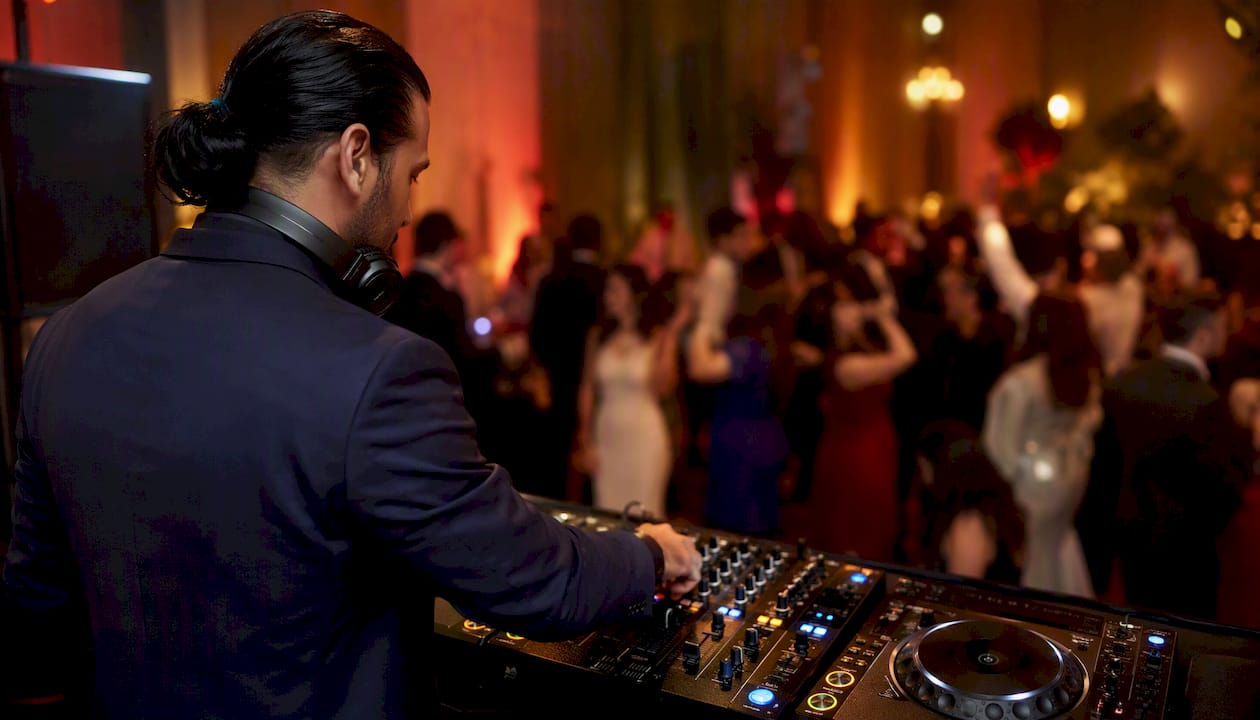
Arrival (warm-up, 70–90 BPM): Familiar, mid-tempo tracks that feel welcoming rather than demanding. Think classic soul, acoustic pop, or laid-back R&B. The goal is to lower social anxiety and signal that the night has begun. Tracks like Stevie Wonder’s catalogue, early 2000s indie pop, or smooth jazz-adjacent grooves work across most demographics.
Build (90–115 BPM): Energy climbs here. Introduce tracks with stronger beats and recognisable hooks. Sing-along anthems from the last two decades, upbeat funk, or crossover pop that most guests will know. This is where the dance floor begins to fill.
Peak (115–130+ BPM): The centrepiece of the night. Dance anthems, high-energy remixes, or genre-specific bangers depending on your crowd. Keep this window to roughly 45–60 minutes so it retains its intensity.
Wind-down (back to 80–95 BPM): Slow the tempo deliberately. Late-night R&B, acoustic covers of familiar songs, or mellow electronic. This phase signals the end gracefully without cutting the energy abruptly.
DJ brief template: “Our guests range in age from [X] to [Y], with a mix of [cultural backgrounds if relevant]. Key must-play tracks: [list 5–8]. Do-not-play list: [list 3–5]. Energy peak window: [time]. Signal for wind-down: [agreed cue, e.g., host raises hand]. PA check at [time].”
Pro Tip: Use a collaborative playlist feature (Spotify’s collaborative playlist or Apple Music’s shared queue) and invite two trusted co-hosts to add tracks. Then lock the queue 48 hours before the event so no one derails the arc on the night.
Which lighting and ambience choices shift the mood instantly?
Lighting and music together account for the majority of a party’s perceived ambience, and layered lighting with warm bulbs and dimmers raises social comfort and encourages mingling. The overhead fixture is almost always the enemy — switch it off.
Three lighting layers to build:
- Ambient: String lights, floor lamps, and candles establish warmth. These run all night.
- Task: Focused light over the bar and food stations so guests can see what they are choosing without squinting.
- Accent: LED uplights, colour-wash strips, or a single moving light over the dance area. These are your mood-shifters — change the colour temperature from warm amber at arrival to a cooler, more energetic hue at peak.
Two setups to switch between:
- Arrival mode: All ambient sources on, accent lights at low warm amber, overheads off. Feels like a well-lit restaurant.
- Peak mode: Ambient sources dimmed slightly, accent lights at full intensity with a cooler or coloured hue, any moving light active.
Zoning and flow: Create three distinct areas — a dance or mingle zone, a social seating zone, and a quieter chill zone. Keep sightlines open between zones so guests can see activity and feel drawn toward it. Bottlenecks at the entrance or bar kill momentum faster than bad music.
On scent: a subtle diffuser near the entrance (citrus or light florals) registers subconsciously as welcoming. Avoid anything heavy or polarising, and never place a scent source near food.
Pro Tip: Buy two or three inexpensive smart bulbs for the main social area and set them to a warm 2700K for arrival. At peak, shift them to a slightly cooler 3500K with a touch of colour. The change is subtle enough that guests feel it rather than notice it.
What food and drink service keeps guests energised and social?
Keeping food available throughout the night, with at least one vegetarian and allergy-friendly option, prevents energy crashes and keeps guests comfortable. The serving style matters as much as the menu.
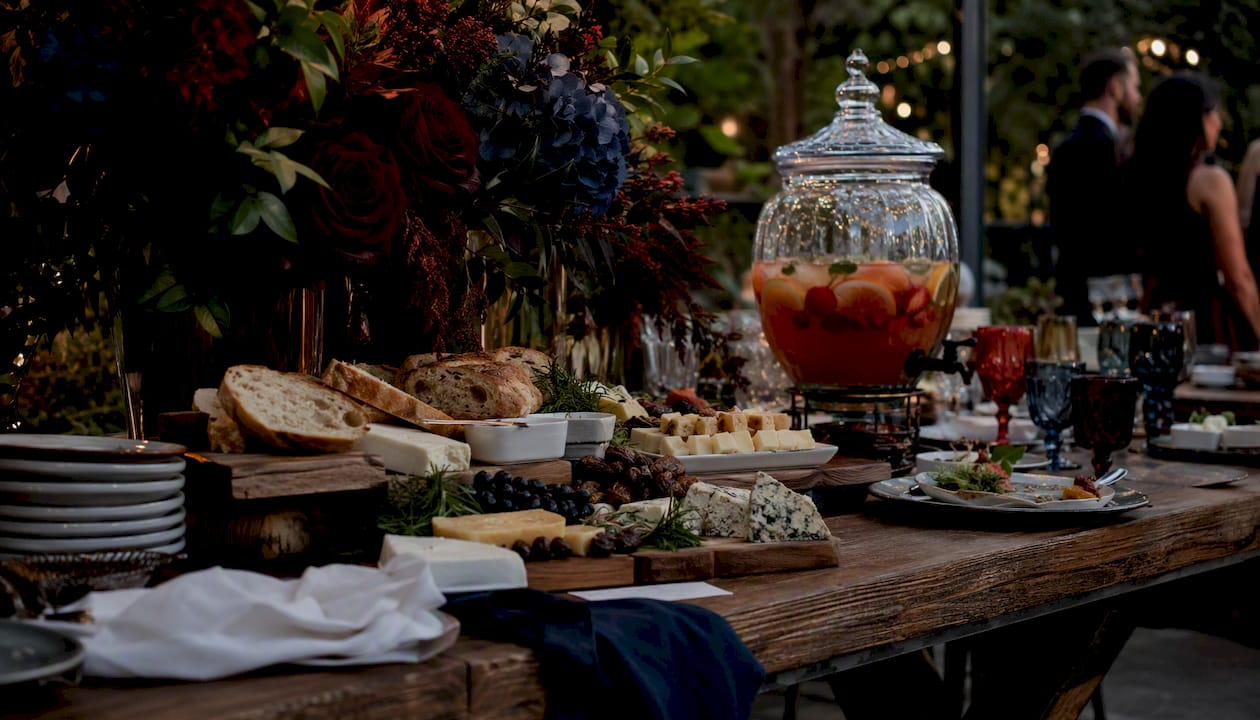
Grazing stations work best for parties of 20 or more. Charcuterie, dips, bread, and seasonal vegetables allow guests to eat on their own schedule without interrupting conversation. Replenish every 45–60 minutes.
Passed finger food during the first hour creates a natural reason for guests to interact with each other and with the host. It also signals hospitality immediately, which sets the tone.
Late-night comfort bites (sliders, fries, pizza slices) introduced around the 90-minute mark give the party a second wind and anchor guests who might otherwise drift toward the door.
A signature house cocktail or punch served at arrival establishes hospitality immediately and reduces congestion at the bar. Pair it with two or three non-alcoholic options of equal quality — sparkling water with fresh fruit, a mocktail, or a specialty lemonade. Abundant ice is non-negotiable.
Rule of thumb: plan for an adequate amount of drinks and food to keep guests comfortable and energized. Splurge on the grazing station and the signature drink; save on the late-night bites, where simple and satisfying outperforms elaborate.
Which activities and icebreakers spark interaction without derailing the flow?
The most effective programmed moments are brief, optional, and timed to bridge a natural energy dip rather than interrupt a peak. Over-programming is a real risk — guests at a well-run party should feel free, not managed.
By party type:
- Casual house party: A collaborative playlist vote, a quick trivia round (10–12 questions, 15 minutes), or a DIY photo booth with a ring light and a few props. These require no facilitation and guests opt in naturally.
- Cocktail gathering: A conversation card set on each table, a curated “two truths and a lie” prompt on a chalkboard, or a themed quiz tied to the occasion.
- Themed event: A costume contest with a single prize, a themed trivia segment, or a short group activity that references the theme directly (a decade-specific playlist vote, a cultural food station with brief descriptions).
Introduce an activity at the 60–90 minute mark, when the initial social energy has settled but before the first natural lull. Keep it to 10–15 minutes and make participation visibly optional. The goal is to give guests a shared reference point — something to laugh about together later in the night.
A DIY photo booth requires only a ring light, a neutral backdrop (a sheet or a decorated wall), and a printed sign with a hashtag or the event name. It runs itself and generates organic social content.
How do you read the room and rescue a flat vibe mid-event?
Even the most carefully planned gathering can stall. The skill is diagnosing the problem quickly and intervening without making the correction obvious.
Quick room-read checklist:
- Are guests standing or sitting? Seated clusters signal low energy.
- Are conversations happening across groups, or are people only talking to the people they arrived with?
- Is the noise level rising or falling? A quieter room usually means disengagement.
- Is the bar or food station drawing long queues? That is a bottleneck, not enthusiasm.
Interventions by problem:
- Flat energy: Shift the music up one phase (skip ahead in the arc), raise the accent lighting slightly, and open the food station if it has been closed.
- Isolated clusters: Circulate personally and make two or three direct introductions between guests who do not know each other. One confident host doing this visibly gives permission for others to do the same.
- Premature departures: Announce the next programmed moment — a toast, a game, a food reveal — to give guests a reason to stay another 20 minutes.
Pro Tip: If a guest has had too much to drink, approach them quietly and privately. Offer water and food, suggest they sit in the chill zone, and if needed, arrange a ride-share home. Never make it a public moment. For a noise complaint from a neighbour, step outside, acknowledge the concern respectfully, and offer a specific end time. Most complaints are resolved by the acknowledgement alone.
When is it worth hiring a professional DJ?
For gatherings of 40 or more guests, events with multicultural or multilingual music needs, or any occasion where the dance floor is central to the experience, a professional DJ delivers a calibre of crowd-reading and technical execution that a curated playlist cannot replicate. Hiring a professional DJ provides crowd-reading, equipment redundancy, and smoother transitions for peak moments — three things that are genuinely difficult to replicate with a streaming service alone.
What a pro brings:
- Seamless transitions that maintain BPM continuity and emotional momentum.
- Redundant audio equipment so a single hardware failure does not end the night.
- Emcee capability for toasts, announcements, and crowd prompts.
- A contingency music library spanning genres, decades, and languages.
- The ability to read the room in real time and adjust without being asked.
How to brief your DJ effectively:
- Share the guest profile: age range, cultural backgrounds, and any language considerations.
- Provide a must-play list (8–12 tracks) and a firm do-not-play list.
- Agree on the energy arc timeline: arrival time, peak window, wind-down cue.
- Confirm technical logistics: PA requirements, venue load-in time, power access.
- Establish a clear signal for energy adjustments (a hand gesture or a text message works well).
Book your DJ at least six to eight weeks before the event for a weekend date, and confirm the engagement with a written contract that specifies set times, equipment scope, and payment terms. For guidance on choosing the right DJ for your event, the criteria around crowd-reading and multicultural repertoire are particularly worth reviewing before your first consultation.
Your printable day-of checklist
Print this page or screenshot this section before the event.
- 3 hours before: Venue fully set up; all lighting tested; food prep complete or underway.
- 90 minutes before: Vendor arrival confirmed; sound check complete; signature drink batched.
- 60 minutes before: Arrival playlist running; all zones stocked; host ready to greet.
- Doors open: Greet every guest personally within two minutes of arrival.
- 20-minute mark: Confirm energy is building; adjust music phase if needed.
- 90-minute mark: Introduce first programmed moment (toast, game, or activity).
- Peak window: Accent lighting at full; music at peak BPM; dance floor open.
- 30–45 min before end: Shift to wind-down playlist; dim lights; open late-night snack station.
- End of night: Vendor pay-outs settled; guests safely departed; venue left as agreed.
Portable tech checklist:
| Item | Check |
|---|---|
| Primary playlist (downloaded offline) | ✓ |
| Backup playlist on a second device | ✓ |
| Bluetooth speaker or PA powered and tested | ✓ |
| Phone fully charged; portable charger packed | ✓ |
| Microphone (if needed) tested and volume set | ✓ |
| Streaming app logged in; data plan active | ✓ |
For a more detailed private party entertainment checklist, including vendor timing and setup sequences, that resource covers entertainment-specific logistics in depth.
What the 15-minute vibe test taught me
The most underrated skill in event hosting is the willingness to intervene early. Most hosts wait too long, hoping the room will correct itself. It rarely does.
My rule is the 15-minute vibe test: if the energy has not visibly shifted in the first 15 minutes after the build phase begins, something structural is wrong — the music is too quiet, the lighting is too flat, or the room layout is creating dead zones. At a corporate event I worked some years ago, the dance floor sat empty for the first 20 minutes of the peak window. The fix took 90 seconds: I raised the PA volume by three decibels, shifted the uplights from white to amber, and opened the food station. The floor filled within five minutes. The intervention was invisible to the guests. That is the standard to hold yourself to — corrections that feel like the party finding its own rhythm.
The hosts who create the best atmospheres are not the ones who plan the most. They are the ones who stay present, read the room honestly, and act without hesitation when the energy needs a nudge.
DJ-phoenix brings the artistry so you can enjoy your own party
Planning the music arc, managing the lighting cues, reading the crowd, and handling the PA system simultaneously is a significant undertaking for any host. Dj-phoenix handles all of it: playlist curation tailored to your guest profile, professional-grade sound equipment, emcee services for toasts and announcements, and real-time crowd-reading that keeps the dance floor alive from the first track to the last.
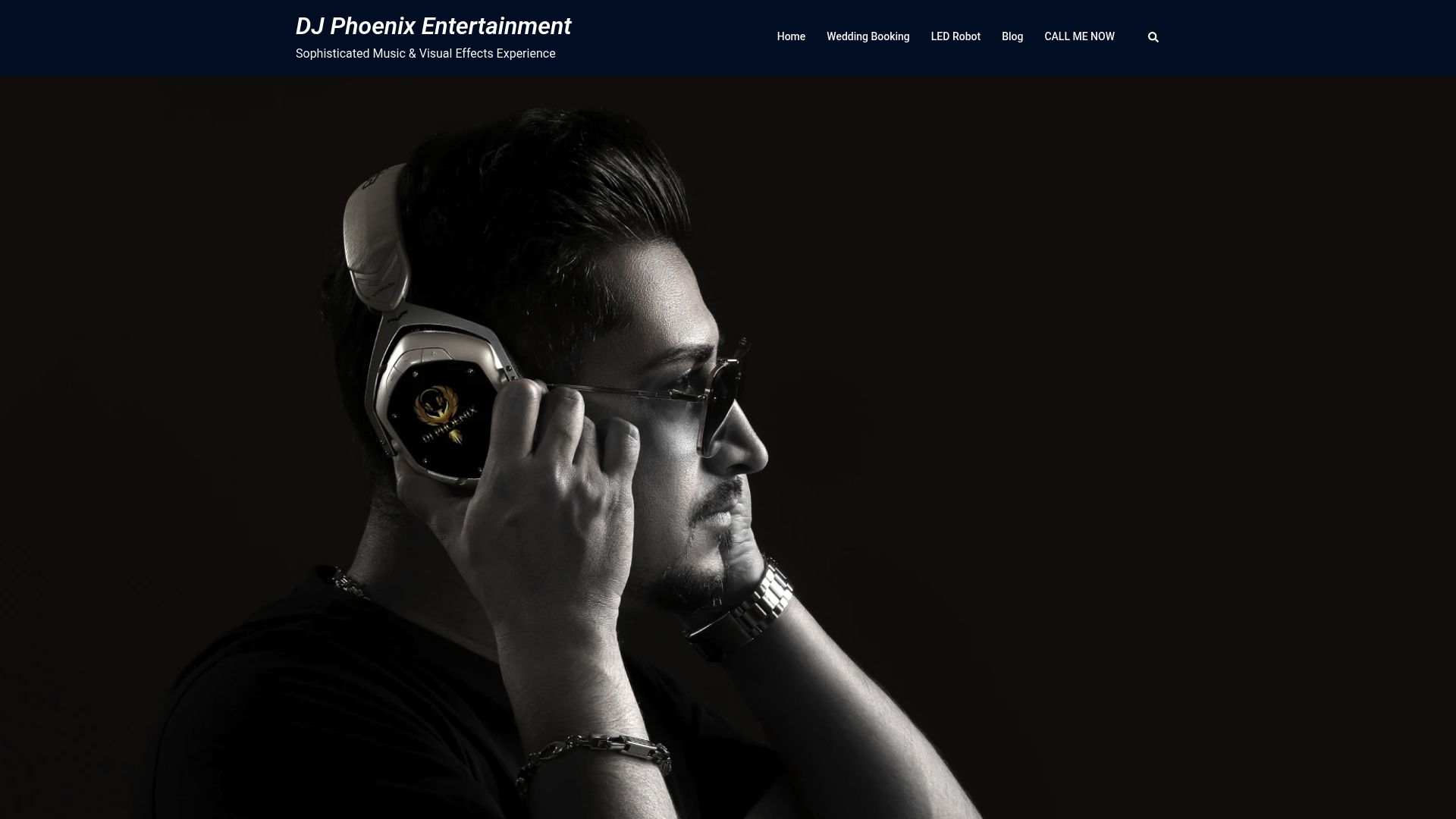
Whether you are hosting a private celebration, a multicultural gathering, or a corporate event in Canada, Dj-phoenix brings the pedigree of having performed for clients of the calibre of Mercedes-Benz and FW Sports. A free consultation is the natural starting point — bring your guest count, a few vibe references, and your must-play list. From there, Dj-phoenix builds the rest. View the performance gallery to see the standard of experience you can expect, or explore party packages to find the right fit for your event.
Sources
- How to Plan a Party | Martha Stewart
- Party planning checklist | Vistaprint
- Party planning checklist | Eventbrite
- How should a party flow be? The 7-Step Guide – Party Plan Checklist
- How to Throw a Good Party: 10 Expert Steps for Legendary Fun 🎉 – Party Checklist