Play low-key jazz standards, acoustic pop and mellow soul at a mid-tempo, conversation-friendly level, roughly 15 to 25 songs per hour, and you have the foundation of an elegant reception. Hand a segmented playlist like this to your DJ or run it as a crossfaded set yourself. This formula has proven effective at many wedding receptions. The curated blueprint below shows exactly how to build it.
TL;DR:
- A well-structured wedding dinner playlist spans four segments, with 15 to 25 songs per hour, to maintain flow and avoid repetition.
- The playlist should match venue acoustics and tempo, avoid explicit or heavy emotional content, and blend standards with modern acoustic covers for cross-generational appeal.
- Experienced DJs can adjust volume, timing, and song choice in real-time based on guest cues, ensuring the atmosphere remains conversation-friendly.
- Providing clear instructions, including cue points and do-not-play lists, helps the DJ deliver a seamless musical experience aligned with the event timeline.
- Professional DJs like DJ Phoenix offer tailored programming, sound tuning, and cultural music integration to ensure the dinner soundtrack enhances the overall wedding flow.
Table of Contents
- Building your wedding dinner playlist: a ready-to-use blueprint
- How do you choose the right dinner songs?
- What songs work best across different dinner moods?
- Coordinating your playlist with a DJ or band
- Why experience matters more than a good playlist alone
- What subtle cues tell a DJ it’s time to shift the mood?
- Let DJ Phoenix handle your dinner soundtrack
- Curated links for further playlist planning
- Sources
- FAQ
Building your wedding dinner playlist: a ready-to-use blueprint
A well-built wedding dinner playlist isn’t one long list; it’s four distinct movements that guide the room without anyone noticing the hand on the dial. Think of dinner as a 60 to 90 minute arc, and your song count should sit around 15 to 25 tracks per hour to avoid repeats and keep the flow continuous.
Arrival and seating (10 to 15 minutes). Guests are finding tables, greeting relatives, settling in. This calls for warm, welcoming instrumentals that don’t demand attention.
- “Fly Me to the Moon” (instrumental version) — Frank Sinatra
- “La Vie en Rose” (piano arrangement)
- “Autumn Leaves” — Bill Evans Trio
- “Come Away With Me” — Norah Jones
First course (15 to 20 minutes). Volume stays low here since conversation is at its peak. Vocal tracks work if they’re gentle and familiar.
- “At Last” — Etta James
- “The Way You Look Tonight” — Frank Sinatra
- “Songbird” — Fleetwood Mac
- “Skinny Love” (acoustic cover)
Main course (20 to 30 minutes). This is where you can introduce a bit more texture by mixing acoustic pop with soul, while staying well below dance-floor energy.
- “Perfect” (Wedding Version) — Benny Martin, an instrumental cover that keeps the melody recognisable without a vocal competing with toasts nearby
- “Thinking Out Loud” (acoustic cover)
- “Ain’t No Sunshine” — piano rendition
- “Isn’t She Lovely” — instrumental
Dessert and transition (10 to 15 minutes). Energy climbs gradually here. Experienced DJs often build in more rhythmic content during the final stretch of dinner to bridge naturally into speeches or the first dance.
- “Uptown Funk” (acoustic/lounge version)
- “September” — mellow cover
- “I Wanna Dance with Somebody” (jazz lounge cut)
For mixed-age guest lists, stick to clean or edited versions of anything modern. A wedding-specific edit trims abrupt intros, fades, and any language that doesn’t belong at Grandma’s table, and most DJ pool services carry these edits specifically for this purpose.
How do you choose the right dinner songs?
Choosing dinner music comes down to matching sound to setting, not chasing personal favourites. A string quartet arrangement that sounds gorgeous in a stone chapel can get swallowed in a tented reception with hard, reflective surfaces bouncing frequencies around.
Follow this sequence when building or vetting your set:
- Match genre to venue acoustics. Tented and outdoor spaces need less low-end and more midrange presence, since bass control matters more than raw volume for keeping conversation clear.
- Set your tempo band. Aim for 60 to 90 beats per minute during the meal itself; save anything faster for dessert and beyond.
- Screen for content. Cut songs with explicit lyrics, breakup themes, or anything emotionally heavy. Dinner isn’t the moment for a ballad about heartbreak, no matter how good the vocal.
- Balance the generations. Blend recognisable standards for older relatives with acoustic covers of newer hits so nobody feels left out of the room.
- Draft a checklist for your DJ. List your must-plays, your do-not-plays, and any cultural songs that need a specific arrangement.
Pro Tip: Ask your DJ or band to test the volume at the farthest table from the speakers, not the closest one. If your uncle at table 12 has to shout to be heard, the mix needs adjusting before guests even sit down.
For couples building out the rest of the reception’s flow, our guide to wedding reception song selection covers how dinner music should hand off into the later set.
What songs work best across different dinner moods?
A single genre rarely covers three hours of family, friends, and every age bracket in between. Spreading your selections across five categories gives you range without losing the conversation-friendly thread that ties the whole set together.
Jazz and standards. These are the safest bet for cross-generational appeal because everyone from grandparents to college friends recognises the melodies.
- Frank Sinatra — “The Way You Look Tonight”
- Etta James — “At Last”
- Nat King Cole — “L.O.V.E.”
- Ella Fitzgerald — “Dream a Little Dream of Me”
Acoustic and indie. Stripped-down versions of modern hits bring warmth without the production that makes originals feel too big for a dinner room.
- Ed Sheeran (acoustic sets)
- John Mayer (acoustic sets)
- Bon Iver — “Skinny Love”
- The Lumineers — “Ho Hey” (acoustic take)
Soul and R&B. Smooth, mid-tempo soul keeps energy present without pulling attention from the table.
- Marvin Gaye — “Ain’t No Mountain High Enough” (slower cuts)
- Sam Cooke — “You Send Me”
- Stevie Wonder — “Isn’t She Lovely” (instrumental)
- Al Green — “Let’s Stay Together”
Instrumental and piano covers. These deliver a familiar melody with zero lyrical distraction, which is exactly why they work for guests of every background.
- Piano arrangements of chart hits
- Solo guitar wedding sets
- String quartet covers of pop standards
Bossa nova and lighter world music. A touch of bossa nova adds texture without shifting the mood too far from elegant.
- Astrud Gilberto — “The Girl from Ipanema”
- João Gilberto (classic bossa catalogue)
- Light Latin jazz instrumentals
A look across public wedding-dinner playlists confirms this pattern: jazz standards, smooth soul, and acoustic covers dominate the category, and the same core artists reappear across multiple curated sets because couples consistently gravitate toward familiar melodies at the dinner hour rather than unfamiliar deep cuts.
For multicultural celebrations, don’t try to force every tradition into the same five categories. Give your DJ three to five culturally significant songs in instrumental or soft vocal arrangements and let them weave those into the set naturally rather than isolating them into their own segment.
Coordinating your playlist with a DJ or band
Even the best playlist falls flat without a clear brief. Whether you’re working with DJ Phoenix, another entertainer, or a live band, give them the following before the wedding day:
- A timeline with cue points marking when speeches, toasts, and the first course start and end.
- A do-not-play list covering songs tied to breakups, exes, or anything the couple simply dislikes.
- Clean or edited versions only for anything with explicit content, especially for family-heavy guest lists.
- Preferred instrumentation notes, such as “more piano, less horn section” if you have a strong preference.
- A volume check request for the far tables, not just near the speakers or stage.
On the technical side, ask about fade times between tracks (three to five seconds usually feels smoothest), crossfade settings if you’re running a self-managed playlist, and a backup device in case the primary source fails. A short, written vendor brief reduces the chance of on-the-night surprises far more effectively than a verbal conversation two weeks before the wedding. Our wedding DJ timeline guide walks through a full cue sheet if you want a template to start from.
Why experience matters more than a good playlist alone
A playlist is a starting point. Reading the room in real time is a skill. Experienced DJs spend years reading dinner crowds at weddings and corporate events, learning exactly when a table full of quiet conversation is ready for a small lift in energy and when it isn’t.
Timing separates a good dinner soundtrack from a forgettable one. Volume that’s technically correct but delivered at the wrong moment still disrupts a toast. Blending cultural requests into a set without making them feel like an afterthought takes practice, not luck.
Sound quality matters just as much as song choice. Premium equipment reproduces a soft jazz vocal clearly at low volume, where budget speakers distort and force the mix louder than the room needs.
What subtle cues tell a DJ it’s time to shift the mood?
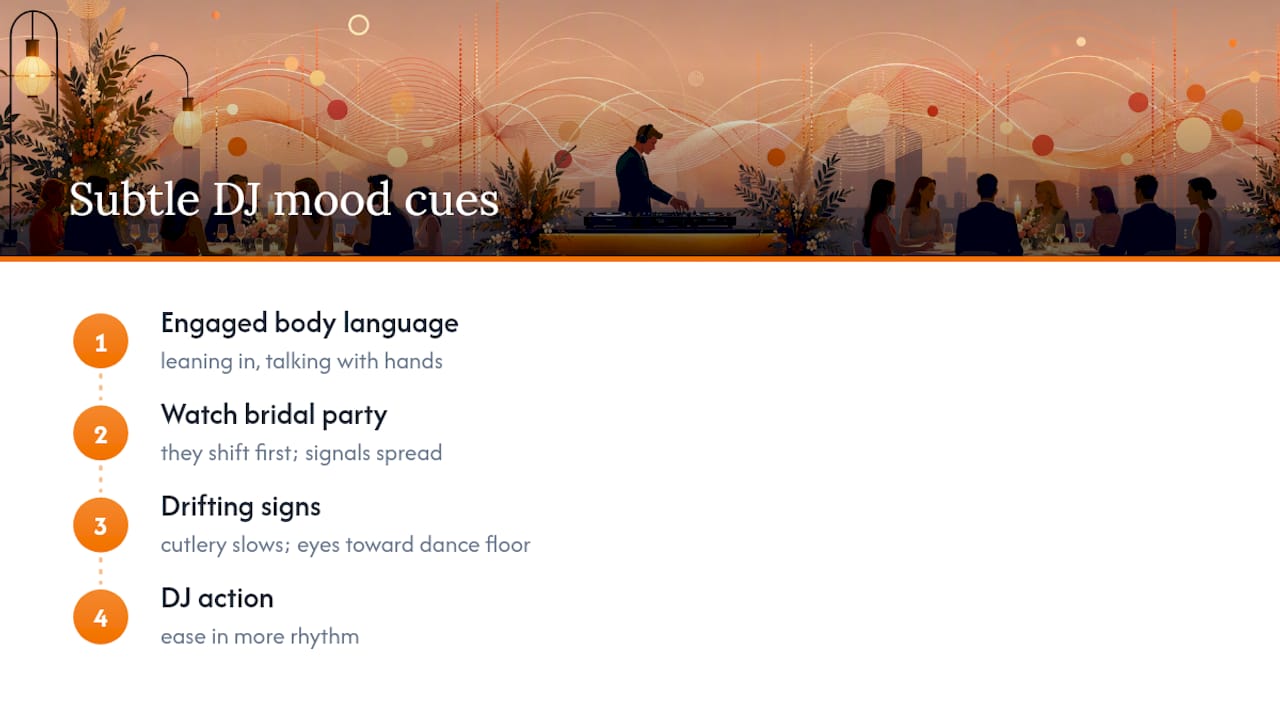
Experienced DJs watch body language more than the clock. Guests leaning in and talking with their hands mean the volume and tempo are right where they should be. When cutlery slows and eyes start drifting toward the dance floor, that’s the cue to ease in more rhythm.
Pro Tip: Watch the bridal party’s table specifically. They tend to shift energy first, and that shift usually spreads to the rest of the room within a few songs.
— Reza
Let DJ Phoenix handle your dinner soundtrack
Building the perfect dinner playlist takes real attention, and getting it wrong is easy when you’re also managing seating charts and a dozen other wedding details. Professional DJs can take that entire piece off your plate: curated playlist programming for multicultural guest lists, professional timing for speeches and toasts, and sound equipment tuned for the room, not just turned up.
The Gold, Silver, and Bronze wedding packages each include music programming built around your guest list, your venue, and your must-play requests, from arrival through the last dance. If your reception includes cultural traditions that need careful blending into the dinner set, that experience comes standard, not as an upgrade. Want to see how DJ Phoenix approaches the decision from the couple’s side first? Read how to choose the right DJ for your wedding, then request a consultation to walk through your specific timeline and song requests.
Curated links for further playlist planning
- Sortra’s practical dinner music guide covers volume testing and song-count planning in more depth.
- Inside Weddings’ 13 dinner song picks offers another curated shortlist to compare against.
- Fotovalera’s wedding video song guide is useful if you also need instrumental tracks for your wedding video.
- Wild Foodz’s meal pacing guide helps you align music transitions with plated service timing.
Sources
- How to plan dinner music for a wedding: a practical guide for a seamless reception
- DJ Ragoza – 2 Hour Wedding Dinner Mix (Clean) by DJ Ragoza/Team Ragoza | Mixcloud
- 13 Songs to play at dinner during your wedding reception — Inside Weddings
FAQ
What kind of music plays during a wedding dinner?
Most receptions favour jazz standards, acoustic pop covers, and smooth soul kept at a mid-tempo, conversation-friendly volume. These genres carry enough melody to feel intentional without pulling attention away from table conversation.
What are some good songs to play at dinner at a wedding?
Strong picks include Frank Sinatra’s “The Way You Look Tonight,” Etta James’s “At Last,” and instrumental covers like Benny Martin’s Wedding Version of “Perfect”. Mixing a few jazz standards with acoustic covers of modern songs covers most guest-list ages.
What’s good background music for a wedding meal?
Soft jazz, acoustic guitar covers, and piano arrangements of familiar songs work best as background music because they carry melody without lyrics competing with speech. Plan for roughly 15 to 25 songs per hour to keep the set varied without repeating tracks.
Should there be music during a wedding dinner?
Yes. Music during dinner fills silence, supports the mood, and gives the room a consistent energy between courses and speeches. The key is keeping it audible but never loud enough to interrupt conversation at the table.
How does DJ Phoenix handle wedding dinner music specifically?
DJ Phoenix builds dinner sets around the couple’s guest list, blending multicultural song requests into instrumental or soft vocal arrangements so nothing feels out of place. This programming is included in the wedding packages, alongside sound equipment tuned for clear conversation at every table.