
Treat the DJ as a core production partner and commit to a multi-phase workflow from the moment your event brief is approved. That single decision separates brand events that generate content, energy, and recall from those that merely fill a room with sound. The non-negotiables to lock immediately:
- RFP booking window: Secure specialised entertainment well in advance to allow technical integration and brand customisation.
- Technical rider: Request it before signing any agreement.
- Run-of-show: Build DJ cues directly into the master document.
- Sound check window: Reserve 3–4 hours before guest arrival, without exception.
- Content capture plan: Identify shareable moments and assign a social team before load-in day.
Table of Contents
- Pre-event checklist: from RFP to two weeks out
- The multi-phase workflow every brand event needs
- Technical specs you must lock down before the event
- How to brief the DJ and align music with the brand narrative
- Design entertainment moments for content capture
- How to budget for DJ entertainment and protect the contract
- Day-of timeline: load-in through load-out
- Common failures and how to prevent them
- Key takeaways
- What experience on the floor actually teaches you
- Dj-phoenix brings the calibre your brand event demands
Pre-event checklist: from RFP to two weeks out
Procurement timing is where most planners lose leverage. Pre-production for major events typically begins 6–12 months in advance to secure vendors, finalise logistics, and establish communication protocols. For a professional DJ at a brand event, that window matters: elite talent books quickly, and technical integration with your AV supplier requires time.
RFP essentials to request:
- Technical rider with power requirements, PA specifications, and stage plot
- Sample run-of-show with DJ cue points
- Client references from comparable brand events
- Content and camera rules (what the DJ permits to be filmed and distributed)
- Proof of liability insurance
Upfront deliverables before contract signing:
- Sample set list options aligned to your brand profile
- Must-play and do-not-play lists
- Content release forms for performer footage
Two-week checklist:
- Confirm venue power and amperage against the technical rider
- Lock load-in logistics and service elevator dimensions
- Finalise the run-of-show with all DJ cues and speaker handoffs
- Distribute the social content schedule to your capture team
- Confirm emcee cues and transition timing with the DJ directly
Pro Tip: Ask the DJ for a venue walk-through confirmation in writing. Surprises at load-in — a freight elevator that cannot accommodate a subwoofer, or a power panel on the wrong side of the room — are preventable with one site visit.
The multi-phase workflow every brand event needs
Successful event production follows a structured sequence: intention, pre-production, technical rehearsals, and live execution. Skipping any phase is where technical failures and brand misalignment originate.
- Intention and goal setting. Define what the event must communicate and measure. Brand events succeed when they establish a core belief, design a signature interaction, and tie outcomes to objective KPIs.
- Pre-production. Conduct a venue walk-through with the DJ and AV supplier. Produce the technical diagram, floor plan, and master run-of-show with DJ cue sequences and content capture windows.
- Technical rehearsals. Run all cues — lights, video, music, microphones — multiple times. Rehearsals should begin well before show day so every transition is muscle memory, not guesswork.
- Live execution. The DJ manages energy flow, supports speaker handoffs, and drives the narrative arc from arrival through the signature brand moment to close.
Responsibility matrix (abbreviated):
| Phase | Client/Planner | DJ | AV Vendor |
|---|---|---|---|
| Intention | Define KPIs and brand cues | Review brief | Confirm tech scope |
| Pre-production | Approve run-of-show | Submit technical rider | Produce floor plan |
| Tech rehearsal | Attend and sign off | Run full cue sequence | Operate all systems |
| Live execution | Monitor and approve changes | Manage energy and cues | Real-time system support |
Pro Tip: Build a run-of-show template that includes a dedicated column for DJ cues alongside lighting and video cues. When all three are visible on one document, transition failures drop significantly.
Technical specs you must lock down before the event
Sound quality is a brand signal. A poorly calibrated PA at a Mercedes-Benz activation communicates something about the brand whether the client intends it or not. Treat the DJ’s sound system as a professional AV asset, not an afterthought.
| Specification | What to confirm |
|---|---|
| PA type and coverage | Line array vs. point-source; coverage map for the room |
| SPL targets | Appropriate level for the space and audience density |
| Monitor requirements | Stage monitors or in-ear for DJ and emcee |
| Microphone count | Emcee, panel, and backup wireless units |
| Power and amperage | Dedicated circuits confirmed with venue electrician |
| Redundancy | Backup playback device, spare cables, UPS for critical systems |
Redundancy checklist:
- Backup laptop or media player with identical set loaded
- Spare XLR cables and DI boxes on stage
- UPS unit protecting the mixer and primary playback system
- Contingency language in the contract specifying the DJ’s backup protocol
Sound check timing: Test the full system 3–4 hours before guests arrive. That window allows time to resolve EQ issues, confirm monitor mixes, test all microphones, and run a full cue sequence without pressure. Anything less compresses the margin for error to near zero.
Pro Tip: Request DJ equipment specifications in writing and share them with your venue’s technical coordinator at least three weeks before the event. Surprises on load-in day cost time and money.
Sound quality and logistics are critical trust signals that directly affect audience perception of the brand.
How to brief the DJ and align music with the brand narrative
A brand experience is a live, real-world interaction designed for meaningful engagement, not passive observation. The DJ’s brief must reflect that. Music is the emotional architecture of the room.
Creative brief template elements:
- Event objective and audience profile (demographics, cultural background, energy expectations)
- Brand cues: colours, values, campaign language the music should echo
- Signature moments: product reveal, award presentation, networking open
- Must-play and do-not-play lists with rationale
- Transition cues for speaker handoffs and reveal drops
- Emcee support requirements
Inclusive programming checklist:
- Request a multicultural programming consultation if your audience spans multiple cultural backgrounds.
- Confirm the DJ can adapt the set in real time rather than following a rigid pre-recorded playlist.
- Discuss hearing accessibility: captions or transcripts for music-led segments where appropriate.
- Review the playlist together at least one week before the event.
- Confirm cultural competence in the DJ’s approach to diverse audiences.
Pro Tip: Schedule a 30-minute creative consultation call, not just an email exchange. The DJ’s ability to read the room depends on understanding the audience’s emotional starting point — that nuance rarely survives a brief form.
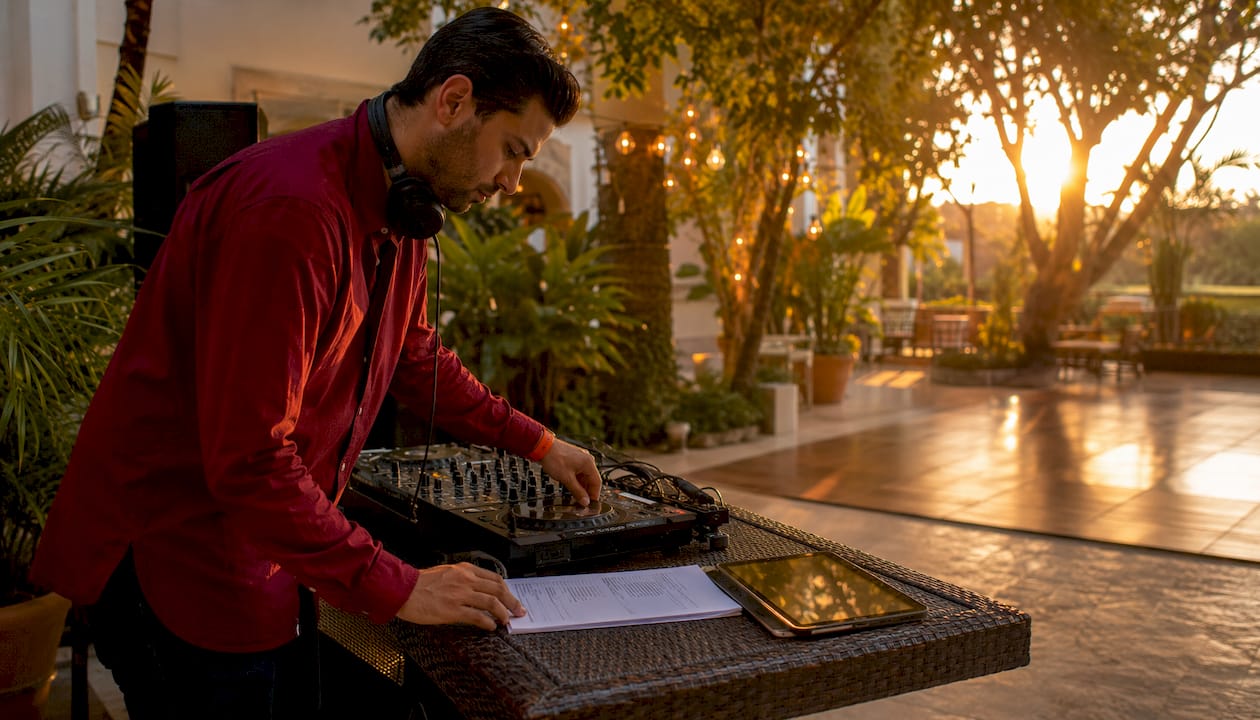
Design entertainment moments for content capture
Modern brand events are live content productions designed for digital channels. Every high-energy transition or reveal drop is a potential clip. Plan for it from day one.
Inherently shareable moments to place in the run-of-show:
- Reveal drops with synchronised lighting and music
- Choreographed crowd interactions at peak energy
- Behind-the-scenes load-in and setup footage
- DJ transition moments between programme segments
Coordination checklist (DJ, lighting, photo/video, social team):
- Assign a dedicated social team member to the DJ for the evening
- Brief the videographer on the 6–30 second clip windows tied to DJ cues
- Confirm lighting synchronisation with the DJ’s cue sheet
- Establish a live hashtag at least two weeks before the event and seed it with teaser content
Permissions and licensing: In Canada, SOCAN administers performing rights for music played at public events. Confirm that your venue holds a current SOCAN licence or that your event contract addresses licensing obligations. Capture releases for performers and guests should be collected at registration.
Pro Tip: Brief the DJ on which moments are “hero clips” so they hold the energy peak for at least 15 seconds. A transition that resolves in three seconds is not capturable. One that sustains gives your editor something to work with.
How to budget for DJ entertainment and protect the contract
Entertainment is a moderate share of the total event budget, and industry guidance recommends including a contingency reserve for unforeseen production or technical costs. Build that reserve in from the first draft.
| Budget variable | Notes |
|---|---|
| Talent fee | Varies by market, event scale, and DJ calibre |
| Gear rental and backline | Confirm what the DJ supplies vs. what the venue or AV vendor provides |
| Travel and accommodation | Required for out-of-market bookings |
| Technical labour | Load-in crew, AV technician, stage manager |
| Insurance | General liability; confirm coverage limits with your venue |
| Contingency reserve | Add 10–15% of total production costs |
Contract essentials:
- Technical rider attached as a schedule to the agreement
- Cancellation and force majeure clauses with clear notice periods
- Overtime and load-out terms specifying rates and windows
- Liability and insurance requirements for both parties
- Content and release clauses covering all recorded footage
Day-of timeline: load-in through load-out
- Load-in (morning). Crew arrives; staging and AV rigging follow a precise sequence.
- System build and cable run. PA, monitors, DJ booth, and lighting truss installed and connected.
- Sound check (3–4 hours before guest arrival). Full system test: EQ, monitor mix, all microphones, backup playback.
- Tech rehearsal. Run every cue — music, lighting, video — at least twice with all operators present.
- Final briefing (60 minutes before doors). DJ, stage manager, AV tech, and social team confirm the run-of-show, last-minute changes, and emergency contacts.
- Doors open. DJ manages arrival energy; social team begins capturing content.
- Programme execution. Stage manager calls cues; DJ executes transitions and supports speaker handoffs.
- Load-out. Follows a defined window in the contract; crew removes equipment in reverse order of installation.
Staffing roster:
- Stage manager: calls all cues and holds decision authority for on-the-fly changes
- AV technician: monitors audio, lighting, and video systems in real time
- DJ liaison: single point of contact between the DJ and the production team
- Content capture lead: coordinates photographer, videographer, and social team
- Floor safety officer: manages crowd flow and equipment placement safety
Pro Tip: Confirm the day-of operational checklist with the DJ 48 hours before the event, not the morning of. Last-minute confirmations compress the margin for every team member on site.
Common failures and how to prevent them
Top risks and mitigations:
- Audio failure: Require a backup playback device and spare cables; confirm UPS protection.
- Insufficient power: Verify amperage with the venue electrician against the technical rider before load-in.
- Late load-in: Enforce a contractual load-in window with penalty language for venue delays.
- Poor sightlines: Conduct a sightline check during the venue walk-through; adjust DJ booth placement accordingly.
- Cultural missteps in music selection: Schedule a playlist review and inclusive programming consultation at least one week before the event.
- No content capture: Assign a dedicated social team before load-in day; brief them on hero clip windows.
Risk matrix:
| Risk | Likelihood | Impact | Owner | Mitigation |
|---|---|---|---|---|
| Audio failure | Medium | High | AV vendor + DJ | Redundant playback, UPS, spare cables |
| Power shortage | Low | High | Planner + venue | Pre-verified amperage, dedicated circuits |
| Late load-in | Medium | Medium | Stage manager | Contractual window, penalty clause |
| Cultural misstep | Low | High | DJ + planner | Playlist review, inclusive brief |
| No content capture | Medium | High | Social lead | Dedicated team, hero clip briefing |
Health and safety: Confirm equipment placement does not obstruct emergency exits. Brief the floor safety officer on crowd management protocols and maximum occupancy. Ensure speaker stacks and truss are certified and load-rated for the venue.
Key takeaways
Treating the DJ as a production partner and following a structured workflow from goal-setting through technical rehearsal is the single most reliable way to protect brand integrity and maximise entertainment ROI at a corporate event.
| Point | Details |
|---|---|
| Book early | Secure professional DJ talent well in advance to allow technical integration and brand customisation. |
| Mandate a technical rider | Require the rider before signing; confirm power, PA specs, and redundancy with the venue. |
| Schedule a 3–4 hour sound check | Test the full system before guest arrival to resolve EQ, monitor, and microphone issues without pressure. |
| Brief with brand cues | Provide a creative brief with must-play lists, signature moments, and inclusive programming requirements. |
| Dj-phoenix for corporate events | Dj-phoenix brings a multi-phase workflow, multicultural programming expertise, and a proven track record with clients including Mercedes-Benz and FW Sports. |
What experience on the floor actually teaches you
The conventional wisdom in event production is that the run-of-show document is the authority. After years of working brand events across Canada, the more honest view is that the run-of-show is a starting point. The room always has a different opinion.
What separates a competent DJ from a genuine production partner is the capacity to read the energy in real time and make micro-adjustments that the document cannot anticipate. A product reveal that lands flat needs a different musical response than one that ignites the room. A networking segment that stalls needs a tempo shift, not a playlist continuation. These are judgment calls, and they happen in seconds.
The pre-event creative consultation is where that judgment gets calibrated. When a DJ understands the brand’s values, the audience’s cultural context, and the emotional arc the planner is trying to build, those real-time decisions align with the brand rather than working against it. Skipping that consultation to save 30 minutes is one of the most expensive shortcuts in event production.
One operational detail that rarely appears in RFPs: confirm the service elevator dimensions and load-in path before the venue contract is signed. A subwoofer that cannot reach the stage is not a DJ problem — it is a planning failure that surfaces at the worst possible moment.
Dj-phoenix brings the calibre your brand event demands
When your brand event requires a DJ who functions as a true production partner, not simply a music source, Dj-phoenix’s corporate event services deliver the artistry and technical pedigree that prestigious activations demand. With a proven track record serving clients of the calibre of Mercedes-Benz and FW Sports, Dj-phoenix brings multicultural programming expertise, a formal technical rider, and a multi-phase workflow that integrates directly with your AV and production team.
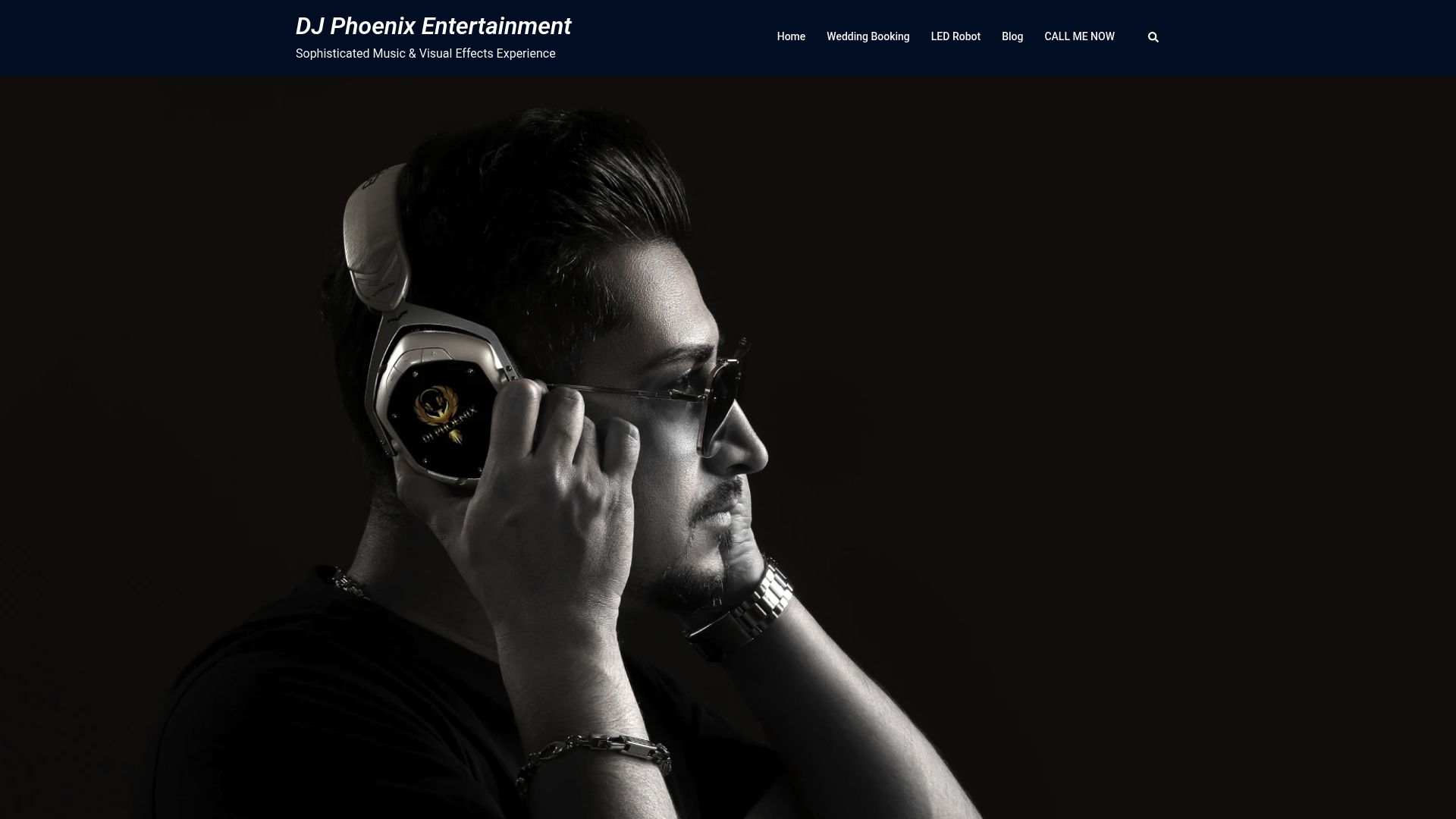
Request Dj-phoenix’s technical rider and a sample run-of-show for your event, or view the performance gallery to assess style, energy, and production quality firsthand. To discuss your event brief and confirm availability, visit dj-phoenix.com and connect with the team directly.