Choose a first-dance song that fits a dance style you can actually perform, passes a lyric check for stray breakup lines or profanity, and runs about 2.5 to 3.5 minutes once edited for reception flow. That single rule solves most of the trouble couples run into: songs that sound perfect on a playlist but stall the room, drag past the four-minute mark, or shift tempo halfway through and leave two people stranded mid-spin. Dance instructors consistently point to tempo and structure, not genre, as the real deciding factor, and a good DJ can confirm both before you commit.
Here is a starting shortlist, one per major style, to test against your own comfort on the dance floor:
- Classic/timeless: Elvis Presley, “Can’t Help Falling in Love” — slow, steady 3/4 feel, ideal for a simple sway or waltz.
- Soul/R&B: Etta James, “At Last” — smooth 4/4 ballad built for a nightclub two-step.
- Modern pop: Ed Sheeran, “Perfect” — mid-tempo, singalong-friendly, works with a basic sway or box step.
- Neo-soul/piano ballad: John Legend, “All of Me” — dynamic build, best with a rehearsed routine rather than freestyle.
- Country: Lonestar, “Amazed” — steady tempo, forgiving for beginner dancers.
- 2020s viral pick: JVKE, “Golden Hour” — bright, cinematic, suits couples who want a modern, photogenic feel.
Key Takeaways
Choosing a first-dance song works best when tempo, lyrics, and dance-style fit are settled before length and edits, and every choice gets tested with a professional ahead of the wedding day.
| Point | Details |
|---|---|
| Pick by meaning, then tempo | Choose a song for its personal significance first, then confirm it sits in a comfortable tempo range around 80 to 100 BPM. |
| Vet lyrics fully | Read every verse of your shortlist out loud to catch breakup or narrative mismatches hidden past the chorus. |
| Trim to 2.5 to 3.5 minutes | Ask your DJ or band to edit longer songs down so the moment doesn’t drag through your reception timeline. |
| Test with an instructor before locking it in | Bring two or three finalists to a dance lesson and confirm the tempo and structure actually work for your footing. |
| Book vendor support early | Dj-phoenix builds song edits, timing cues, and band coordination into its wedding bookings so your pick lands cleanly on the day. |
Table of Contents
- Why the first dance matters emotionally and logistically
- How do you actually choose a first-dance song?
- What’s the ideal song length, and how do you edit one down?
- Curated first-dance songs by genre, era, and mood
- Which dance style actually fits your song?
- Getting your song to your DJ or band on schedule
- What do DJs and dance instructors actually recommend?
- How does the first dance fit into your overall reception timeline?
- Can you adapt or mash up a song to fit your dance style?
- How should you practice your first dance before the wedding?
- Why do you need to check lyrics before committing to a song?
- What most couples get right, and what they don’t see coming
- How Dj-phoenix turns your song pick into a first dance that actually works
- Sources
Why the first dance matters emotionally and logistically
The first dance carries emotional weight and practical stakes at the same time, so the song you pick has to satisfy both. Emotionally, it is the moment guests remember and photographers build a whole gallery around. Logistically, it sets the tempo for the rest of the reception and has to fit into a tight run of speeches, dinner service, and cake cutting.
On the emotional side:
- It anchors your wedding photos and video highlight reel around one clear, quiet moment.
- It sets the emotional register for the reception, whether that’s tearful, playful, or triumphant.
- It gives guests a shared memory tied to a specific song, which is why classics like “Can’t Help Falling in Love” get chosen so often, according to The Knot’s list of enduring first-dance favourites.
On the logistics side:
- A song running past four minutes eats into a schedule that’s usually already tight between dinner and speeches.
- A tempo shift mid-song can throw off simple choreography you rehearsed for a steady beat.
- Floor space and lighting cues need to be set before the track starts, not during it.
How do you actually choose a first-dance song?
Pick by meaning first, then test the song against tempo, structure, and how it plays in front of a room full of guests. A song you love privately doesn’t automatically work publicly, and the gap between those two things is where most couples get stuck.
Work through this checklist with your partner before you bring anything to a dance instructor or DJ:
- Emotional meaning. Does the song actually connect to your relationship, or does it just sound nice? A song tied to a real memory reads as more genuine on camera than a generically “romantic” pick.
- Lyrical vetting. Read the full lyrics, not just the chorus you know from the radio. Plenty of songs that sound sweet in the hook turn into breakup narratives or references to infidelity by the second verse.
- Tempo and BPM. Ballroom Factory Dance Studio points to a working range of roughly 80 to 100 BPM as a comfortable zone for couples without dance backgrounds. Faster songs need more footwork; slower songs give you room to sway.
- Song structure. Some tracks build dramatically, jumping from a quiet verse to a loud chorus with a full tempo change (John Legend’s “All of Me” is a good example). That’s beautiful on a record and genuinely hard to choreograph around unless you rehearse the transition.
- Typical length. Most radio edits run three to four minutes. Anything longer needs a trim before your reception, not during it.
- Dance-style match. Does the beat suit a sway, a box step, or something more structured like a rumba? Match the song to a style you can learn in the time you have, not the other way around.
- Crowd reaction potential. Singalong songs like “Perfect” get guests swaying and filming from their seats. Quieter, more personal picks keep the moment intimate but ask less of the room.
Pro Tip: Read the lyrics of your top candidates out loud, all the way through, before you get attached to any of them. A song about longing for someone who’s gone (however gorgeous the melody) sends the wrong message on your wedding day, and it’s an easy thing to miss when you only know the single you hear on the radio.
Bring two or three finalists, not one, into your first lesson with a dance instructor or your consultation with your DJ. Testing multiple options against your actual movement, in the shoes you’ll wear, tells you far more than listening on repeat at home ever will. If one song stalls out because the tempo drags or the bridge throws off your footing, you’ll want a backup ready rather than starting the search over three weeks before the wedding.
What’s the ideal song length, and how do you edit one down?
Aim for a final edit of about 2.5 to 3.5 minutes. Most full-length songs run longer than that, and a professional DJ or bandleader can trim the intro, tighten a bridge, or fade the outro so the track lands cleanly without losing the parts that matter to you.
Tell your DJ or band exactly this:
- The specific version of the song (radio edit, album cut, acoustic version, live recording).
- The timecode where you want the fade or cut to happen, marked to the second if you can.
- Your preferred intro length, especially if you’re walking into the dance before the song fully starts.
- A backup file format (MP3 or WAV) and a backup device, in case a laptop or phone fails.
Pro Tip: Mark your preferred edit at the three-minute mark and actually dance to that exact cut during a rehearsal, not just listen to it on speakers. A cut that sounds fine in your living room can feel abrupt when you’re mid-turn and the music stops.
Experienced wedding musicians recommend testing a song’s full structure, intro through outro, to find the most natural edit point rather than just chopping at a round number. Lock your final choice three to six months before the wedding if you can, and hand the finished file to your DJ or band about four weeks out so there’s time to confirm the edit works.
Curated first-dance songs by genre, era, and mood
Use the tempo and dance-style notes below as a filter, not a final answer. A song that reads as “romantic ballad, slow sway” on paper might feel completely different once you’re actually holding your partner and moving to it, so treat this catalogue as a shortlist generator, not a verdict. Pull six to twelve songs that appeal to you across a few categories, then test your top two or three with an instructor or your DJ before locking anything in.
Classic and timeless picks (pre-1980)
- Elvis Presley, “Can’t Help Falling in Love” — Slow 3/4 waltz feel, roughly three minutes, no edit typically needed. Works for a basic sway or a simple waltz box step. High singalong potential among older guests.
- Etta James, “At Last” — Smooth, steady 4/4 ballad around three minutes. Pairs naturally with a nightclub two-step. One of the most consistently chosen classic standards for its recognizable melody and forgiving tempo.
- Frank Sinatra, “The Way You Look Tonight” — Mid-tempo swing feel, easy to dress up with a foxtrot for couples who want something a bit more structured than a sway.
80s and 90s favourites
- Whitney Houston, “I Will Always Love You” — Ballad with a dramatic key change and volume build partway through; rehearsing the transition matters here, or ask your DJ to trim the extended outro.
- Bryan Adams, “(Everything I Do) I Do It for You” — Steady mid-tempo rock ballad, comfortable for a slow sway, minimal choreography required.
- Boyz II Men, “End of the Road” — R&B ballad with a slower verse and fuller chorus, good for couples comfortable with a bit of tempo variation.
2000s and 2010s picks
- Ed Sheeran, “Perfect” — Mid-tempo, around 4.5 minutes at full length, so most couples request a trim to roughly three minutes. Suits a sway or basic box step and reliably gets guests singing along.
- John Legend, “All of Me” — Builds from a quiet piano verse into a fuller chorus. The tempo and dynamic shift make this one of the harder picks to choreograph without practice, so give it extra rehearsal time or ask your DJ about smoothing the transition.
- Christina Perri, “A Thousand Years” — Gentle, steady ballad well suited to a simple sway, with a natural build that photographs beautifully without demanding technical footwork.
2020s and current favourites
- JVKE, “Golden Hour” — Bright, cinematic pop with a steady mid-tempo pulse, close to four minutes at full length. Works well for a sway or a lightly choreographed routine and photographs especially well given the song’s title and mood.
- Lewis Capaldi, “Someone You Loved” — Emotional piano ballad, slow and steady, comfortable for beginner dancers who want something heartfelt without complex footwork.
Country picks
- Lonestar, “Amazed” — Steady mid-tempo country ballad, forgiving for beginners, and a long-time reception staple for couples who want a warmer, less orchestral feel than a classic pop ballad.
- Thomas Rhett, “Die a Happy Man” — Slow, romantic, and rhythmically simple, good for a basic sway with minimal instruction.
R&B and soul
- Beyoncé, “Halo” — Builds from a soft verse to a soaring chorus; the dynamic range asks more of your choreography than a flat ballad does, so it rewards a rehearsed routine over pure freestyle.
- Adele, “Make You Feel My Love” — Slow, steady piano ballad with a consistent tempo throughout, one of the more forgiving R&B-adjacent picks for couples without dance experience.
Indie and alternative
- The Paper Kites, “Bloom” — Airy, understated indie folk with a gentle, even tempo, well suited to a relaxed sway for couples who want something quieter than a mainstream ballad.
- Ben Howard, “Only Love” — Acoustic-driven with a warmer folk texture, comfortable at a slow tempo with room for a simple two-step.
Upbeat and shorter options
For couples who’d rather skip the slow-ballad format entirely, upbeat picks trim the “standing and swaying” time and get everyone moving faster. Songs like Bruno Mars, “Marry You” or Stevie Wonder, “Signed, Sealed, Delivered I’m Yours” run at a tempo suited to swing or a simple jive, and they tend to pull guests onto the floor within the first minute rather than after a slow build.
Mood tags to guide your search
- Romantic and intimate: “Make You Feel My Love,” “A Thousand Years,” “Can’t Help Falling in Love.”
- Joyful and celebratory: “Golden Hour,” “Marry You,” “Signed, Sealed, Delivered I’m Yours.”
- Cinematic and dramatic: “Halo,” “All of Me,” “I Will Always Love You.”
Which dance style actually fits your song?
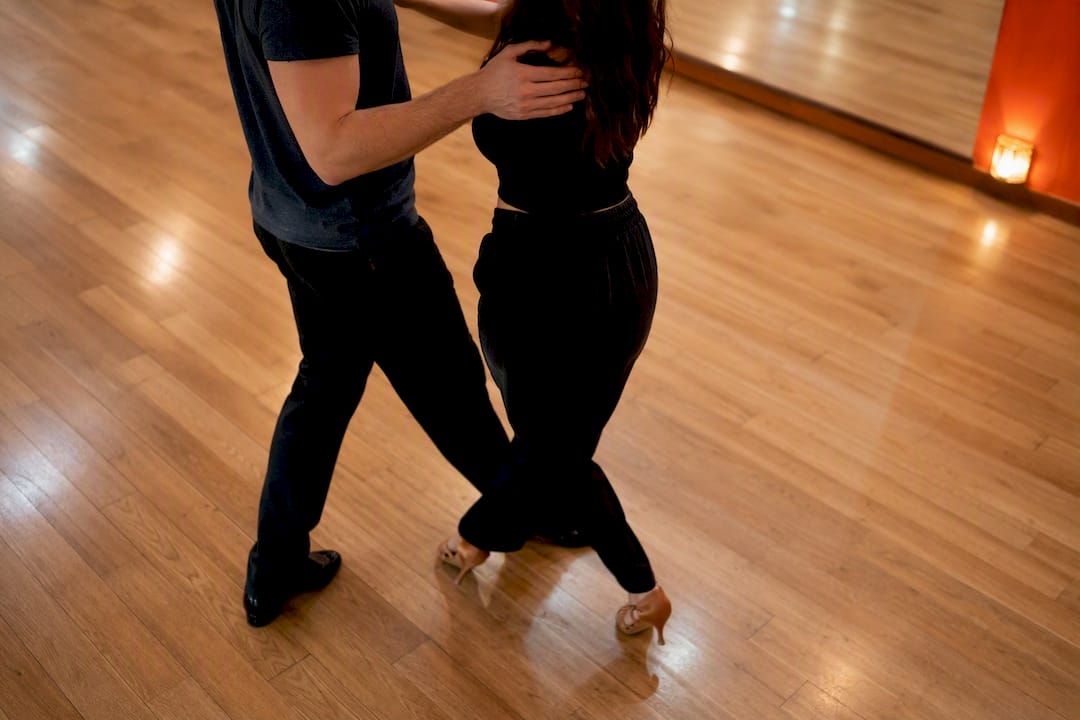
Match your dance style to your comfort level first, then to the beat of your song, since a style that looks stunning on video but takes six weeks to learn isn’t worth the stress if your wedding is in eight. A practical dance-style guide lists which styles suit beginners and which need real instruction time.
| Dance style | Typical tempo/feel | Difficulty | Space needed |
|---|---|---|---|
| Simple sway | Any slow tempo, no strict beat count | Beginner | Minimal |
| Nightclub two-step | Slow 4/4 ballads | Beginner to intermediate | Minimal |
| Waltz | 3/4 feel, moderate tempo | Intermediate | Moderate |
| Rumba | Slow 4/4, Latin-influenced | Intermediate | Moderate |
| Foxtrot | Smooth mid-tempo, 4/4 | Intermediate | Moderate |
| Swing | Upbeat, retro feel | Intermediate to advanced | Generous |
A few notes worth knowing before you commit to a style:
- The sway and nightclub two-step require the least rehearsal time and suit almost any slow ballad, including “At Last” or “Make You Feel My Love.”
- Waltz suits songs with a genuine 3/4 timing feel, like “Can’t Help Falling in Love,” and looks more polished with a few lessons behind it.
- Swing and a full foxtrot routine need floor space and usually more instruction, so factor venue size and your available lesson time into the decision, not just how the song sounds. For practical advice on venue selection and floor size considerations, see Booking Event Hall for Weddings: A Practical Guide.
Getting your song to your DJ or band on schedule
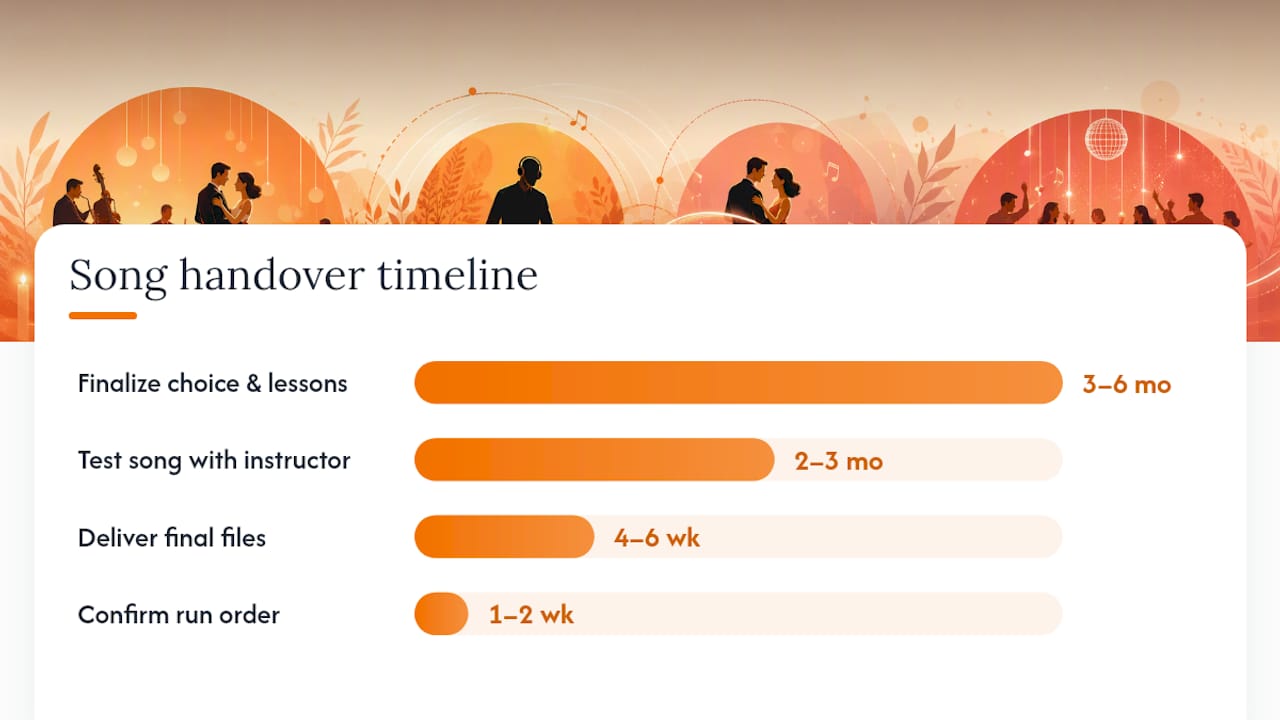
Lock your song choice three to six months before your wedding, then confirm the final edit and hand over your files about four weeks prior, earlier if you’re working with a live band rather than a DJ.
A realistic timeline looks like this:
- Three to six months out: Finalize your top choice and book any dance lessons you want.
- Two to three months out: Test your song with an instructor and confirm the edit point actually works with your choreography.
- Four to six weeks out: Deliver the final file to your DJ, or sheet music and a reference recording to a live band, since arrangements take longer to prepare than a digital edit.
- One to two weeks out: Confirm the run order with your emcee, including exactly when the first dance happens relative to dinner and speeches.
- Day of: Do a quick sound check and confirm any lighting or special-effects cues with your DJ before guests arrive.
Bands and DJs bring different strengths to this moment. A live band can rearrange a song’s key or tempo to suit your dancing, add a horn section, or extend an ending for applause, but they need sheet music or a clear reference track well in advance, and structural changes take rehearsal time. A DJ works from your actual recording, which means the edit you hear in rehearsal is exactly what plays on the day, and mashups or trimmed intros are usually a quicker turnaround.
Give whichever vendor you hire a short checklist: the labelled audio file or sheet music, your preferred edit timecode, any choreography notes tied to specific lyrics or beats, lighting cues if you want them, and a single point of contact for day-of questions. Dj-phoenix builds exactly this kind of pre-event timeline into every wedding booking so nothing gets left to a last-minute text thread.
What do DJs and dance instructors actually recommend?
If your favourite song doesn’t naturally fit an easy sway, you have two real options: request an edit that smooths the tricky sections, or choose a dance style built to handle the song’s structure rather than fighting it. Professional instructors consistently steer couples toward whichever fix costs less rehearsal time, not whichever sounds more impressive.
A short practical checklist that DJs and instructors return to again and again:
- Test the song’s beat for a consistent pulse before you build choreography around it. A track that speeds up or drops out mid-verse (again, “All of Me” is a common example) needs either an edit or a routine designed around that change.
- Rehearse at least once in the actual shoes and dress or suit you’ll wear, since heel height and fabric change your balance more than couples expect.
- Mark every edit point with an exact timecode when you hand the file to your vendor, not a vague “cut it somewhere around the middle.”
- Always have a backup song ready. If your first pick turns out to be harder to dance to than expected two weeks before the wedding, you don’t want to start from zero.
Instructors and DJs frequently point out that matching a song’s natural rhythm to an appropriate dance style, rather than forcing a mismatched pairing, is what actually reduces stress on the wedding day. A common real-world fix involves a DJ blending the final chorus of a slow ballad into a livelier second song, so the couple starts intimate and ends with guests already moving onto the floor. That kind of transition takes coordination, but it solves the “one song feels too short, two songs feels excessive” problem cleanly.
How does the first dance fit into your overall reception timeline?
The first dance needs a fixed spot in your reception schedule, and most couples place it either right after introductions and before dinner, or right after dinner and before the parent dances and toasts. Both placements work, but they change the room’s energy differently, so decide early and tell your planner and DJ the same answer.
Placing the first dance before dinner gets it done while guests are freshest and attentive, and it lets photographers capture it in good light if you’re at a daytime or early-evening reception. It also means you’re not dancing on a full stomach in a formal outfit, which matters more than couples expect.
Placing it after dinner, closer to the toasts and cake cutting, keeps the emotional momentum building toward the night’s later, more energetic dancing. This works especially well if you want the first dance to flow directly into parent dances and then into open dancing, since the DJ can transition the mood gradually rather than starting cold.
Either way, tell your DJ or band exactly where the first dance sits relative to dinner service and speeches, because kitchen timing and emcee announcements both depend on that placement. A five-minute miscommunication here is one of the most common sources of wedding-day stress, and it’s entirely avoidable with a written run sheet shared in advance.
Can you adapt or mash up a song to fit your dance style?
Yes, and it’s one of the more effective fixes when you love a song but its structure doesn’t naturally suit the dance you want. A DJ can blend two songs, extend a favourite section, or smooth out an awkward key change so the track supports your choreography instead of working against it.
Common adaptations include slowing a naturally upbeat song into a ballad-style arrangement for a sway, or speeding up a slow verse into a livelier second half so a quiet opening builds into a danceable ending. Dream Wedding Dance notes that Latin-influenced tracks often map naturally to rumba or salsa, while modern romantic ballads suit a modern waltz or simple sway more comfortably than a structured Latin style.
A mashup approach also solves the “one song isn’t quite right” problem directly: start with a slow, sentimental track for the first minute, then transition into a second, more upbeat song to close the dance and invite guests onto the floor. This works particularly well for couples who want an intimate opening moment without asking guests to sit through a full four-minute ballad. Some couples take this further with a themed transition, like a coordinated costume change or a burst of visual effects timed to the second song’s opening beat, though that kind of staging needs to be planned with your DJ well ahead of the wedding day.
How should you practice your first dance before the wedding?
Book a lesson with a local dance instructor as soon as you’ve narrowed your song choice to two or three finalists, ideally three to four months before your wedding. Most studios offer wedding-specific packages that teach a simple routine matched to your chosen song’s tempo and structure, and one or two sessions is often enough for a basic sway or box step.
If lessons aren’t in the budget or schedule, plenty of couples build a workable routine from online tutorials, particularly for beginner-friendly styles like a nightclub two-step or simple waltz box step. The key is rehearsing to your actual edited track, not a generic tempo, so you know exactly where the song builds, fades, or shifts.
Practice in the shoes and, if possible, the outfit you’ll wear on the day. A floor-length dress or new dress shoes change your balance and stride more than most couples expect, and discovering that during your first lesson beats discovering it mid-ceremony. Run through your routine at least three or four times in the two weeks before the wedding, ideally once on a hard floor similar to your venue’s, since carpet and hardwood behave very differently underfoot.
Why do you need to check lyrics before committing to a song?
Read every verse of your shortlisted songs out loud before you fall in love with any of them, because choruses lie. A hook can sound completely romantic while the full song underneath tells a story about a breakup, an affair, or a relationship that didn’t survive, and that mismatch is easy to miss when you only know a song from the radio.
Run each finalist through a quick mental checklist: does the full lyric support a wedding-day tone, are there any lines that reference another person or a past relationship, and does the song’s overall narrative arc (does it stay hopeful, or does it turn bittersweet by the final verse) match what you actually want guests to feel? Some songs marketed as romantic classics, once you read past the opening lines, turn out to be about longing for someone who’s already gone.
This matters just as much for upbeat or country picks as it does for slow ballads. A catchy melody with a rowdy or breakup-themed lyric underneath is just as mismatched as a slow, gorgeous ballad about heartbreak. If a song passes the melody test but fails the lyric test, it’s not a lost cause. Ask your DJ whether an instrumental version exists, since that sidesteps the lyric problem entirely while keeping the melody you love.
What most couples get right, and what they don’t see coming
Most couples booking Dj-phoenix for a wedding walk in with a song already chosen, usually something sentimental and mid-tempo, and the request that comes up again and again isn’t about the song itself. It’s about the moment right after: how to transition smoothly from that quiet first dance into the rest of the night without an awkward silence on the floor.
What professionals wish more couples understood earlier is simple: the song matters less than the plan around it. A gorgeous track with no clear edit, no rehearsed footing, and no transition cue creates more stress on the day than a simpler song executed with a clean handoff to the next moment.
How Dj-phoenix turns your song pick into a first dance that actually works
Dj-phoenix builds first-dance logistics directly into every wedding booking, so the song you fall in love with in this guide doesn’t stall out on the actual dance floor. That means custom edits trimmed to your preferred timecode, on-site sound calibrated to your venue’s size, coordination with a live band if you’re blending styles, and clear timing cues so your DJ or emcee never guesses when to bring the lights down.

Couples working through the checklist in this guide, tempo, lyrics, dance style, length, benefit from a consultation early rather than after the invitations go out. Dj-phoenix has handled first-dance logistics for clients ranging from intimate ceremonies to high-profile events for brands like Mercedes-Benz and FW Sports, and that same attention to sound quality and floor engagement carries into every wedding booking. If you have a shortlist of two or three songs and want a professional read on which one fits your dance ability and venue, browse the DJ performance gallery or reach out through the Dj-phoenix wedding DJ page to book a consultation and lock your date.
Sources
- First Dance Songs by Dance Style | Ballroom Pages
- First Dance Wedding Music – How to Choose the Perfect Song
- First Dance Songs: 50 Picks Across Every Genre, Era & Mood – Paperlust
- Essential Advice for Your First Wedding Dance: How to Choose a Song That Matches Your Style – Ballroom Factory Dance Studio
- 101 First Dance Songs to Kick Off Your Wedding Reception