The best Latin corporate event music is not one playlist. It is a sequence: warm, mostly instrumental Latin jazz and bossa for arrival, light grooves through dinner, then a deliberate pivot into salsa, cumbia, bachata and reggaeton once the room is ready to dance. Below we set out how to match styles to each moment, how to serve a mixed audience, what to ask of the sound system, and what U.S. music licensing means for your event.
TL;DR
- Build the night in stages: conversational music for arrival, softer music for dinner, a planned bridge into dancing, then a peak and a gentle landing.
- Keep Latin instrumentals and low-volume grooves for networking and meals, and save the vocal-led dance repertoire for the reception.
- Mix eras, countries and tempos so the whole team, not only Spanish speakers, feels invited onto the floor.
- Public performance of music, including by a DJ, generally requires licensing in the U.S.; confirm what your venue already holds.
- A seasoned DJ who reads the room and can act as emcee holds these stages together in real time.
Table of Contents
- Why Latin music suits corporate events
- Matching Latin styles to each moment
- From networking to dancing: a programming timeline
- Programming for a culturally diverse audience
- Sound, volume and room setup
- Licensing: what U.S. event organizers should know
- Our perspective
- Working with a DJ and emcee
- Bring Latin energy to your event with DJ Phoenix
- FAQ
- Sources
Why Latin music suits corporate events
Latin rhythms carry an immediate sense of celebration. They are danceable even for guests who insist they never dance, and the family of styles is wide enough to serve a quiet cocktail hour and a closing-hour dance floor from the same musical vocabulary. A Latin jazz trio, a bossa nova arrival set and a salsa peak can feel like one coherent evening rather than three disconnected playlists.
That range is why Latin programming works for product launches, holiday parties, client appreciation evenings, awards dinners and heritage observances. In the U.S., National Hispanic Heritage Month runs from September 15 to October 15, and many workplaces use it to bring teams together around shared cultural experiences. The music need not wait for that window, but when an observance is the occasion, the programming deserves particular care and authenticity.
Matching Latin styles to each moment
The most common planning mistake is choosing a genre before choosing a moment. Start with what guests are doing, then choose the sound.
| Moment | What guests are doing | Latin styles that fit | Vocals and volume |
|---|---|---|---|
| Arrival and registration | Greeting, collecting badges | Bossa nova, Latin jazz, acoustic guitar, soft Afro-Cuban instrumentals | Mostly instrumental, background level |
| Networking and cocktails | Talking in small groups | Latin lounge, light cumbia and son grooves, mellow boleros | Sparse lyrics, clearly below conversation |
| Dinner and program | Eating, listening to speakers | Instrumental Latin jazz, classical guitar, gentle samba | Soft, never competing with the speaker |
| Dance pivot | Room shifting mode | Familiar pop-leaning Latin, mid-tempo cumbia, bachata | Vocals return, volume rises gradually |
| Peak | Dancing | Salsa, merengue, reggaeton, Latin pop, crossover hits | Full energy |
| Landing | Winding down, farewells | Slower bachata, ballads, Latin pop favourites | Tempo and volume ease off |
The logic in the first rows follows widely used corporate guidance: warm, mid-tempo, mostly instrumental music for arrival, sparse lyrics and steady grooves while people network, softer music during meals, and more energy and vocals at an evening reception. Another event-music team makes a similar point, suggesting slower arrival music followed by slightly more upbeat selections as the event progresses.
Dance-floor styles and what each does
Salsa is the peak-hour engine. Its driving percussion and brass suit guests who already know the steps, and it is the style most likely to produce a crowd around the dance floor. Merengue is quicker and simpler to follow, which makes it a friendly option for people who have never danced a Latin step. Cumbia has a steady, rolling feel that works across age groups, so it is a dependable bridge between dinner and dancing. Bachata is the slower, more intimate choice and is excellent for the landing portion of the night. Reggaeton and Latin pop bring in the younger and more contemporary guests and connect Latin programming to what people already hear on their phones.

Tempo ranges for each genre vary from source to source, so rely on your DJ’s ear and the energy in the room rather than a number on a chart.
When to choose instrumental over dance music
Use instrumental Latin music whenever conversation, speeches or business is the point of the moment: registration, networking, plated dinners, award presentations. Save dance music for a reception or party segment that is clearly signalled in the run of show. If the whole evening is a celebration, such as a launch party, you can move into rhythmic material sooner, but still ease guests in rather than starting at full volume.
From networking to dancing: a programming timeline
Professional music programmers describe the evening in stages: conversational music for arrival, supportive music during dinner and the program, a deliberate pivot into dancing, a peak mixing familiar songs with surprises, and a deliberate landing. The same source recommends lowering the tempo over the final three songs so the night ends on purpose rather than simply stopping.
Here is how we would translate that into a typical four-hour Latin-themed corporate evening.
- First 45 minutes: arrival. Latin jazz, bossa nova and acoustic instrumentals. Volume low enough that nobody raises their voice.
- Next 60 minutes: cocktails and networking. Introduce light cumbia and son rhythms, still with sparse lyrics. Consider our guidance on the role of music in networking events.
- Next 60 minutes: dinner and program. Return to soft instrumentals. Fade cleanly before the host takes the microphone and let the speaker own the room.
- The pivot, about 10 to 15 minutes. Start with recognizable mid-tempo tracks that feel like an invitation, not a command. This is the most consequential window of the night.
- Peak, about 60 to 75 minutes. Alternate salsa, merengue, reggaeton and Latin pop, mixing one or two songs everyone knows with a surprise that gets a cheer.
- Landing, final 10 to 15 minutes. Slow the tempo song by song, finishing with a warm, singable close.
Smooth movement between genres matters as much as the choice of songs. Matching tempo or energy as you move from one style to the next keeps dancers from leaving the floor between tracks, a craft we describe in more detail in our piece on seamless DJ transitions.
Programming for a culturally diverse audience
“Latin” is not one culture. A Mexican-American finance team, a group of colleagues from Colombia and Puerto Rico, and a room where most guests have no Latin heritage will hear the same song very differently. Good programming respects that.
Event-music guidance recommends that music follow the purpose of the event, with attendees’ age, cultural background and preferences taken into account. In practice, we suggest four checks before you finalize a list:
- Ask who is in the room. A short survey or a conversation with your employee resource group tells you more than any playlist guide.
- Span countries and decades. Include Caribbean, Mexican, South American and Central American traditions, classic and current, so no single group feels like a stereotype.
- Balance Spanish and English. Bilingual crossover tracks welcome guests who do not speak Spanish, while core Spanish-language favourites honour those who do.
- Vet lyrics. Much reggaeton and some other dance music is explicit. Request clean edits for a workplace audience.
Variety also prevents fatigue. Two hours of one rhythm, however infectious, flattens the room; contrast between styles is what keeps energy rising.
If you would like your team to experience the dances before the party, free salsa and bachata lessons are a relaxed way to introduce the steps and break the ice.
Sound, volume and room setup
Latin music is rich in percussion and brass, and a poorly set system makes it harsh. Three practical points matter at a corporate venue.
Keep background levels below conversation. At arrival and networking, music should be felt more than noticed. Dinner should be softer still.
Plan clean transitions to speakers. The music should fade before the host steps up, not cut off abruptly or compete with the microphone.
Place the speakers for the room, not the DJ. Coverage matters more than power. Uneven sound produces dead zones where guests either strain to hear or flee the volume. Our guides to DJ placement at a venue and how a line array system works explain how to avoid both.
Also confirm venue rules early: load-in times, noise limits, and whether the venue’s own system and microphones are available.
Licensing: what U.S. event organizers should know
Playing recorded music at a corporate event is a public performance, and the law treats it seriously. ASCAP states that U.S. copyright law requires permission from copyright owners for public performance, and that this covers DJs as well as streaming, broadcasts and live musicians. Historically, general licensees have obtained licenses from ASCAP, BMI and SESAC, and GMR became a fourth performing rights organization in 2013, as the U.S. Copyright Office’s records note.
What this means in practice: many venues already hold blanket licenses covering music played on their premises, but you should ask rather than assume. If your event is in a rented space, in a tent, or at your own offices, the answer may differ. For the full picture, read our guide to corporate music licensing basics, and ask a music licensing attorney if your event is recorded, streamed or used in marketing, because those uses typically need separate rights.

If you plan to build your own mixes, note that DJ-oriented libraries exist for the purpose: BPM Supreme’s Latino and Global library offers curated Latin DJ music, clean versions, instrumentals and event playlists, with a Standard plan listed at $22.99 per month. Check the terms of any library for whether it permits use at public events.
Our perspective
Over many years of performing for corporate clients, including Mercedes-Benz and FW Sports, we have learned that a Latin set succeeds or fails at the pivot. Anyone can queue a list of well-known songs. The artistry lies in sensing the exact moment when a room of colleagues is ready to move, and in choosing the first track that gives them permission.
Our approach is to treat the evening as a single composition. We curate playlists for multicultural audiences, read the crowd as it develops, and shift between styles so that no guest is left on the edge of the room. A salsa classic may open the peak for one audience; for another, a mid-tempo cumbia or a bilingual pop crossover is the better door.
This is why we believe a live DJ with emcee capability outperforms any prepared list. The person at the controls can adjust to a delayed dinner, a long keynote or an unexpectedly lively table, and can introduce the dance floor with the polish a prestigious event deserves.
Reza
Working with a DJ and emcee
A playlist can supply the sound; a DJ supplies judgment. The difference shows up when the schedule slips, when a senior executive wants a toast, or when the floor stalls and needs a rescue. We examine this trade-off in our comparison of a corporate DJ and a playlist system, and our note on open-format DJs explains how a DJ with range keeps a mixed crowd dancing.
When you brief a DJ for a Latin corporate evening, share:
- the run of show, with exact times for arrival, speeches, dinner and dancing;
- the guest profile: size, age range, languages and cultural backgrounds;
- must-play and do-not-play songs;
- the venue’s sound limits and the microphone needs of speakers;
- whether the host would like the DJ to emcee announcements and introductions.
For budgeting, our article on corporate DJ cost breaks the fee into line items so nothing surprises you late in the process. For a wider view of brand programming, see our best practices for brand event entertainment.
Bring Latin energy to your event with DJ Phoenix
DJ Phoenix Entertainment provides DJ services for corporate events, with playlists curated for multicultural audiences, professional emcee skills and high-quality sound equipment. Corporate pricing is not published, so we quote each event after learning its format and guest profile.
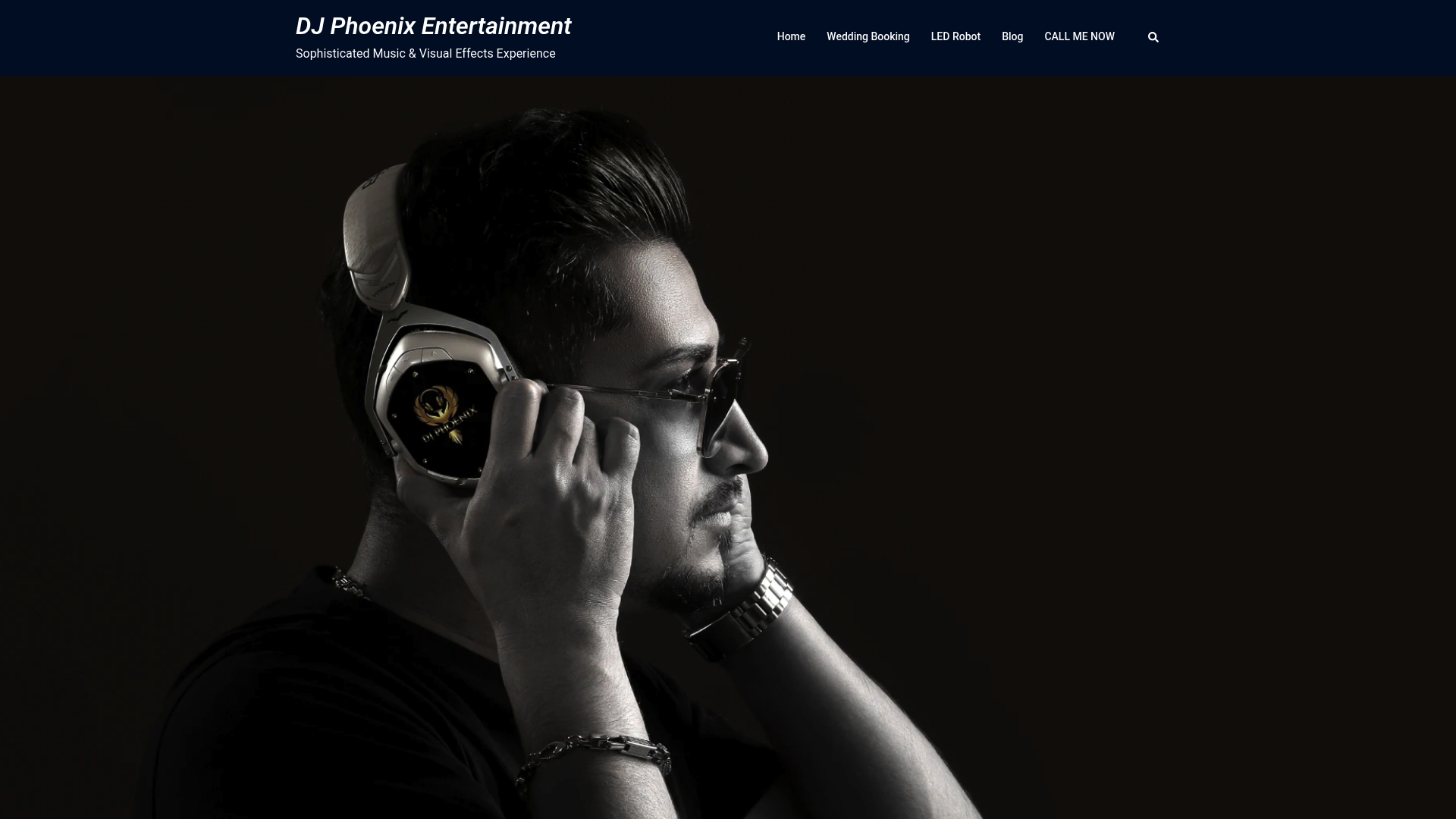
If you want to add atmosphere, our party packages list an MC at $500, a drum player at $600, a VJ service at $150, and sparkler machines from $350. Our LED robot and dry ice fog options can add a visual finale. To discuss your date and format, start at dj-phoenix.com.
FAQ
What Latin music is best for a corporate dinner?
Choose soft instrumental Latin jazz, bossa nova or classical guitar, kept low enough that guests can talk without raising their voices. Avoid vocal-heavy or high-tempo tracks until the program ends. Fade the music cleanly before any speaker takes the stage.
Can I play Latin dance music throughout a corporate event?
You can, but it rarely serves the evening. Guests need quieter music to network and eat, and constant dance music tires the room. Reserve high-energy salsa, merengue and reggaeton for a reception or party segment after dinner.
Do I need a license to play music at my company event?
In the U.S., public performance of copyrighted music generally requires permission, and that includes music played by a DJ. Many venues hold blanket licenses, so ask yours what it covers. If the event is filmed or streamed, seek advice on additional rights.
How do I choose Latin music for a mixed audience?
Learn who is attending, then span countries, decades and languages. Include bilingual crossover songs and request clean versions of explicit tracks. A DJ who reads the room can adjust the mix as the night develops.
Should I hire a DJ or use a playlist?
A playlist works for background arrival music. For a night that moves from networking to dancing, a DJ can time the pivot, manage announcements and respond to the crowd, which a fixed list cannot do.
Sources
- Music for Corporate Events and Trade Shows: Planner Guide
- Creating a Relaxed Atmosphere with Background Music for Corporate Events
- Building the Perfect Event Playlist: Music Programming
- Best Music for Corporate and Formal Events
- ASCAP Music Licensing FAQs
- U.S. Copyright Office letter on performing rights organizations
- Latino+Global Library, BPM Supreme
- Hispanic Heritage Month Activities for Work
- Latin Night: Free Salsa and Bachata Lessons