A quinceañera playlist is not one list. It is five short playlists, one for each moment of the celebration, each with its own job: announce the guest of honour, honour the family in the vals, thrill the room with the surprise dance, and then keep three generations dancing until the last song. Choose the songs for each moment separately, agree the order with the person at the decks, and the evening will carry itself. We have shaped this guide around that principle, with songs you can use today and the reasoning behind each choice.
If you are planning an event where the music must satisfy grandparents, teenage cousins and a court of chambelanes at once, the practical advice below is written for you. As DJ Phoenix Entertainment, we build our private party sets around multicultural audiences and a high-energy atmosphere, and the principles here are the ones we apply when we read a room.
TL;DR
- Build five mini-playlists: ceremony or arrival, grand entrance, vals, baile sorpresa (surprise dance) and party set.
- For the vals, “Tiempo de Vals” by Chayanne is the classic; modern choices such as “Die With a Smile” and “Golden Hour” are now popular too.
- Keep a must-play list of ten to fifteen songs plus a do-not-play list, and share both with your DJ at least two weeks ahead.
- For the party set, mix generations: salsa, banda, cumbia and reggaeton alongside current pop and a few English-language crowd favourites.
- Ask the DJ to edit long songs so the choreography stays crisp and the room stays engaged.
Table of Contents
- How a quinceañera evening is organized
- Grand entrance songs: make the first minute count
- The vals: choosing the waltz
- The baile sorpresa: the surprise dance
- The party set: one floor, three generations
- How to build your playlist, step by step
- Our perspective
- Bringing your playlist to life with us
- Final checklist before the day
- FAQ
- Sources
How a quinceañera evening is organized
Before a single song is chosen, it helps to see the evening as a sequence. A quinceañera is built around a small number of ceremonial moments, and the music changes character at each one. MZ Photography advises organizing the playlist by segment: ceremony music, grand entrance, waltz, surprise dance and party time.
That structure answers the question families ask most often: how many songs do we need? There is no fixed count, because the length of the party set depends on your hours. What you do need is a manageable core. The same MZ Photography guide suggests a must-play list of ten to fifteen songs and a separate do-not-play list, both shared with the DJ at least two weeks before the event. Those two lists give the DJ your taste and your limits, and leave the rest of the evening free for reading the crowd.
Here is a simple map to work from:
| Moment | What the music must do | Typical feel |
|---|---|---|
| Arrival or ceremony | Set a gracious tone while guests find their seats | Soft, instrumental or ballad |
| Grand entrance | Announce the honoree and her court | Bold, recognizable, upbeat |
| Vals | Honour family, tradition and the transition | Romantic, orchestral or ballad in three-quarter time |
| Baile sorpresa | Surprise and delight the guests | Pop, reggaeton and urban medley |
| Party set | Fill the floor for every age | Latin classics, current hits, singalongs |
Grand entrance songs: make the first minute count
The entrance is the first time every guest looks at the same doorway. The song should be instantly recognizable, so that the room reacts before the honoree has taken a step.
Some long-standing favourites are exactly that. Coldplay’s “Viva la Vida” has been a household title since it became available as an individual download in 2008, and its sweeping, anthemic build suits a slow, deliberate walk. Marc Anthony’s “Vivir Mi Vida” works for a livelier, more celebratory entrance; Vulture described it as a large-scale slab of global dance pop, which is precisely why it lifts a room. Its place on Apple Music’s Lo Mejor de lo Mejor release shows how long it has been circulating.
Another frequent pick is “Eres Para Mí” by Julieta Venegas with Anita Tijoux. It runs about three minutes and thirteen seconds, and it reached No. 5 on the US Billboard Hot Latin Songs chart in 2007, so guests of several ages will know it.
Choosing between a long walk and a fast one
The entrance song is cut to match the choreography, not the other way round. Decide first how the court will enter: in pairs, as a procession, or with the honoree arriving last to a dramatic pause. Then choose the section of the song that fits. A DJ can edit the opening, build a drop, or loop a bar so that the honoree’s name is announced exactly as the music peaks. This is where a live MC adds real value: the announcement and the music land together.
Two practical checks apply to any entrance song. Read the lyrics in full, because a song that sounds festive in the first thirty seconds may include language you would not want grandparents hearing. And rehearse the walk once to the actual edit, so the timing is not discovered on the night.
The vals: choosing the waltz
The vals is the emotional centre of the evening. Traditionally it is danced to a waltz in three-quarter time, counted in threes, which gives it its gentle rise and sway. Families today choose between a classical piece, a Spanish-language ballad, or an English-language song arranged as a waltz.
The classics
The most frequently named choice is Chayanne’s “Tiempo de Vals”, which is described as the classic quinceañera waltz. Among instrumental options, “The Blue Danube” and “Sobre las Olas” remain the standard traditional selections. Couture Candy’s top twenty also includes “De Niña a Mujer” by Julio Iglesias and “I Hope You Dance” by Lee Ann Womack, both lyrically fitting for a girl turning fifteen.
A note on “I Hope You Dance”: it was written in 1999 and released in 2000, and its album version runs 4:54, while the radio edit runs 3:59. Those differences matter, because the version you choose changes your choreography length by a full minute.
What families choose now
The waltz repertoire is changing. Quinceañera Magazine’s June 2026 report, drawn from Expo Quinceañera events, lists “Die With a Smile” by Bruno Mars and Lady Gaga, “Dreaming of You” by Selena, “Golden Hour” by JVKE and “Moonlight” by Ariana Grande among today’s most popular. It also notes that many families now commission custom waltz mixes that blend orchestral, pop, K-pop and traditional melodies.
That last point is worth emphasizing. A custom mix is exactly the kind of work a DJ should do with you: a slow orchestral opening for the father-daughter moment, a pop-leaning middle for the dance with the chambelanes, and a lifted finish for the full court. Three songs stitched into one arrangement can serve the three parts of the vals far better than one song stretched to fit.

Length and edits
Most quinceañera waltzes run several minutes once the transitions are counted, and a song that is beautiful on a streaming service can feel long on a dance floor. Share your choice with your choreographer and your DJ early, and ask for an edit that fits the steps. Clean choreography at a slightly shorter length is always more moving than a long routine in which the court begins to lose its place.
The father-daughter moment
Many families include a dedicated dance between the honoree and her father or another important figure. If that is your plan, choose a song with a gentle pace and a lyric that speaks plainly. Our guide to father-daughter dance songs and how to edit them offers ten ideas and shows how a thoughtful edit keeps the moment tender instead of drawn out.
The baile sorpresa: the surprise dance
After the vals comes the contrast. The baile sorpresa is a modern choreography, usually performed to a medley of pop, reggaeton and urban hits, and it signals that the formal part of the evening has ended and the celebration has begun.
Because it is a medley, the DJ’s craft matters most here. Transitions must be clean, the key and tempo changes must feel intentional, and the final track must flow directly into the open dance floor. A medley built on current radio hits will excite the younger guests; a single recognizable classic folded into the middle will bring the adults in. Plan the surprise dance as a three- to four-minute arc with a clear peak, and give your DJ the exact order of tracks well before the event, so the choreographer’s counts and the mix agree.
The party set: one floor, three generations
The hours after the formalities are where a quinceañera is remembered. A good party playlist is, in the words of Remezcla’s 50 Classic Bangers, a way of satisfying several generations at once. The same article points to “Mi Niña Bonita” for fatherly tears and the banda favourite “El Tucanazo” as a nostalgic dance-floor staple that can pull even reluctant teenagers into the quebradita-style shuffle while the dads take over the floor.

A balanced set
Think in blocks of three or four songs, each aimed at a different group, so that no one waits long for something they love:
- Opening block: recognizable crowd-pleasers, such as a salsa anthem or a pop hit that everyone knows, to bring people to the floor.
- Generational block: banda, cumbia or classic cumbia-pop for aunts, uncles and grandparents, with a few well-known oldies.
- Teen block: current reggaeton, Latin pop and the songs the court will sing along to.
- Singalong block: English-language party standards that every age group knows.
- Wind-down block: a slower set for conversation, cake and photographs before the final run.
This kind of balance is the heart of multicultural programming. Families often bring together Mexican, Central American, Caribbean and American traditions in one room, and the playlist is where all of them are honoured. Our Latin wedding playlist for bilingual couples shows how a forty-five-track list can move between Spanish and English without losing the floor, and the same logic applies to a quinceañera.
Guests who feel considered tend to stay on the floor, and the same thinking extends to the rest of the evening, from the music to quinceañera favor ideas that guests carry home.
The do-not-play list
The do-not-play list protects the evening as much as the must-play list builds it. Add songs with lyrics you would not want in a room that includes grandparents and young cousins, songs that carry a painful association for your family, and any track you have heard too often in the past few months. Share this list at the same time as your must-plays, so your DJ can program around it from the beginning.
How to build your playlist, step by step
- Fix the timeline. Write the order of events with approximate times: arrival, entrance, vals, surprise dance, dinner, party set. The music follows the schedule, not the reverse.
- Choose the three anchor songs. Pick the entrance, the vals and the surprise-dance medley first, because they involve choreography and rehearsal.
- Confirm edits with the choreographer. Settle the final lengths and any section cuts so that the steps and the music match.
- Write the must-play list. Ten to fifteen songs, drawn from the people who matter most to the evening.
- Write the do-not-play list. Be specific. A short list that names titles is easier to honour than a general preference.
- Brief the DJ and the MC. Share the lists and the pronunciation of names. The announcements should sound as polished as the music.
- Leave room to read the crowd. A fixed playlist with no flexibility cannot respond to the energy of the floor. Let the DJ adjust the order within the blocks.
Our perspective
A quinceañera is one of the few celebrations where tradition and the present moment share a stage so openly. The vals honours generations of family; the surprise dance belongs entirely to the young people in the room. A playlist has to respect both.
In our work with multicultural audiences, we treat the playlist as a living arrangement, not a printed list. Our approach is built on curated playlists, the ability to read the crowd, and smooth transitions between musical styles, so that a salsa classic can lead naturally into current reggaeton, and a banda favourite can hand the floor back to a pop singalong without a pause. We also work with premium sound equipment, because a beautifully chosen waltz deserves to be heard clearly in every corner of the hall.
The strongest celebrations we have in mind are the ones where the family’s choices and the DJ’s judgment work together: your must-play songs guide the evening, and our reading of the room keeps the energy high from the entrance to the last song.
Reza
Bringing your playlist to life with us
A well-built playlist deserves a skilled hand at the controls. Our private party DJ service pairs curated music for diverse audiences with professional emcee skills, and the party packages let you add the elements a quinceañera often calls for: an MC for $500, a drum player for $600, a VJ (video jockey) service for $150, and two-sparkler or four-sparkler machines at $350 and $500. For visual drama at the entrance, our LED robot dancer rental and dry ice fog are available, with the dancer from $500 to $1,300 and the fog at $300.
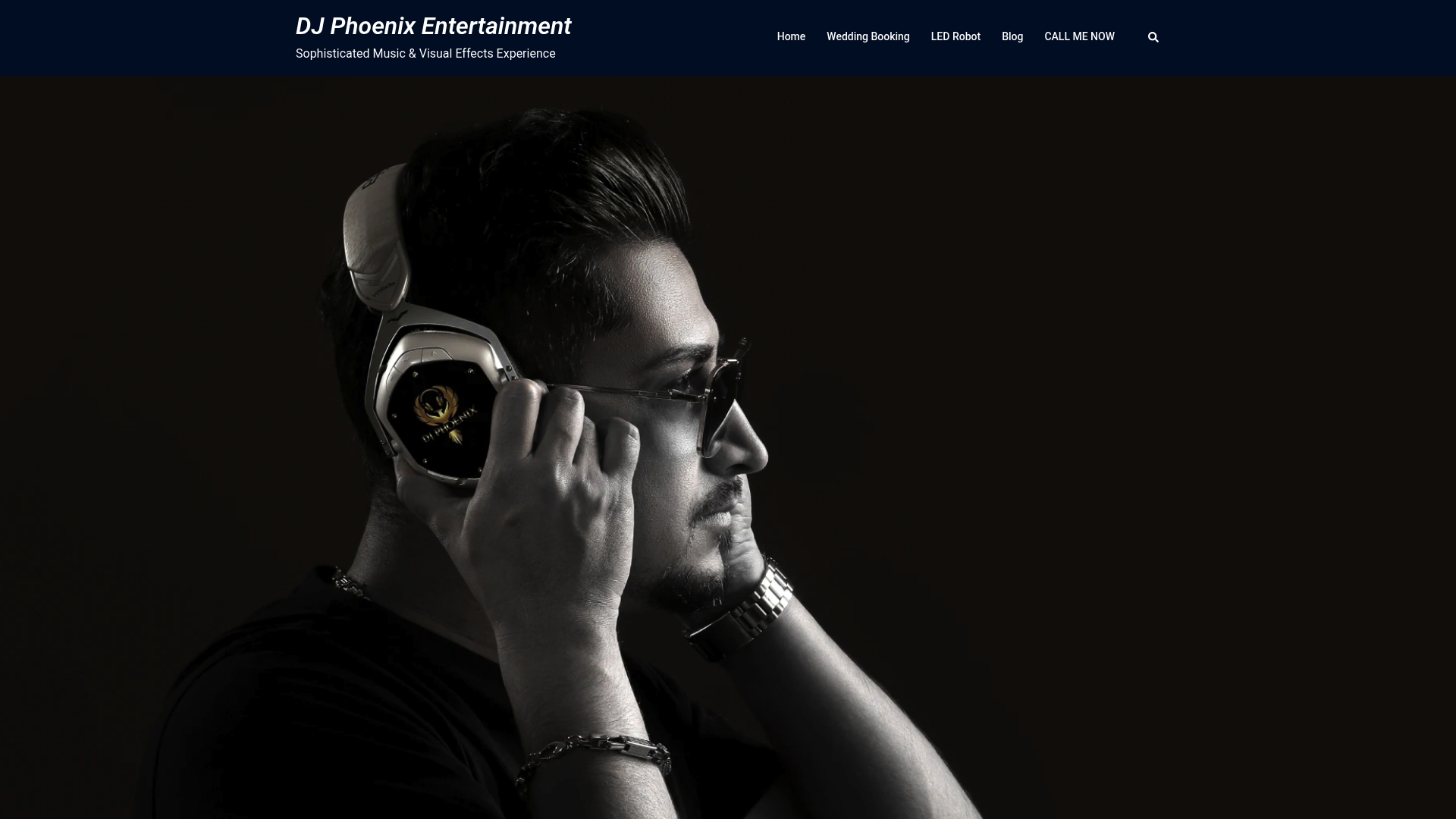
Tell us about your guest list, your family’s musical traditions and your timeline, and we will shape the evening around them. Start from our private party DJ page to see what we offer and request your date.
Final checklist before the day
- Your three anchor songs are edited to the exact length of the choreography.
- The must-play and do-not-play lists are with your DJ, at least two weeks ahead.
- Lyrics for the entrance, the surprise dance and the first party block have been read in full.
- The MC has the correct pronunciation of every name in the court.
- The party set includes at least one block for each generation in the room.
- A sound check is planned at the venue before guests arrive.
FAQ
What is a good entrance song for a quinceañera?
Choose a song that guests recognize immediately and that suits how the court will walk in. “Viva la Vida” by Coldplay suits a grand, slower procession, while “Vivir Mi Vida” by Marc Anthony suits a livelier arrival. Read the lyrics first and have your DJ edit the track to match your choreography.
Which song is most popular for the quinceañera waltz?
“Tiempo de Vals” by Chayanne is the classic choice, and “The Blue Danube” and “Sobre las Olas” are the usual traditional alternatives. Modern families also choose pop and ballad titles such as “Die With a Smile” or “Golden Hour”. Whichever you pick, ask for an edit so the length suits your steps.
How many songs should a quinceañera playlist include?
Start with a must-play list of ten to fifteen songs and a separate do-not-play list, and give both to your DJ at least two weeks before the event. The ceremonial moments each need one anchor song, and the rest of the evening is filled by the DJ from your guidance and the mood of the room.
What songs get all ages dancing at a quinceañera?
Combine Latin classics, such as banda, cumbia and salsa, with current Latin pop, reggaeton and a few English-language favourites that everyone knows. Songs like “El Tucanazo” and “Vivir Mi Vida” are examples of tracks that cross generations. Group them in blocks so each age group has something to look forward to.
Sources
- Viva La Vida track on iTunes, Coldplay
- Marc Anthony Returns With a New Salsa Album, Vulture
- Vivir Mi Vida, Apple Music
- Eres para mí, Wikipedia
- I Hope You Dance, Wikipedia
- Quinceañera Songs: Vals, Entrance and Surprise Dance Picks
- What Are the Most Popular Quinceañera Waltz Songs?, Quinceañera Magazine
- 50 Classic Bangers That Made Every Quinceañera Pop Off, Remezcla
- Quinceañera Music and DJ Tips, MZ Photography