Traditional music is defined as the living cultural heritage of a community, transmitted across generations through performance, ritual, and shared memory. For event planners, understanding the role of traditional music at events is not a peripheral concern. It is the difference between an event that entertains and one that genuinely moves people. Music functions as an emotional tool that connects individuals to collective memory and reinforces shared values. When you program traditional music with intention and cultural literacy, you create experiences that resonate long after the last note fades.
How does traditional music foster cultural identity at events?
Traditional music is a living archive of cultural values, not simply a performance genre. Every melody, rhythm, and lyric carries encoded social meaning that a community has refined over centuries. When that music plays at an event, it does not merely entertain. It transmits identity.
Music shapes collective memory by anchoring individuals to shared experiences and communal narratives. This is why a single familiar melody can silence a room or move guests to tears. The anthropological mechanism is straightforward: music activates emotional memory, and emotional memory binds people to one another and to their heritage.
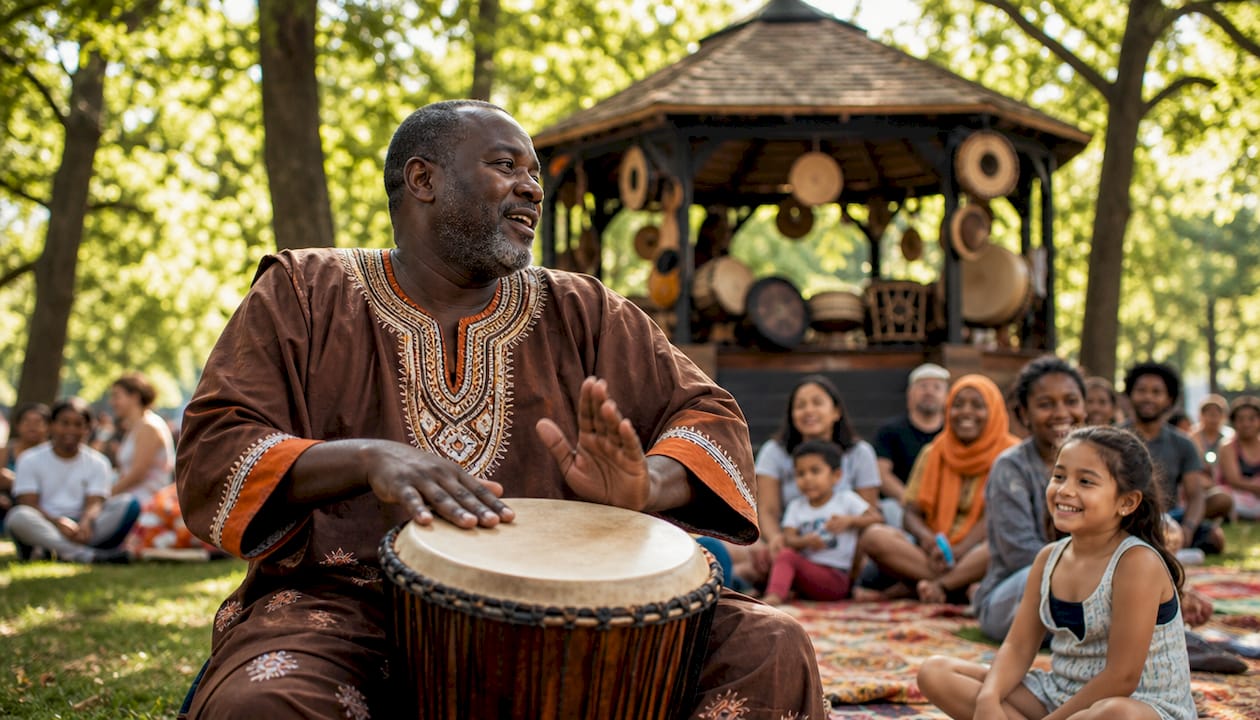
Research confirms this effect at scale. A study examining 378 participants found that traditional festival music boosts cultural confidence and collective belonging among event attendees. That finding means planners who include authentic traditional music are not simply adding atmosphere. They are actively building psychological safety and social cohesion within the room.
The Batak Toba community of North Sumatra offers one of the most documented examples of this principle in practice. In Batak Toba weddings, Gondang Uning-uningan reinforces social norms and marks ceremonial stages such as the ulos cloth giving ritual. The music is not decorative. It is structural. Remove it, and the ceremony loses its cultural grammar.
The cultural significance of music also extends to how it shapes group identity over time. Traditional music at community festivals, multicultural galas, and heritage celebrations gives participants a shared reference point. That reference point builds the kind of cultural confidence and belonging that no generic playlist can replicate.
When selecting traditional performers for your event, consider these qualities:
- Cultural fluency: The performer understands the social context of the music, not just the notes.
- Community connection: The performer has roots in or formal training within the tradition they represent.
- Ceremonial awareness: The performer knows which pieces belong at which moments in a program.
- Audience adaptability: The performer can engage a diverse crowd without diluting cultural meaning.
Pro Tip: Ask potential performers to describe the social function of two or three pieces in their repertoire. A culturally fluent musician will answer with narrative and context, not just genre labels.
How do you balance authenticity and evolution in traditional music programming?
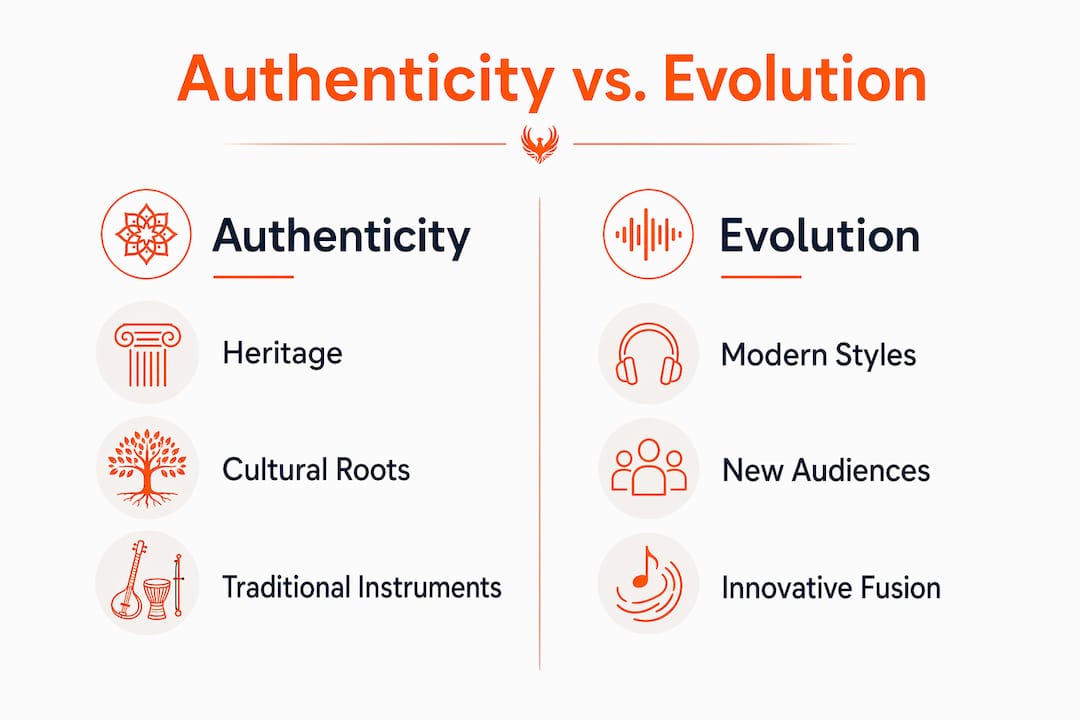
Traditional music faces a genuine paradox. It must remain rooted in heritage to carry cultural meaning, yet traditional music must evolve to stay relevant and avoid becoming a museum exhibit. For event planners, this tension is not abstract. It shows up in every booking decision you make.
UNESCO’s guidance on safeguarding traditional culture recommends that event organizers work with folklorists and cultural custodians and document performance practices thoroughly before programming traditional music. This is not bureaucratic caution. It is the professional standard for anyone serious about cultural integrity.
The risk of getting this wrong is real. Commercialising traditional music risks diminishing its spiritual and social bonding value. When a sacred ceremonial piece is stripped of its context and performed as background ambience, it loses the very quality that made it worth including. Guests may not consciously identify the problem, but the emotional resonance simply will not be there.
Planners who navigate this well tend to follow a clear set of principles:
- Consult before you programme: Engage a cultural adviser or community elder before finalizing the musical selection.
- Preserve performance sequences: Many traditional pieces are meant to be performed in a specific order tied to ritual stages.
- Avoid superficial fusion: Blending traditional and contemporary styles requires deep knowledge of both. Without it, the result is cultural distortion.
- Credit the tradition publicly: Acknowledge the cultural origin of the music in your event programme and MC script.
- Prioritise living traditions: Favour music that is still actively practised within its community of origin.
The cultural fusion planning guide from Dj-phoenix offers a practical framework for integrating traditional music while respecting its cultural meaning across different event formats.
Pro Tip: Before booking a traditional ensemble, request a brief cultural consultation session. Thirty minutes with a knowledgeable performer will reveal whether the act is grounded in genuine tradition or a polished commercial approximation.
How can event planners integrate traditional music across different event types?
The practical application of traditional music varies significantly by event type. Each format carries different social expectations, and the music must serve those expectations while preserving cultural authenticity.
Weddings and ceremonial events
Weddings are the most structurally demanding context for traditional music. As the Batak Toba example illustrates, traditional music in ceremonies is not ambient. It is functional. Each piece marks a specific ritual moment, and the sequence matters. Planners working on multicultural weddings should map the ceremony’s ritual stages first, then match musical selections to each stage with guidance from the family or a cultural adviser. Dj-phoenix’s wedding packages are designed with this multicultural awareness built in.
Community festivals and cultural celebrations
Festivals are where traditional music delivers its most measurable social impact. The research on 378 participants confirms that authentic traditional music at festivals strengthens collective belonging and cultural confidence. The key variable is authenticity. A local ensemble with deep community ties produces a fundamentally different audience response than a commercial act performing a surface approximation of the same tradition.
Corporate and multicultural events
Corporate events present a different challenge. The goal shifts from ritual reinforcement to cultural inclusion. Traditional music in this context signals respect for the diverse backgrounds of attendees. It communicates that the host organisation values cultural heritage, not just productivity. For multicultural events, the 2026 planning guide from Dj-phoenix addresses how to programme across cultural communities without privileging one tradition over another.
| Event type | Traditional music function | Primary cultural benefit |
|---|---|---|
| Wedding | Marks ritual stages and reinforces social norms | Strengthens family and community bonds |
| Community festival | Builds collective identity and cultural pride | Boosts cultural confidence and belonging |
| Corporate gathering | Signals inclusion and cultural respect | Fosters cross-cultural understanding |
| Multicultural celebration | Honours multiple heritage traditions simultaneously | Deepens shared identity across communities |
A practical integration checklist for planners:
- Identify the cultural communities represented among your guests.
- Consult with community representatives before finalising the musical programme.
- Map musical selections to specific event moments rather than using traditional music as generic background.
- Brief your MC and event staff on the cultural significance of each piece.
- Allocate adequate sound equipment and stage space for traditional instruments.
What are the common challenges in sourcing traditional music for events?
Sourcing authentic traditional music is harder than it appears. The supply of genuinely skilled traditional musicians is limited in most markets, and industry structures heavily influence which performers get booked, often favouring commercially polished acts over culturally grounded ones. Planners who do not actively seek out authentic practitioners will default to whatever the mainstream entertainment market offers, which is rarely the real thing.
The most common sourcing challenges include:
- Limited local availability: Authentic traditional musicians are often concentrated in specific geographic communities and may not be listed on mainstream booking platforms.
- Verification difficulty: Without cultural knowledge, it is hard to assess whether a performer is genuinely rooted in the tradition they represent.
- Scheduling constraints: Traditional musicians often have community obligations that conflict with commercial event schedules.
- Instrument and technical requirements: Traditional instruments may require specific acoustic conditions or amplification setups that standard event venues do not provide.
- Audience reception uncertainty: Planners sometimes hesitate to book unfamiliar traditional music out of concern that guests will not engage.
Field research confirms that local traditional musicians produce measurably stronger community cohesion than generic commercial performers. That finding should give planners the confidence to invest in sourcing the real thing, even when it requires more effort.
The most reliable sourcing strategies involve direct community engagement. Contact cultural associations, heritage organisations, and university ethnomusicology departments in your region. These networks maintain relationships with active traditional musicians who do not market themselves through commercial channels. For events with a specific cultural focus, such as authentic Hawaiian music in tourism and hospitality contexts, specialist cultural organisations are the most credible source of performers.
Key takeaways
Traditional music at events is the most direct tool available to planners for building genuine cultural connection, and its impact depends entirely on the authenticity and cultural literacy of the programming.
| Point | Details |
|---|---|
| Cultural identity anchor | Traditional music transmits heritage and reinforces collective memory in ways no generic playlist can replicate. |
| Research-backed social impact | A study of 378 participants confirms traditional festival music boosts cultural confidence and collective belonging. |
| Authenticity over approximation | Local musicians grounded in their tradition produce stronger community cohesion than commercially polished alternatives. |
| UNESCO standard applies | Work with folklorists and cultural custodians before programming traditional music at any formal event. |
| Event type shapes function | Traditional music serves ritual, social, and inclusive functions differently across weddings, festivals, and corporate events. |
Why I think most event planners underestimate traditional music
After years of working across weddings, corporate galas, and multicultural celebrations, I have observed a consistent pattern. Planners treat traditional music as a cultural garnish, a brief segment before the main entertainment begins. That approach misses the point entirely.
Traditional music does not warm up a room. It defines the room. When it is programmed with genuine cultural knowledge, it shifts the emotional register of an event in a way that no lighting rig or production effect can match. I have watched guests who arrived as strangers become visibly moved, connected, and present the moment a familiar traditional melody began. That is not entertainment. That is community formation in real time.
The uncomfortable truth is that most planners avoid deep engagement with traditional music because it requires cultural homework they have not done. The UNESCO standard exists precisely because the risk of getting it wrong is real. Commodified, decontextualised traditional music does not just fall flat. It can cause genuine offence to the communities whose heritage it represents.
My advice is to treat cultural consultation as a non-negotiable line item in your event budget, not an optional courtesy. The planners who do this consistently produce events of a calibre that their peers cannot replicate. Dj-phoenix’s approach to multicultural entertainment is built on exactly this principle: cultural depth is not a feature. It is the foundation.
— Reza
Dj-phoenix and the art of culturally grounded event entertainment

Dj-phoenix brings a rare combination of multicultural artistry and technical pedigree to every event. With experience serving prestigious clients such as Mercedes-Benz and FW Sports, Dj-phoenix has built a reputation for curating entertainment programmes that honour cultural heritage while keeping audiences fully engaged. Whether you are planning a multicultural wedding, a corporate gathering, or a community celebration, the event organiser services at Dj-phoenix offer a consultative approach that integrates traditional music with the sophistication your guests deserve. Explore the performance gallery to see how cultural depth and elite entertainment combine at the highest level.
FAQ
What is the role of traditional music at events?
Traditional music at events serves as a cultural connector, reinforcing shared identity, marking ritual stages, and building collective belonging among attendees. Its function goes well beyond entertainment.
Why does authenticity matter when programming traditional music?
Commercialised or decontextualised traditional music loses its spiritual and social bonding value, producing a shallow experience that can also cause cultural offence. Authentic performers grounded in their tradition deliver measurably stronger community cohesion.
How does traditional music benefit corporate events?
At corporate events, traditional music signals cultural respect and inclusion, helping diverse attendees feel acknowledged and valued. This builds cross-cultural understanding and elevates the overall guest experience.
What does UNESCO recommend for traditional music at events?
UNESCO recommends working with folklorists and cultural custodians and documenting performance practices thoroughly before programming traditional music at formal events.
How do I find authentic traditional musicians for my event?
Contact cultural associations, heritage organisations, and university ethnomusicology departments in your region. These networks connect planners with active traditional musicians who are not listed on mainstream commercial booking platforms.