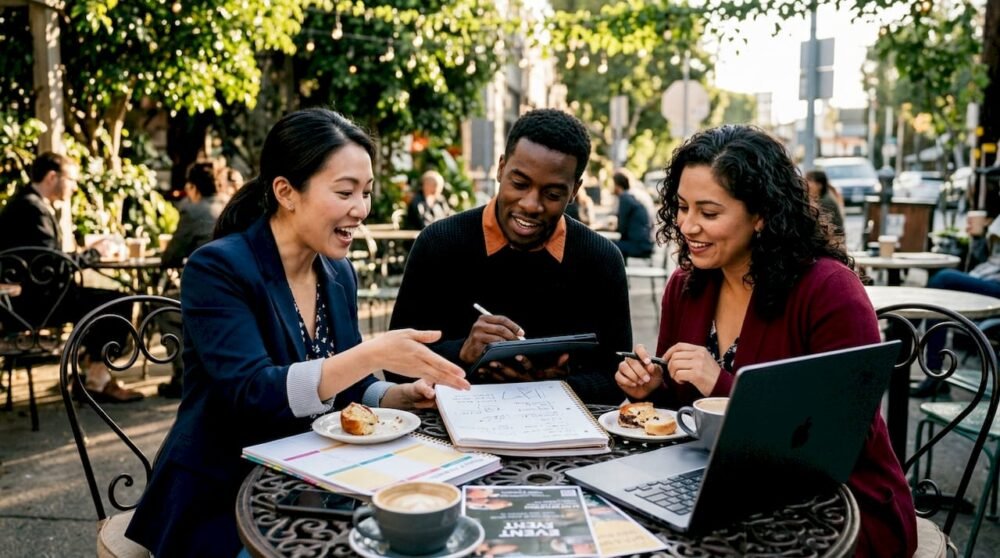
Multicultural event entertainment is defined as the deliberate integration of cultural performances, artistic traditions, and heritage-based activities designed to promote inclusivity and celebrate diverse customs. The industry term for this practice is “cultural fusion entertainment,” and it applies across weddings, corporate functions, festivals, and private celebrations. What sets it apart from standard event programming is intentionality. Every performance, workshop, and musical set is chosen to honour a specific cultural tradition while making every guest feel genuinely seen. For event organizers and wedding planners working with diverse guest lists, understanding what is multicultural event entertainment is the foundation of every successful booking decision.
What is multicultural event entertainment?
Multicultural event entertainment is the purposeful inclusion of diverse cultural acts spanning music, dance, storytelling, culinary demonstration, and interactive workshops. It is not a single performance style. It is a curated programme of experiences drawn from multiple cultural traditions, assembled to reflect the backgrounds of the guests in the room. The goal is active celebration, not passive observation.
This approach applies at every scale. A 40-person wedding reception can feature a live tabla player alongside a DJ set that moves between Persian classical music and Afrobeats. A 2,000-person corporate gala can include a Bollywood dance troupe, a Mariachi ensemble, and a multilingual Master of Ceremonies who transitions the audience between acts with cultural fluency. The format scales; the principle does not change.
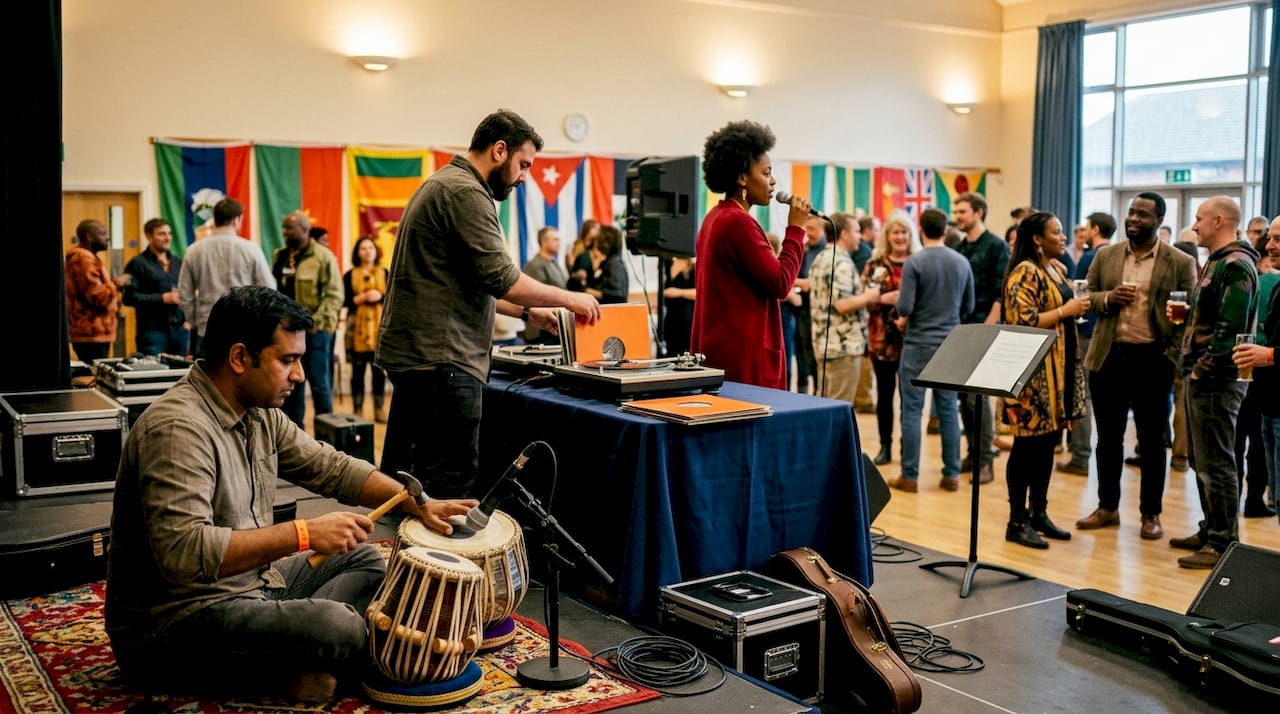
Dj-phoenix has built an entire practice around this principle. With a catalogue of curated playlists spanning dozens of cultural traditions and a track record that includes prestigious clients like Mercedes-Benz and FW Sports, Dj-phoenix treats multicultural entertainment as a discipline, not a novelty.
What are the common types of multicultural entertainment?
Multicultural entertainment packages typically include customised rosters of diverse performers, MC coordination, and interactive workshops that engage guests with new cultural traditions. The most effective events draw from several distinct formats.
Traditional cultural performances are the anchor of any multicultural programme:
- Live music sets featuring instruments tied to specific traditions, such as the sitar, oud, steel pan, or erhu
- Cultural dance performances including Flamenco, Bharatanatyam, West African drumming and dance, or Hula
- Storytelling and spoken word rooted in oral traditions from Indigenous, Caribbean, or West African cultures
- Multicultural fashion shows that present traditional dress from multiple communities in a single runway format
Interactive and participatory formats shift guests from audience to participant:
- Culinary demonstrations and tastings where chefs prepare dishes from specific cultural traditions and explain their significance
- Hands-on craft workshops such as henna artistry, calligraphy, or traditional textile weaving
- Potluck-style sharing events where interactive elements transform the event from passive attendance into an educational and personal experience for guests
DJ-led cultural fusion sets are among the most versatile formats available. A skilled DJ reads the room and transitions between musical traditions without losing the crowd’s energy. This is where Dj-phoenix excels. The ability to move from Punjabi bhangra to Latin salsa to R&B within a single set, while keeping the dance floor full, requires both technical skill and genuine cultural knowledge.
Multilingual Masters of Ceremonies provide the connective tissue between acts. An MC fluent in two or more languages and comfortable with multiple cultural protocols keeps the programme flowing and signals respect to every community represented in the room.
What are the benefits of multicultural events?
The benefits of incorporating cultural diversity in events extend well beyond aesthetics. Well-planned multicultural events build lasting community connections, celebrating diversity while avoiding tokenism and superficial representation. That outcome has real value for hosts.
For attendees:
- Guests from minority cultural backgrounds feel genuinely honoured rather than tolerated
- Cross-cultural understanding grows organically when people share music, food, and performance together
- The event becomes memorable precisely because it offers something guests have not experienced before
For hosts and organizers:
- Multicultural programming differentiates an event in a crowded market
- Corporate clients who prioritise diversity and social responsibility find that multicultural entertainment aligns directly with their public commitments
- Wedding couples from different cultural backgrounds can honour both families without compromise
True inclusion requires accessibility-first planning including translation services and clear signage for attendee engagement regardless of background. This means the benefits only materialise when the planning is thorough. A Bollywood dance performance with no context provided to non-South Asian guests is entertainment. The same performance with a brief MC introduction explaining its origins becomes education, connection, and celebration simultaneously.
Pro Tip: Survey your guest list before finalising the entertainment programme. Knowing which cultural communities are represented lets you make deliberate choices rather than educated guesses.
Music events, when designed with community in mind, strengthen social bonds in ways that outlast the event itself. That is the standard worth planning toward.
How to plan multicultural entertainment effectively
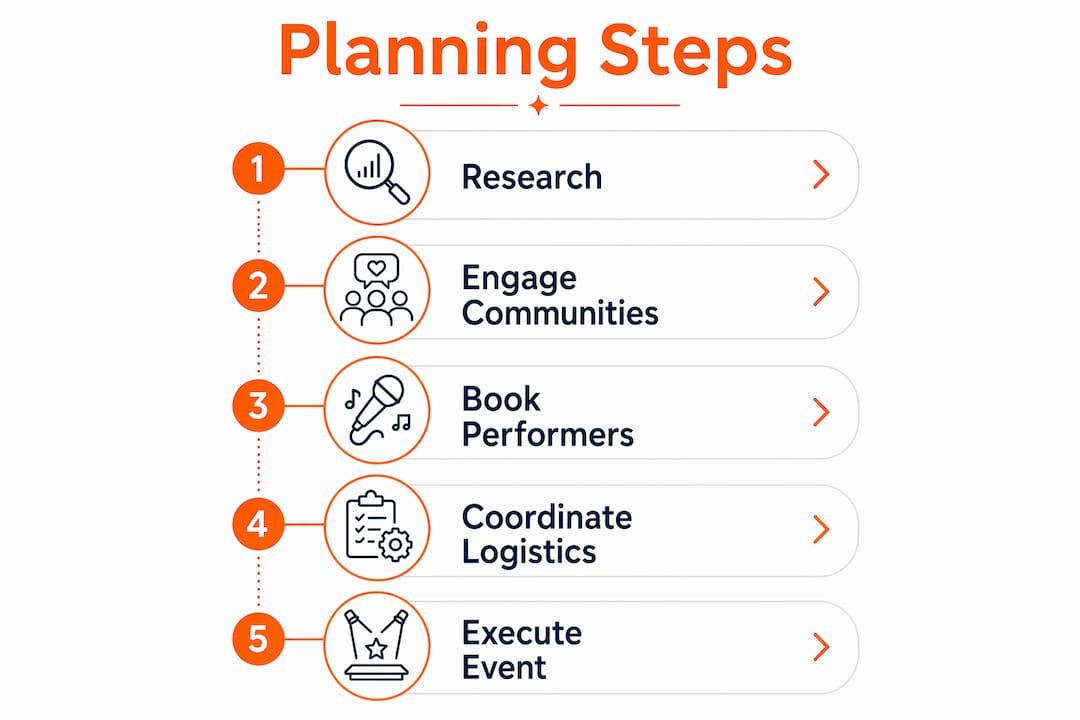
Effective planning for cultural fusion entertainment follows a clear sequence. Event organizers should begin logistics at least 6 months before the event date to manage permits and budget effectively. Starting late compresses every decision that follows.
Step-by-step planning framework:
- Define the cultural communities you are honouring. Consult with community representatives early. Authentic representation requires input from the communities themselves, not assumptions made from the outside.
- Set a realistic budget. Community venues typically cost $800–$2,000 for 200–300 people, and permits range from $50 to $500 depending on location. Factor in performer fees, sound equipment, translation services, and multilingual signage separately.
- Book performers from within the community. Agencies that specialise in cultural entertainment can source authentic performers. For the DJ component, work with a specialist like Dj-phoenix who has a documented history with multicultural programming.
- Arrange accessibility services. Multilingual marketing and culturally sensitive signage increase event outreach and invite greater community participation than static, single-language promotion. Apply the same logic to on-site communications.
- Confirm the programme sequence with your MC. The order of performances matters. Placing the most participatory element early warms the room; saving the highest-energy act for the peak hour keeps momentum.
- Market through the right channels. Reach each cultural community through its own media, social networks, and community organisations. A single English-language press release will not reach a multilingual audience.
The table below summarises the core budget categories for a mid-scale multicultural event serving 200–300 guests.
| Budget Category | Estimated Range |
|---|---|
| Venue rental | $800–$2,000 |
| Permits and licences | $50–$500 |
| Cultural performers | $500–$3,000+ |
| DJ services | $800–$2,500 |
| Translation and signage | $200–$800 |
| Multilingual marketing | $300–$1,000 |
Pro Tip: Check the local religious calendar, school schedule, and city events calendar before locking in your date. Scheduling conflicts with religious holidays or major city festivals affect permits, vendors, and audience availability in ways that are very difficult to recover from.
For event coordination support, working with a specialist who understands multicultural programming from the inside saves significant planning time.
What challenges arise with multicultural entertainment?
Every multicultural event carries logistical and cultural complexity. Knowing the common pitfalls in advance is the most reliable way to avoid them.
Logistical challenges:
- Permit requirements vary by municipality and by the type of performance. Outdoor amplified music, open flames for cultural cooking demonstrations, and large crowd gatherings each carry separate permit categories.
- Vendor coordination across multiple cultural performers requires a single point of contact who understands each act’s technical requirements. A tabla player and a steel pan ensemble have very different sound setup needs.
- Timing conflicts between acts, especially when performers travel from different cities, require buffer time built into the schedule.
Cultural sensitivity challenges:
- Tokenism is the most common failure mode. Featuring a single performer from a cultural community to “represent” that community reads as superficial. Depth matters more than breadth.
- Inclusion must be holistic, involving accessibility, engagement, and cultural authenticity for effective multicultural events. A performance that guests cannot understand or contextualise does not achieve its purpose.
- Cultural protocols differ. Some traditions require specific staging, specific audience behaviour, or specific introductions. Consult performers directly about their requirements.
Audience engagement challenges:
- Passive audiences disengage quickly from unfamiliar cultural content. Hands-on interactive elements foster educational and personal connections among attendees, enhancing the overall event impact.
- Multilingual guests need multilingual support. A unilingual programme alienates a portion of the audience from the first announcement.
Pro Tip: Build community partnerships before the event, not during it. Local cultural organisations, community centres, and diaspora associations are the most reliable source of authentic performers, cultural advisors, and promotional reach.
Exploring unique live music formats that blend traditions can also resolve the engagement challenge. When the music itself crosses cultural lines, the audience follows naturally.
Key takeaways
Multicultural event entertainment succeeds when cultural authenticity, accessibility, and logistical precision work together from the first planning meeting to the final performance.
| Point | Details |
|---|---|
| Start planning early | Begin logistics at least 6 months before the event to manage permits, bookings, and budget. |
| Budget with specificity | Venue, permits, performers, and translation services each carry separate costs; plan for all of them. |
| Prioritise authenticity | Book performers from within the cultural communities you are honouring and consult community advisors. |
| Build in accessibility | Multilingual signage and translation services are not optional; they determine whether inclusion is real. |
| Avoid tokenism | Depth of cultural representation matters more than the number of cultures represented. |
Why multicultural entertainment is worth getting right
I have worked events where the multicultural programme was assembled at the last minute, and I have worked events where it was planned with the same rigour as a concert production. The difference in audience response is not subtle. When guests from a specific cultural background see their music, their dance, or their food treated with genuine respect and craft, the energy in the room shifts. You can feel it.
The mistake I see most often is treating cultural entertainment as a checkbox. An organizer books one act from each community and considers the work done. What actually works is building a programme where each element connects to the next, where the DJ set reinforces what the dancers just performed, and where the MC gives every act the context it deserves. That requires a specialist, not a generalist.
Wedding planners, in particular, underestimate how much the music carries the cultural weight of the evening. A Persian wedding where the DJ cannot transition between traditional Iranian music and contemporary pop without losing the dance floor is a missed opportunity. The same evening with a DJ who knows both traditions fluently becomes a celebration that both families remember for years.
The other thing I would tell any planner: do not wait until the event to discover what the community needs. The consultation happens before the contract is signed.
— Reza
Dj-phoenix for your multicultural event
Dj-phoenix brings over three decades of experience in multicultural entertainment to every event, from intimate wedding receptions to large-scale corporate galas. His curated playlists span Persian classical music, Afrobeats, Latin rhythms, South Asian bhangra, and contemporary pop, with the technical skill to transition between them without losing a single guest on the dance floor.
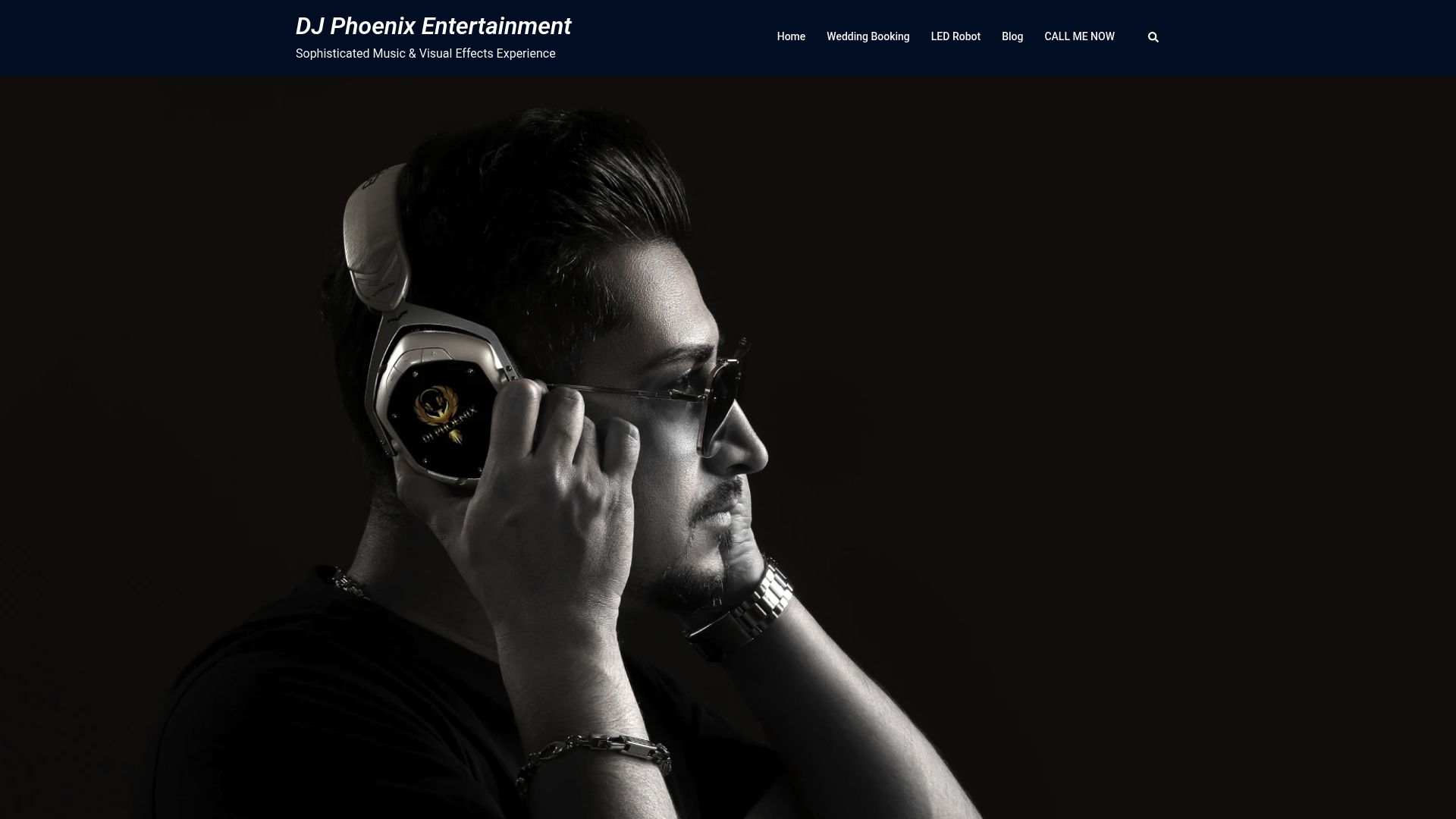
Whether you are planning a multicultural wedding, a corporate diversity celebration, or a private cultural gathering, Dj-phoenix offers tailored entertainment packages built around your guest list and your cultural priorities. His work with prestigious clients like Mercedes-Benz and FW Sports reflects the calibre of experience he brings to every booking. Explore the wedding packages or review the performance gallery to see the artistry in action.
FAQ
What is multicultural event entertainment?
Multicultural event entertainment is the deliberate integration of cultural performances, artistic traditions, and heritage-based activities designed to promote inclusivity and celebrate diverse customs. It applies across weddings, corporate functions, festivals, and private celebrations.
What should I include in a multicultural entertainment programme?
A strong programme includes live cultural music, traditional dance performances, interactive workshops such as culinary demonstrations or craft activities, and a multilingual MC to connect each act. A culturally fluent DJ set ties the entire programme together.
How far in advance should I plan multicultural entertainment?
Begin logistics at least 6 months before the event date to manage permits, performer bookings, and budget effectively. Starting earlier gives you access to the best performers and the most suitable venues.
How do I avoid tokenism in multicultural event planning?
Tokenism occurs when a single performer is expected to represent an entire cultural community. Avoid it by consulting community representatives directly, booking multiple acts from each tradition you are honouring, and giving each performance proper contextual introduction.
What does multicultural entertainment cost for a mid-scale event?
For an event serving 200–300 guests, venue rental typically runs $800–$2,000, permits range from $50 to $500, and performer fees vary widely based on the acts booked. Translation services and multilingual signage add $200–$800 to the total budget.