
Upscale corporate entertainment standards come down to seven non-negotiable criteria: audience fit, brand alignment, production rigour, timing and integration, risk and compliance, accessibility and inclusivity, and measurable outcomes. Every booking decision you make should be filtered through those seven lenses before a contract is signed.
The organising principle behind every elite corporate event is a five-stage planning methodology: Audience Analysis, Objective Alignment, Format Selection, Provider Evaluation, and Experience Design. That sequence prevents the scattered, instinct-driven procurement that turns premium budgets into forgettable evenings.
TL;DR — enforce these seven standards at shortlist stage:
- Audience fit: Does the format genuinely resonate with this specific guest profile?
- Brand alignment: Does the act’s content, wardrobe, language, and public reputation reflect your organisation’s values?
- Production rigour: Can the supplier deliver the technical quality the venue and format demand?
- Timing and integration: Is the entertainment woven into the run-of-show, not bolted on at the end?
- Risk and compliance: Are insurance, permits, and contingency plans confirmed in writing?
- Accessibility and inclusivity: Does the experience work for every guest, regardless of ability or background?
- Measurable outcomes: Are success metrics defined before the event, not after?
Table of Contents
- What do upscale corporate entertainment standards actually require?
- Which entertainment formats suit high-end corporate events?
- How does the five-stage planning process work in practice?
- How do you vet entertainment suppliers to upscale standards?
- What production and technical standards protect an upscale impression?
- What does upscale corporate entertainment cost in Canada?
- Risk management, accessibility, and Canadian compliance
- How do you measure success and amplify the experience after the event?
- How Dj-phoenix meets upscale corporate entertainment standards
- Sustainability and eco-friendly best practices for upscale Canadian corporate events
- Contingency planning for high-end events: what to prepare for
- Key takeaways
- What actually separates good corporate entertainment from exceptional
- Dj-phoenix: a Canada-based partner for upscale corporate entertainment
- Useful sources and further reading
What do upscale corporate entertainment standards actually require?
Premium business gatherings are defined less by budget than by the precision with which every standard is enforced. A well-matched mid-budget act that aligns with your event objective will consistently outperform an expensive headliner booked on notoriety alone.
Audience fit means more than demographics. It means understanding whether your guests are peers celebrating a milestone, clients being rewarded for loyalty, or prospects being introduced to a brand for the first time. Each scenario calls for a different energy, format, and pacing.

Brand alignment is the standard most planners underestimate. Four dimensions govern it: content (what the act says and performs), wardrobe (how the act presents itself on stage), language (register, humour, and cultural sensitivity), and public reputation (what a quick search reveals about the performer’s off-stage conduct). All four should appear as explicit clauses in your supplier brief.
Production rigour sets the ceiling on perceived quality. A world-class performer in an underpowered room with poor sightlines reads as mediocre. The venue’s technical infrastructure must be designed to support the act, not the other way around.
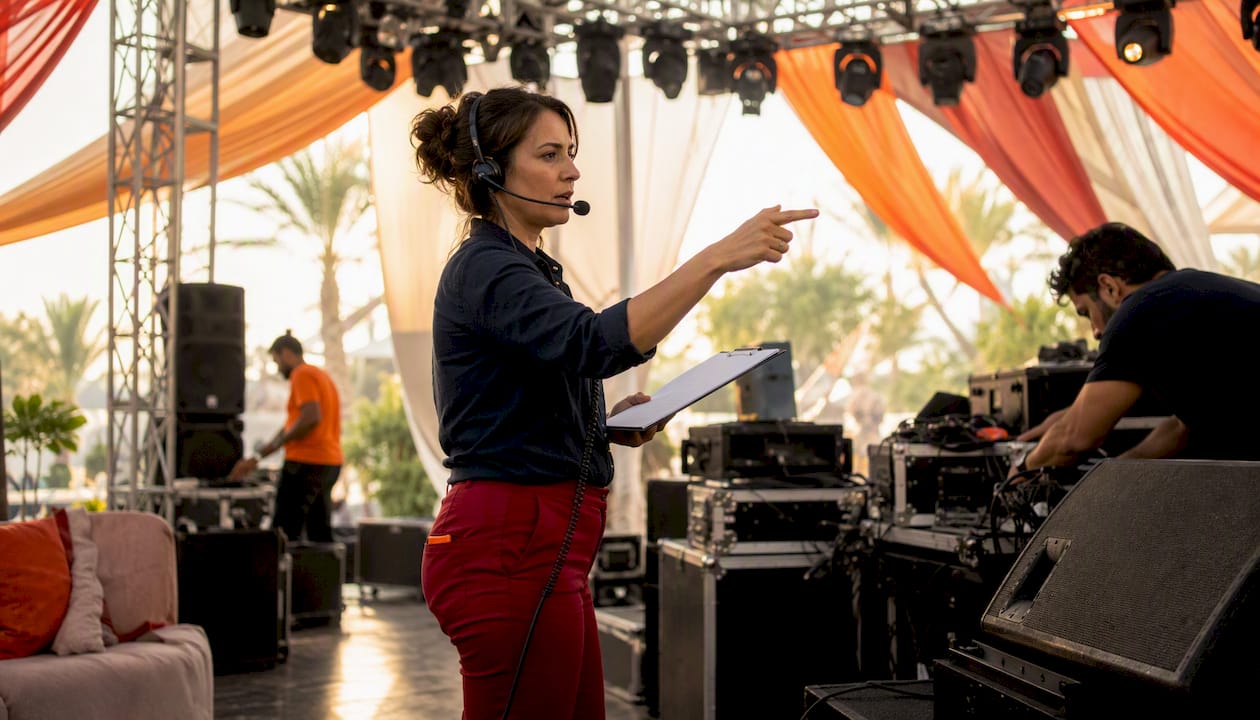
Timing and integration means the entertainment is sequenced into the programme with precision: after the keynote, before dessert, with a five-minute buffer for transitions. Late starts and abrupt endings erode the premium impression regardless of talent quality.
Risk and compliance belong in every contract. Confirm general liability coverage, technical riders, and load-in windows before you issue a purchase order.
Accessibility and inclusivity is both an ethical obligation and a brand-reputation safeguard. An inclusive entertainment checklist should be part of every RFP package.
Sustainability expectations are increasingly a procurement standard in Canada. Specify low-waste catering, digital materials, and carbon-offset travel in your brief.
Pro Tip: The most common failure at elegant corporate functions is the “safe but forgettable” trap: booking a generic act because it carries no risk. Upscale standards demand that you take a considered creative risk, backed by audience data, rather than defaulting to the most inoffensive option available.
Which entertainment formats suit high-end corporate events?
The format you choose should be a direct expression of your event objective. Reviewing your types of corporate event entertainment options before shortlisting suppliers is the fastest way to align format with purpose.
- VIP gala headline acts (recognition galas, annual awards): Ideal when the goal is to honour achievement and create a shared emotional peak. Requires full staging, professional lighting rigs, and a dedicated sound engineer. Production complexity is high.
- Private culinary and chef experiences (client reward dinners, executive retreats): A sommelier-led tasting or live chef theatre keeps conversation flowing while reinforcing exclusivity. Pairs naturally with premium wine procurement for VIP hospitality. Production complexity is low to moderate.
- Destination retreats with curated evenings (incentive travel, senior leadership offsites): The entertainment programme should mirror the destination’s cultural identity. Ambient roving artists or local musicians create a sense of place that a generic DJ set cannot replicate.
- Immersive and AR/XR experiences (product reveals, innovation summits): High-impact for brand storytelling, but planners often underestimate the coordination overhead. Staffing, timing buffers, and contingency plans materially increase both production costs and timeline needs.
- Curated live music ensembles (networking receptions, conference dinners): A jazz quartet or string ensemble elevates ambient energy without competing with conversation. Specify acoustic or amplified depending on room size.
- High-end DJ curation and emcee services (galas, product launches, multicultural celebrations): A skilled DJ who reads the room and transitions between musical styles maintains energy across the full arc of an event. For multicultural audiences, cultural fusion programming is a distinct discipline, not a playlist afterthought.
- Experiential team-building activations (conference energisers, leadership summits): Interactive game shows, mentalists, and collaborative art installations work well when the objective is connection and participation. These formats require more floor space and staffing than passive entertainment.
- Ambient roving artists (cocktail receptions, pre-dinner arrivals): Caricaturists, illusionists, and living statues create memorable micro-moments without requiring a stage. They are the most flexible format for irregular venue layouts.
- Wellness and relaxation lounges (multi-day conferences, incentive programmes): Massage stations, guided breathwork, and curated sensory spaces signal that the organisation values its guests as people, not just attendees.
Luxury event producers consistently position bespoke venue curation and integrated vendor management as the differentiators that separate a premium experience from a well-funded standard one.
How does the five-stage planning process work in practice?
Successful upscale corporate entertainment follows a structured sequence that prevents scattered decision-making. The five stages below, adapted from industry methodology and the 5 C’s of event management, give you a repeatable framework with Canadian lead times.
Planning timeline
| Stage | Activity | Canadian lead time | Key deliverable |
|---|---|---|---|
| 1. Audience analysis | Guest persona mapping, cultural and accessibility needs | 10–14 weeks out | Guest persona map |
| 2. Objective alignment | Define top three measurable outcomes | — | Objectives brief |
| 3. Format selection | Shortlist formats against objectives and venue | — | Format shortlist (top 3) |
| 4. Provider evaluation | RFP, vetting, contract negotiation | 6–12 weeks out | Signed contract and rider |
| 5. Experience design | Run-of-show, tech checks, rehearsal | 1–2 weeks out | Run-of-show with cues |
Note: Prime-season dates (September through December) often require booking 12+ months ahead for higher-tier talent in Canada. Build that lead time into your annual event calendar.
Stage-by-stage deliverables
- Audience analysis: Produce a guest persona map that captures seniority, cultural backgrounds, accessibility requirements, and entertainment preferences. This document governs every subsequent decision.
- Objective alignment: Articulate the top three outcomes you want guests to feel, know, or do after the event. Tie each objective to a measurable indicator.
- Format selection: Score each shortlisted format against your objectives and venue constraints. Eliminate formats that require production infrastructure the venue cannot support.
- Provider evaluation: Issue a structured RFP, conduct supplier interviews, and complete the vetting checklist (see the next section). Negotiate contract terms before issuing a deposit.
- Experience design: Build a minute-by-minute run-of-show that integrates entertainment cues with speeches, catering, and AV transitions. Confirm technical requirements and assign a single point of contact for day-of coordination.
How do you vet entertainment suppliers to upscale standards?
Vetting is where most reputational risk is either eliminated or ignored. A thorough brand event entertainment vetting process covers seven dimensions.
Supplier vetting checklist:
- Portfolio relevance: Has the supplier performed at events of comparable scale, formality, and audience profile? Request video evidence, not just a highlight reel.
- Production capability: Can they supply or integrate with professional-grade AV, lighting, and staging? Confirm technical specifications in writing.
- References: Speak directly with two recent corporate clients. Ask specifically about punctuality, professionalism under pressure, and how the supplier handled an unexpected problem.
- Insurance and liability: Require a certificate of general liability insurance (minimum $2 million CAD is standard for most Canadian corporate venues) and confirm the policy covers the event date and venue.
- Rider feasibility: Review the technical and hospitality rider before signing. An unrealistic rider is a red flag for poor event-day behaviour.
- Brand-safety vetting: Screen the performer’s public social media, recent press, and any documented complaints. All four brand-alignment dimensions — content, wardrobe, language, and reputation — must clear your organisation’s standards.
- Contingency planning: Ask explicitly: “What is your plan if you cannot perform?” A professional supplier has a named backup and a documented escalation process.
Questions to ask in supplier interviews
- Describe the most technically complex corporate event you have performed at. What was your role in the production planning?
- How do you adapt your performance when the audience energy shifts unexpectedly?
- What does your standard contract include regarding cancellation, force majeure, and liability?
- How do you handle content or language that may not suit a corporate audience?
- Who is your day-of technical contact, and how do you coordinate with the venue’s AV team?
Red flags to act on immediately: a supplier who cannot provide references, who resists adding brand-alignment clauses to the contract, or who has no documented contingency plan. Walk away from any supplier who treats the rider as non-negotiable before you have even discussed the event brief.
Pro Tip: When briefing a DJ or emcee for a multicultural corporate audience, a structured DJ brief that specifies cultural programming preferences, language expectations, and prohibited content is worth more than any verbal agreement. It protects both parties and sets a professional tone from the first conversation.
What production and technical standards protect an upscale impression?
Technical failures are the fastest way to undermine a premium experience. The production baseline for luxury corporate events treats entertainment as the anchor of the event schedule, with venue, lighting, and staging designed to support the performer’s requirements rather than forcing the performer to adapt to an underpowered space.
Minimum production standards by format:
- DJ sets: Line-array or high-output PA system sized to the room, dedicated monitor mix, professional lighting rig with at least four moving heads and wash fixtures, isolated power circuit, and a backup audio source.
- Live music ensembles: Separate monitor mixes per musician, a dedicated front-of-house engineer, and acoustic treatment or strategic staging to prevent feedback in reflective rooms.
- Immersive or AR experiences: Dedicated fibre or high-bandwidth Wi-Fi circuit, blackout capability for the activation zone, and a technical rehearsal of no less than two hours before doors open.
- Theatre or spoken-word formats: Lapel and handheld mic redundancy, confidence monitors for the performer, and a clear sightline from every seat in the room.
Rehearsal and load-in expectations:
Arrive at the venue no less than three hours before the first guest. Use the first hour for load-in and cable runs, the second for soundcheck and lighting cue programming, and the third for a full technical run-through with the emcee or performer. Confirm venue technical compatibility before the load-in date, not on the day.
Pro Tip: Staging height is one of the most underestimated decisions in production planning. A stage that is too low makes the performer invisible from the back of the room; one that is too high creates a physical distance that kills intimacy at gala dinners. For rooms under 200 guests, a 30–45 cm platform is usually the right balance. Brief your venue technical team on this before they set up.
What does upscale corporate entertainment cost in Canada?
Budget allocation for premium business gatherings should reflect the event’s primary objective. When audience engagement is the central goal, allocating roughly 15–25% of the total event budget to entertainment is a defensible investment.
Sample Canadian cost components
Ranges are indicative. Actual costs vary by city, venue, event complexity, and supplier tier.
Budget planning notes:
- Deposit requirements typically range from 25–50% of the performer fee at contract signing, with the balance due 7–14 days before the event.
- Custom content production (branded intro videos, personalised set lists, bespoke activation design) adds cost but materially raises perceived value.
- For high-attendance or championship-scale events, production costs can exceed performer fees, particularly when outdoor staging, weather protection, and generator power are required.
Scheduling guidance:
- Book local and regional talent 2–6 months out for standard corporate dates.
- For September through December events, begin supplier outreach no later than January of the same year.
- For national headliners or internationally recognised acts, a 12-month lead time is the professional standard in Canada.
Risk management, accessibility, and Canadian compliance
Every upscale corporate event in Canada carries a compliance layer that must be addressed before contracts are signed. Ignoring it exposes the organisation to financial liability, reputational damage, and potential regulatory penalties.
Insurance requirements:
- General liability: Minimum $2 million CAD per occurrence is the standard requirement at most Canadian hotel ballrooms and convention centres. Some venues require $5 million CAD for large-scale productions.
- Liquor liability: Required whenever alcohol is served. Confirm whether the venue’s licence covers your event or whether you need a Special Occasion Permit (SOP) through your provincial liquor authority (e.g., the AGCO in Ontario, the BCLDB in British Columbia).
- Performer/entertainer insurance: Confirm the supplier carries their own professional liability and equipment coverage. Do not assume the venue’s policy extends to third-party performers.
- Event cancellation insurance: Protects against financial loss from unforeseen cancellations, including weather events, venue closures, and performer illness.
Accessibility obligations:
Canada’s Accessible Canada Act (S.C. 2019, c. 10) establishes a federal framework for accessibility in federally regulated spaces, and Ontario’s Accessibility for Ontarians with Disabilities Act (AODA) sets enforceable standards for events in that province. At minimum, upscale corporate events should provide:
- Wheelchair-accessible entrances, seating areas, and washrooms
- Captioning or ASL interpretation for keynote and entertainment segments where feasible
- Sensory-considerate programming (volume management, lighting intensity options)
- Dietary accommodations communicated in advance
Accessibility is not only a legal obligation. Organisations that visibly prioritise inclusive programming signal a standard of care that resonates with guests, sponsors, and media alike.
Local compliance points:
- Noise bylaws vary by municipality. In Toronto, outdoor amplified sound after 11:00 PM in most zones requires a permit or exemption. Check with your local municipal office before finalising load-out times.
- Liquor licensing rules differ by province. Always confirm your event’s specific permit requirements with the relevant provincial authority rather than relying on general guidance.
- Fire code occupancy limits apply to all entertainment configurations. Confirm that staging, décor, and activation footprints do not reduce emergency egress below the venue’s permitted capacity.
How do you measure success and amplify the experience after the event?
A premium entertainment investment deserves a rigorous post-event evaluation. Defining your metrics before the event is what separates a professional programme from one that simply felt good in the room.
Quantitative and qualitative success metrics:
- Net Promoter Score (NPS) from a post-event survey, benchmarked against your organisation’s previous events
- Audience survey items tied directly to your three stated objectives (e.g., “Did the evening reinforce your confidence in our brand?”)
- Social engagement: organic posts, mentions, and story shares from guests during and after the event
- Sponsor satisfaction scores, where applicable
- Attendance rate versus registered guests (a proxy for perceived event value)
- Emcee and entertainment segment ratings from the post-event survey
Post-event measurement checklist:
- Deploy a survey within 24 hours of the event, while impressions are fresh.
- Review social listening data for brand mentions and sentiment in the 48 hours following the event.
- Debrief with your entertainment supplier to capture their observations on audience response and technical performance.
- Document what worked and what did not in a formal post-event report, tied to the three objectives set at the Objective Alignment stage.
Amplification tactics that respect performer rights:
- Commission a highlight edit (60–90 seconds) for internal communications and social channels. Confirm usage rights with the performer before the event, not after.
- Create short social cuts (15–30 seconds) from the entertainment segment for LinkedIn and Instagram. Upscale audiences respond to polished, cinematic content.
- Send VIP follow-up communications that reference a specific entertainment moment, reinforcing the memory of the experience.
- For audience engagement that generated significant participation, consider gated content (a curated playlist, a recipe from the chef experience) as a post-event touchpoint.
How Dj-phoenix meets upscale corporate entertainment standards
Dj-phoenix maps directly to all seven standards through a service model built for the calibre of event this article describes.
How Dj-phoenix aligns with the seven standards:
- Audience fit: Dj-phoenix’s defining capability is reading a diverse crowd in real time and curating playlists that resonate across cultural backgrounds, age groups, and energy levels. Prestigious clients including Mercedes-Benz and FW Sports have engaged Dj-phoenix precisely for this skill.
- Brand alignment: Every engagement begins with a structured briefing process that covers content expectations, wardrobe standards, language register, and brand-sensitive programming. Nothing goes on the playlist or the microphone without prior alignment.
- Production rigour: Dj-phoenix performs with professional-grade sound equipment and can advise on staging and lighting requirements to ensure the production environment matches the event’s prestige.
- Timing and integration: Run-of-show integration is standard practice. Dj-phoenix coordinates directly with the venue’s technical team and the event’s day-of contact to confirm cue sequences, transition timing, and mic handoffs.
- Risk and compliance: Dj-phoenix carries professional liability coverage and operates with documented contingency protocols for equipment failure and schedule disruption.
- Accessibility and inclusivity: Multicultural programming is a core competency, not an add-on. Dj-phoenix’s experience with diverse audiences means inclusive entertainment is built into the brief from the first consultation.
- Measurable outcomes: Post-event debrief and feedback review are part of the service model, giving planners the data they need for post-event reporting.
Briefing template for DJ and emcee suppliers (adapt for your RFP):
- Event type and objective (recognition, networking, product launch, reward)
- Guest profile: seniority, cultural backgrounds, age range, accessibility requirements
- Brand alignment requirements: content restrictions, language register, wardrobe expectations
- Technical requirements: room dimensions, PA system, lighting rig, power availability
- Run-of-show integration: entertainment start/end times, transition cues, speech coordination
- Contingency plan: backup equipment, escalation contact, weather or schedule disruption protocol
Pro Tip: When evaluating a DJ or emcee for an upscale corporate event, ask to hear a live mix or a recorded set from a comparable corporate engagement, not a club or festival performance. The discipline required to hold a room of senior executives through dinner, speeches, and dancing is a distinct skill from high-energy crowd work. The two are not interchangeable.
Sustainability and eco-friendly best practices for upscale Canadian corporate events
Sustainability has moved from a nice-to-have to a procurement standard at premium business gatherings in Canada. The most credible approach integrates environmental responsibility into the event brief from the outset, rather than retrofitting it as a communications exercise.
Practical sustainability standards for upscale events:
- Venue selection: Prioritise venues with LEED certification or documented energy management programmes. Many of Canada’s leading hotel properties now publish sustainability scorecards on request.
- Catering and beverage: Specify locally sourced, seasonal menus and work with suppliers who can demonstrate provenance. Reduce single-use plastics in all food and beverage service.
- Production materials: Replace printed programmes, menus, and signage with digital equivalents wherever the guest experience permits. For physical materials, specify FSC-certified paper and soy-based inks.
- Entertainment travel: Where talent is travelling from outside the host city, build carbon-offset costs into the production budget. For local events, prioritise local and regional talent as a first preference.
- Waste management: Require the venue and all suppliers to provide a post-event waste diversion report. A credible upscale event should target a minimum 70% waste diversion rate.
- Energy use: Specify LED lighting rigs for all production. Modern LED moving heads consume a fraction of the power of traditional tungsten fixtures and produce comparable output.
Canada’s federal government publishes procurement guidance for sustainable events through Environment and Climate Change Canada, and several provincial governments have their own green event standards. Aligning your event brief with those frameworks adds a layer of third-party credibility to your sustainability claims.
Contingency planning for high-end events: what to prepare for
At the level of exclusive event planning, a contingency plan is not a document you hope never to use. It is a professional obligation that your guests, sponsors, and senior stakeholders expect to exist.
Weather and outdoor event disruptions:
- Define a weather decision threshold in the contract: at what wind speed, temperature, or precipitation level does the outdoor plan convert to the indoor contingency?
- Confirm the indoor backup space at the time of venue booking, not the week before the event.
- For destination events in Canadian winter months, build a 24-hour schedule buffer for travel disruptions affecting talent and key production personnel.
Performer cancellations:
- Require a named backup or substitution clause in every entertainment contract. The clause should specify the standard of replacement (comparable calibre, same format) and the timeline for notification.
- Maintain a shortlist of two pre-vetted backup suppliers for every entertainment category you book. This is standard practice at the level of luxury corporate events.
- Confirm that your event cancellation insurance covers partial programme disruption, not only full event cancellation.
Technical failures:
- Require all primary AV and sound equipment to have a documented backup: a second laptop or media server, a spare microphone for every active channel, and a backup power source for critical systems.
- Assign a dedicated technical troubleshooter who is not the performer and not the event producer. Their sole responsibility is equipment monitoring and rapid response.
Venue or catering disruptions:
- Hold a signed secondary venue agreement for events where the primary venue carries material risk (heritage buildings, outdoor marquees, venues under renovation).
- For catering, confirm the supplier’s own contingency for staffing shortages and supply chain disruptions, particularly for events booked more than six months in advance.
The standard that separates an upscale event from a well-intentioned one is not whether disruptions occur. It is whether the plan in place makes the disruption invisible to the guest.
Key takeaways
Upscale corporate entertainment standards require seven enforceable criteria, a five-stage planning methodology, and a vetting process that addresses brand alignment, production capability, and compliance before any contract is signed.
| Point | Details |
|---|---|
| Seven core standards | Enforce audience fit, brand alignment, production rigour, timing, risk/compliance, inclusivity, and measurable outcomes at every booking. |
| Five-stage methodology | Use Audience Analysis, Objective Alignment, Format Selection, Provider Evaluation, and Experience Design as your planning sequence. |
| Lead times matter | Book local talent 2–6 months out; prime-season national headliners require 12+ months lead time in Canada. |
| Budget allocation | Allocate 15–25% of total event spend to entertainment when engagement is the primary objective. |
| Dj-phoenix for corporate events | Dj-phoenix delivers structured briefing, multicultural programming, and professional production for upscale corporate events across Canada. |
What actually separates good corporate entertainment from exceptional
Most planners focus on the headline act. The practitioners who consistently deliver exceptional results focus on the transitions.
The moment a keynote speaker hands the room to a DJ, or a dinner service gives way to a live performance, is where the perceived quality of the entire event is either confirmed or lost. A clumsy transition, a dead-air gap, or a volume level that forces guests to shout over the music erases the goodwill built over the preceding two hours. The headline act is the easy part to get right. The micro-decisions around it are where artistry lives.
Briefing an emcee or DJ for an upscale corporate crowd requires a different conversation than briefing for a general entertainment event. The questions that matter are not “what is your style?” but “how do you read a room that has just sat through two hours of presentations?” and “how do you manage the energy shift between a formal awards segment and an open dance floor?” Those are the questions that reveal whether a supplier has the pedigree for this calibre of work.
One concrete example: the timing of the headline entertainment moment relative to the dinner service. Placing the peak entertainment moment immediately after the main course, rather than after dessert, captures guests at their highest energy and attention level. By the time dessert is served, the memory of the peak moment is already forming. That sequencing decision costs nothing and raises the perceived value of the entire evening.
Dj-phoenix’s approach to Canadian premium events is grounded in exactly this kind of precision: reading the room, managing transitions with discipline, and treating every cue as a deliberate choice rather than a default.
Dj-phoenix: a Canada-based partner for upscale corporate entertainment
For corporate event planners who have worked through the standards in this guide and are ready to shortlist a provider, Dj-phoenix brings a rare combination of multicultural programming expertise, professional production capability, and a structured briefing process designed specifically for upscale corporate work.
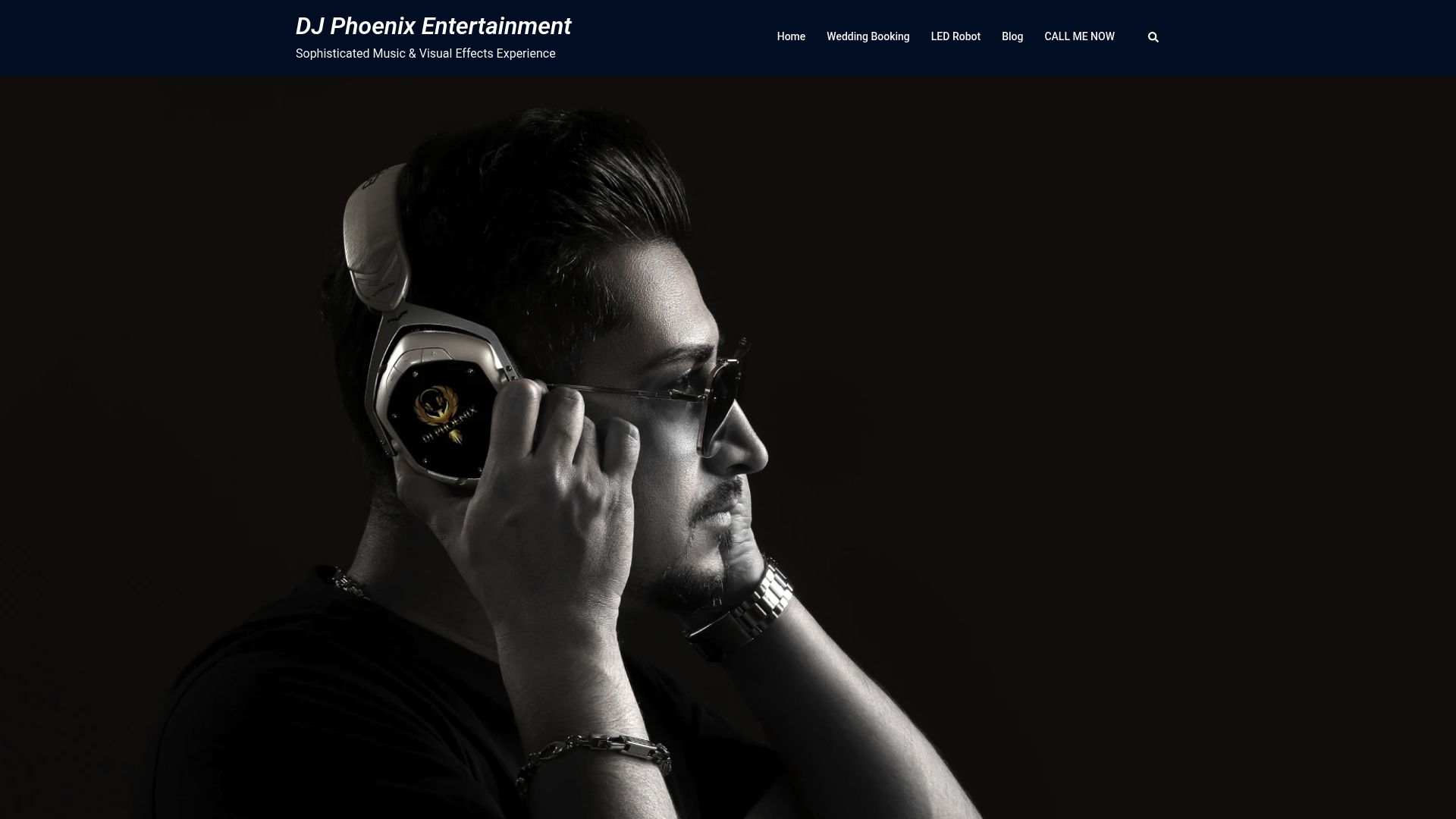
Dj-phoenix’s corporate service offering covers DJ performance, emcee services, sound system provision, and consultation on music and entertainment planning, all delivered with the precision that premium business gatherings demand. The track record includes prestigious engagements with Mercedes-Benz and FW Sports, where the brief required sophisticated crowd reading, brand-aligned content, and flawless technical execution. For planners managing multicultural guest lists, Dj-phoenix’s fluency across musical traditions and cultural programming conventions is a material advantage over a generalist supplier.
To request a proposal or discuss your event brief, visit the corporate DJ services page or review the performance gallery to assess production quality and event fit before your first conversation.
Useful sources and further reading
The resources below support deeper research into the standards, formats, and compliance requirements covered in this guide.
Dj-phoenix planning guides:
- Types of corporate event entertainment: a planner’s guide
- Audience engagement at corporate parties: your 2026 guide
- Inclusive event entertainment checklist for planners
- Multicultural event DJ brief explained for Canadian planners
- Brand event entertainment best practices for corporate planners
Partner resources:
- Bridge PR: hospitality PR and influencer talent management — useful for post-event amplification strategy and media relations for high-profile corporate events.
- FU Wine: why corporate buyers choose premium wine — guidance on beverage procurement for VIP hospitality and culinary entertainment experiences.
Compliance and licensing:
| Resource | Purpose |
|---|---|
| Alcohol and Gaming Commission of Ontario (AGCO) | Special Occasion Permits and liquor licensing for Ontario events |
| BC Liquor Distribution Branch (BCLDB) | Liquor licensing and event permits for British Columbia |
| Environment and Climate Change Canada | Federal guidance on sustainable event procurement |
| Your local municipal office | Noise bylaw permits, outdoor event licences, and occupancy approvals |
Always confirm current permit requirements directly with the relevant authority before contracting entertainment or catering suppliers, as rules and fee structures change periodically.