Cultural fusion event entertainment is defined as the deliberate blending of two or more cultural art forms, including music, dance, visual arts, and interactive experiences, into a single cohesive event programme. The 2026 Surrey Fusion Festival demonstrated the scale this concept can reach, with over 50 cultural pavilions staged across 8 stages over two days. The professional production When the Sun Rises showed what depth looks like, combining salsa, Kathak, and Bharatanatyam with a unified live musical score built by 9 musicians from Latin and Indian traditions. For event planners and hosts, understanding this model is the first step toward designing multicultural entertainment events that audiences remember long after the final performance.
What is cultural fusion event entertainment and why does it matter?
Cultural fusion event entertainment, known in the performing arts world as cross-cultural or intercultural programming, places authenticity and community at its centre. It goes well beyond booking acts from different countries on the same bill. The goal is a programme where each tradition genuinely informs the others, producing something new without erasing what makes each culture distinct.
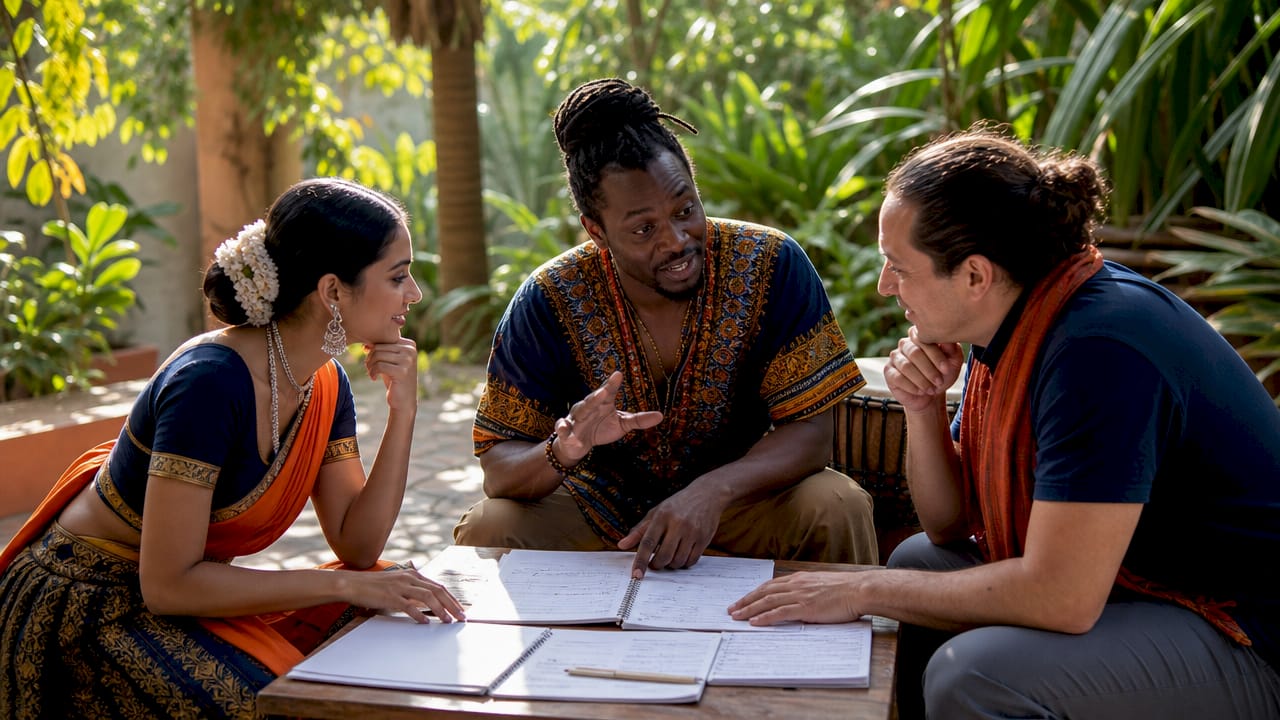
The social impact is significant. Fusion events connect people through music and positivity, offering space to celebrate togetherness in a way that passive concerts rarely achieve. When attendees experience a Sufi vocalist trading phrases with a Latin percussionist, or watch Bharatanatyam footwork synchronise with salsa timing, they witness cultural dialogue in real time. That experience builds empathy and community in a way that a single-genre show simply cannot.
For event planners, the practical implication is clear. You are not just booking talent. You are curating a shared experience that carries social and artistic meaning. That responsibility shapes every decision from venue selection to rehearsal scheduling.
What prerequisites and resources do you need before planning a fusion event?
Preparation is the foundation of any successful community cultural showcase. Rushing into bookings without a clear framework produces disjointed programmes that feel like a variety show rather than a unified celebration.
Identify your cultural partners first
Begin by mapping the cultural communities you want to represent and reaching out to established groups, dance academies, and musicians within each tradition. Authentic representation requires genuine collaboration, not tokenism. The 2026 Good Medicine Youth Group event in Central Saanich showed how youth-led cultural programming can revitalise traditions and generate real community energy when the right partners are involved from the start.
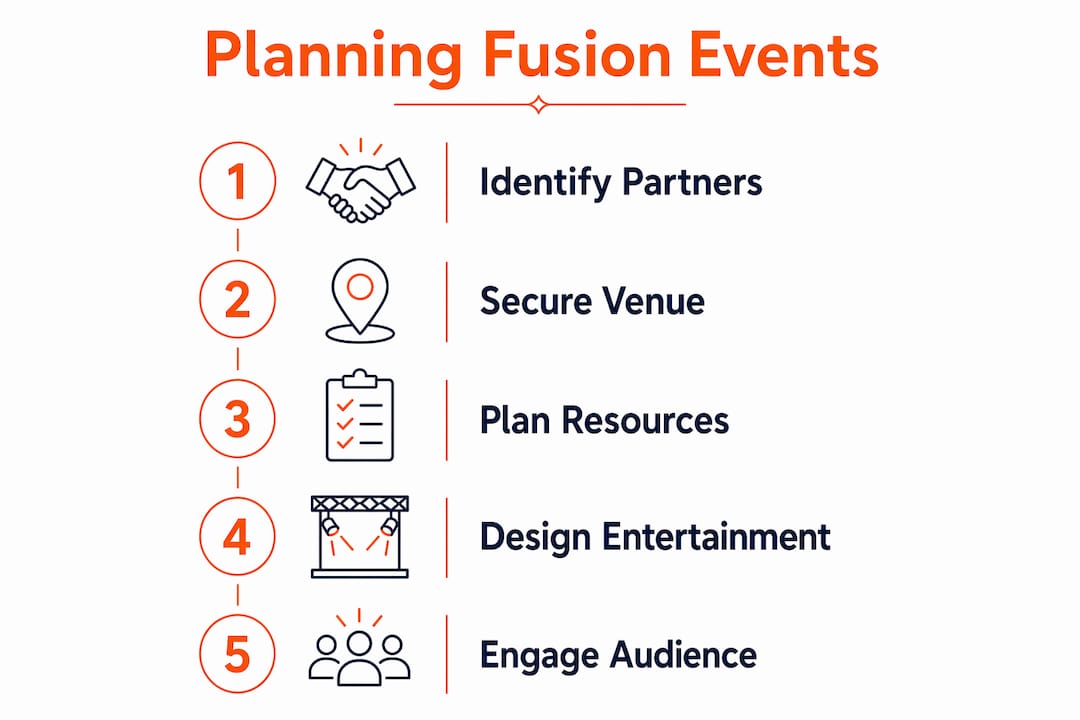
Secure a venue built for multiple activations
Multi-stage or multi-zone venues are non-negotiable for fusion festival entertainment at scale. You need separate spaces for live performances, interactive workshops, and cultural displays so that audiences can move freely without one activity disrupting another. Dj-phoenix works with a range of event venues suited to exactly this kind of layered programming.
Plan your resource categories carefully
| Resource category | Key considerations |
|---|---|
| Performers | Fees, travel, rehearsal time, technical riders |
| Venue | Stage count, acoustics, accessibility, permits |
| Interactivity | Workshop facilitators, materials, space allocation |
| Technical support | Sound systems, lighting, multilingual signage |
| Budget contingency | 15–20% reserve for last-minute changes |
Budget planning must account for artist fees, technical support, and interactive components as separate line items. Underestimating technical costs is the most common planning error at fusion events, particularly when cross-genre music requires specialised sound mixing.
Pro Tip: Build your thematic concept before you book a single act. Productions like When the Sun Rises spent two years developing a shared artistic language around themes of migration and resilience. Even a community-scale event benefits from one unifying idea that connects every performance on the programme.
How do you design immersive fusion entertainment blending music, dance, and activities?
Designing a fusion event programme requires a structured approach. The artistry lies in the sequencing and the depth of collaboration between performers, not simply in placing diverse acts side by side.
Define a unifying theme. Choose a concept that resonates across cultures, such as migration, resilience, or celebration of harvest. Thematic unity transforms a collection of performances into a coherent artistic statement. Every act should be able to articulate how their contribution connects to that theme.
Commission collaborative compositions. Invite musicians from different traditions to create original pieces together rather than performing their repertoire in sequence. The When the Sun Rises model, where Latin and Indian musicians built a shared score over two years, produces results that neither tradition could achieve alone.
Sequence performances to build narrative arc. Open with accessible, high-energy acts to draw audiences in. Place the most complex collaborative performances at the programme’s peak. Close with a participatory moment that brings the full cast and audience together.
Integrate interactive activities between performances. A May 2026 community cultural celebration featured 15+ countries with interactive weaving workshops and passport programmes that kept attendees engaged between stage acts. These activities serve as both entertainment and education.
Rehearse transitions as rigorously as the performances themselves. The moments between acts, the changeovers, the introductions, and the technical resets, define the audience’s experience as much as the performances do. Assign a dedicated stage manager to each transition.
Incorporate youth-led showcases. Youth performers bring authenticity and energy that professional acts sometimes lack. They also signal to community members that the event is genuinely invested in cultural continuity, not just spectacle.
Pro Tip: For music-led fusion events, work with a DJ or music director who can read the crowd and transition between genres without losing the room’s energy. Dj-phoenix specialises in exactly this kind of cross-genre crowd management, drawing on experience with multicultural audiences at events for clients including Mercedes-Benz and FW Sports.
What are effective audience engagement techniques in cultural fusion events?
Active participation separates a memorable fusion event from a forgettable one. Effective fusion entertainment focuses on audience participation rather than passive observation to build genuine cultural togetherness.
Low-barrier participation techniques
The most effective entry points require no prior cultural knowledge. Call-and-response singing, rhythm clapping, and simple movement prompts invite every attendee to participate regardless of background. These techniques work because they are universal. Every culture has a tradition of communal musical response, and tapping into that instinct creates immediate connection.
Roaming performers extend the energy beyond the main stage. A percussionist walking through the crowd, a dancer performing in the food vendor area, or a storyteller engaging small groups between acts all maintain the event’s atmosphere during natural lulls.
Gamification through passport programmes
Cultural passport programmes significantly increase attendee engagement by encouraging exploration beyond comfort zones. Attendees collect stamps from different cultural booths, which creates a structured reason to interact with traditions they might otherwise pass by. The competitive element is gentle enough to feel playful rather than pressured.
Contrasting engagement models
| Approach | Passive concert style | Active community focus |
|---|---|---|
| Audience role | Observer | Participant |
| Performer interaction | Stage-only | Roaming and direct |
| Programme structure | Linear setlist | Zoned, multi-activity |
| Cultural learning | Incidental | Intentional and structured |
| Community outcome | Shared experience | Shared identity |
Youth leadership amplifies all of these techniques. When young people from within a cultural community lead workshops or perform original work, they signal authenticity that adult-led programmes sometimes struggle to project.
What common challenges arise in fusion events and how do you solve them?
Every fusion event encounters friction. Anticipating these challenges before the event date protects both the programme’s quality and the relationships you have built with cultural partners.
Balancing authenticity with broad appeal. The temptation to simplify traditions for a general audience can strip them of meaning. Solve this by briefing emcees and programme notes writers to provide context without condescension. Audiences respect depth when it is explained clearly.
Managing transitions between diverse performance types. A Bharatanatyam piece requires a very different stage setup than a Latin percussion ensemble. Build 10-minute technical buffers into your schedule and use roaming performers or a DJ set to fill those gaps gracefully.
Avoiding cultural stereotypes. Work directly with cultural community leaders to review all promotional materials, costumes, and programme descriptions before publication. One poorly chosen image can undermine months of relationship-building.
Cross-genre music integration. Multilingual lyrics, non-Western tuning systems, and unfamiliar rhythmic structures all create technical challenges for sound engineers. Brief your audio team in advance and schedule a full technical rehearsal with all cross-genre acts together.
Accessibility and inclusivity. Provide multilingual signage, accessible pathways between zones, and sensory-friendly spaces for attendees who find high-volume performances overwhelming.
Pro Tip: Assign a dedicated cultural liaison for each community represented at your event. This person handles last-minute concerns, communicates schedule changes, and ensures their community’s performers feel respected throughout the day. This single role prevents the majority of on-site conflicts.
Key takeaways
Cultural fusion event entertainment succeeds when authentic collaboration, thematic coherence, and active audience participation are built into the programme from the planning stage forward.
| Point | Details |
|---|---|
| Define a unifying theme early | A shared concept like migration or resilience gives every act a common artistic purpose. |
| Invest in collaborative rehearsal | Deep fusion requires time; productions like When the Sun Rises rehearsed for two years. |
| Use passport programmes | Gamified exploration tools increase attendee engagement across all cultural zones. |
| Prioritise active participation | Call-and-response, roaming performers, and workshops build community beyond passive watching. |
| Assign cultural liaisons | One dedicated contact per community prevents most on-site conflicts and representation issues. |
Why fusion events are more than entertainment
I have watched the events industry treat multicultural programming as a checkbox for years. Book a few acts from different countries, add some decorative flags, and call it a cultural celebration. That approach produces polite applause and nothing more.
What I have seen work, genuinely work, is when planners commit to the uncomfortable process of deep collaboration. The When the Sun Rises production did not happen because someone had a clever concept. It happened because artists from Latin and Indian traditions spent two years building a shared musical language. That kind of investment shows. Audiences feel the difference between a programme assembled for optics and one built from real artistic dialogue.
The broader cultural value is also worth naming directly. Fusion events, when done with integrity, become spaces where communities see themselves reflected and celebrated. The Good Medicine Youth Group’s 2026 event in Central Saanich was not just a performance. It was an act of cultural revitalisation. That is a standard worth holding yourself to as a planner.
My honest advice: stop thinking of yourself as a logistics coordinator and start thinking of yourself as a facilitator of cultural connection. The logistical skills matter enormously. But the events that leave a lasting mark are the ones where the planner understood what was actually at stake.
— Reza
Dj-phoenix and your fusion event entertainment vision
Dj-phoenix brings a rare calibre of multicultural artistry to fusion events of every scale, from intimate community cultural showcases to large corporate celebrations. His curated performance gallery reflects years of experience reading diverse crowds and transitioning between genres with the precision that fusion programming demands.
For planners seeking a music director who understands the synergy between cultural traditions, Dj-phoenix offers tailored party packages that blend diverse musical styles into a cohesive, high-energy experience. His work with prestigious clients including Mercedes-Benz and FW Sports demonstrates the pedigree and professionalism that elite events require. Connect with Dj-phoenix to discuss how his expertise can serve your next multicultural event.
FAQ
What is cultural fusion event entertainment?
Cultural fusion event entertainment is the intentional blending of two or more cultural traditions, including music, dance, and interactive activities, into a unified event programme. The goal is authentic cross-cultural dialogue rather than a simple variety show format.
How long does it take to plan a quality fusion event?
A community-scale fusion event typically requires three to six months of planning. Productions with original collaborative compositions, like When the Sun Rises, require significantly longer lead times due to the rehearsal demands of cross-genre performance.
What is a cultural passport programme?
A cultural passport programme is a gamified engagement tool where attendees collect stamps or stickers from different cultural booths or zones throughout an event. It encourages exploration beyond familiar traditions and increases interaction across the full event footprint.
How do you avoid cultural stereotypes in fusion events?
Work directly with cultural community leaders to review all promotional materials, costumes, and programme descriptions before publication. Assign a cultural liaison for each represented community to flag concerns before they become public issues.
What role does a DJ play in fusion event entertainment?
A skilled DJ serves as the musical connective tissue between live performances, managing crowd energy during transitions and blending genres to maintain atmosphere. At multicultural events, the ability to read a diverse crowd and shift between cultural music styles is the defining skill.