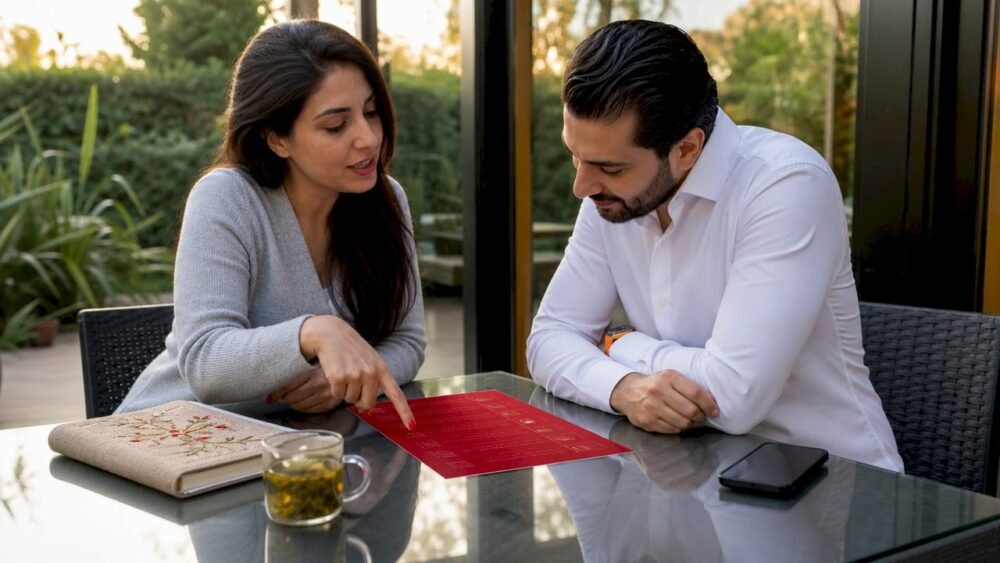
A wedding reception timeline is a structured event schedule that sequences every moment from cocktail hour to send-off, giving you and your vendors a shared roadmap for the day. Without one, even the most beautifully planned celebration can lose momentum, leaving guests restless and couples feeling rushed. The average reception lasts 4–5 hours, sometimes stretching to six depending on guest count and cultural traditions. A well-crafted wedding reception timeline explained clearly to every vendor on your team is the single most effective tool for protecting the moments that matter most.
What is the typical structure of a wedding reception timeline?
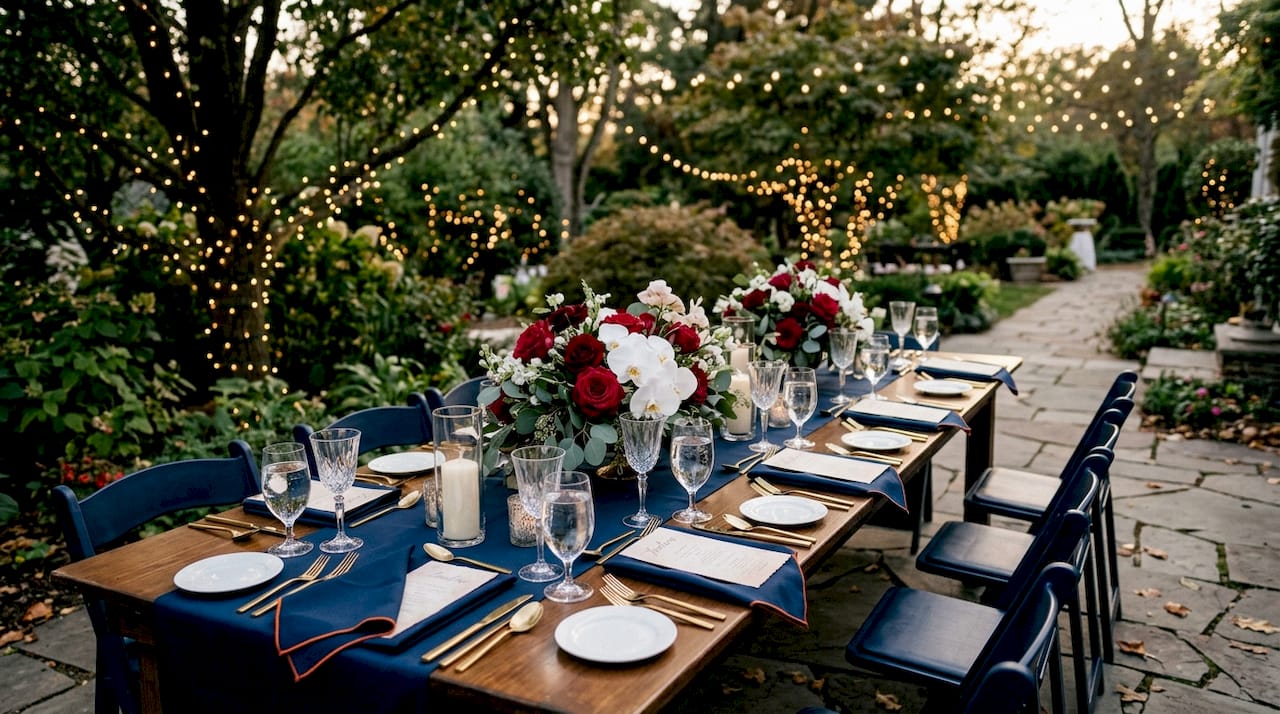
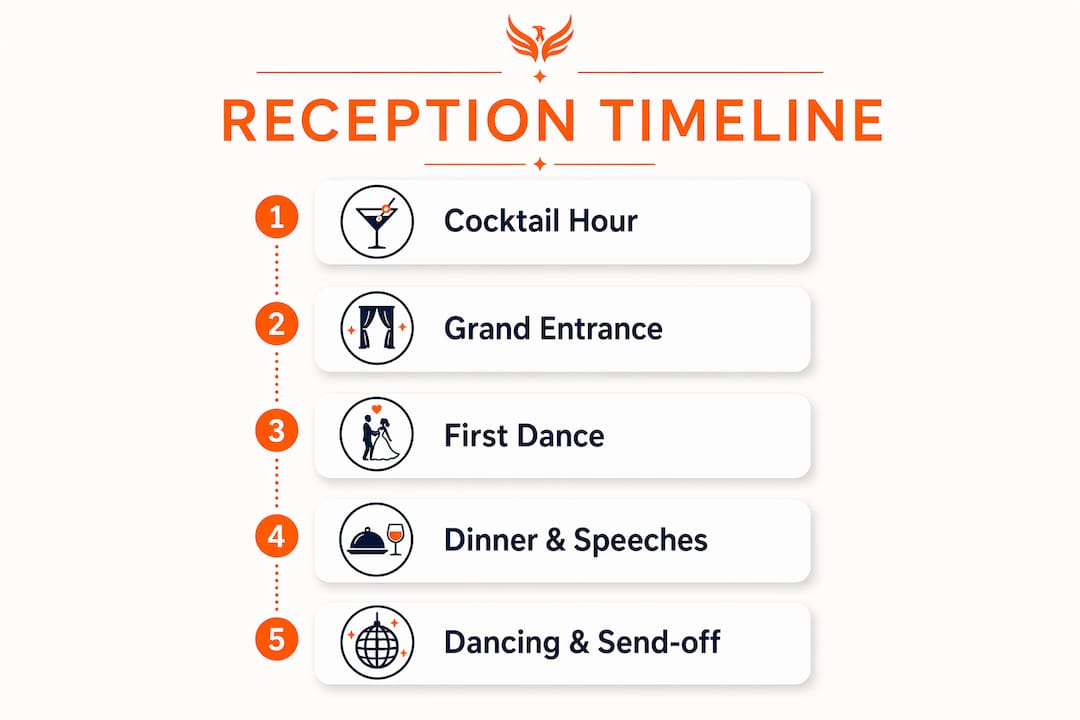
A standard reception follows a predictable arc: cocktail hour, grand entrance, first dance, dinner, speeches, parent dances, open dancing, cake cutting, and send-off. Each segment has a natural duration, and understanding those durations is the foundation of any solid wedding schedule guide.
The typical timing blocks break down as follows:
- Cocktail hour: 45–60 minutes. Guests arrive, mingle, and enjoy appetisers while the wedding party completes portraits.
- Grand entrance and first dance: 10–15 minutes. This is the couple’s formal introduction to the room.
- Dinner service: 60–90 minutes. Plated meals run longer than buffet service; factor in your caterer’s pace.
- Speeches and toasts: 15–20 minutes total. Each speaker should stay within 3–5 minutes to hold guest attention.
- Parent dances: 10–15 minutes. Typically placed right after dinner while the room is still seated and attentive.
- Open dancing: 2–3 hours. The longest block, and the one most guests remember.
- Cake cutting and send-off: 15–20 minutes. A natural close that signals the evening’s end.
| Event segment | Recommended duration |
|---|---|
| Cocktail hour | 45–60 minutes |
| Grand entrance and first dance | 10–15 minutes |
| Dinner service | 60–90 minutes |
| Speeches and toasts | 15–20 minutes |
| Parent dances | 10–15 minutes |
| Open dancing | 120–180 minutes |
| Cake cutting and send-off | 15–20 minutes |
Speeches placed during dinner maintain guest engagement far better than speeches delivered after the meal, when energy tends to drop. Keeping total speech time under 20 minutes is the professional standard, not a suggestion.
How to customise your wedding reception timeline
The reception timeline is a framework, not a fixed script. Planning experts advise treating it as a living document that adapts to actual event energy and guest dynamics. That mindset shift changes how you approach every decision.
Start by identifying your priorities as a couple. If dancing matters most, protect that block fiercely and trim speeches accordingly. If a multicultural programme requires specific cultural dances or rituals, build those in as named segments with their own time allocations. Venues with hard end times demand tighter sequencing; outdoor venues with sunset windows require portrait sessions anchored to the light, not the clock.
Group all formal dances together, either right after the grand entrance or immediately following dinner. Spreading them across the evening fragments the energy and risks missing guests who leave early. Consolidation creates a clear emotional arc: arrival, celebration, intimacy, then full-room dancing.
Scheduling brief couple time during the reception, perhaps a quiet five minutes after the ceremony or just before the grand entrance, gives you both a moment to absorb the day. These pauses improve emotional well-being and are consistently cited by couples as among the most valued parts of their evening.
Pro Tip: Build your timeline backward from your venue’s hard end time. Assign the send-off first, then work forward through dancing, dinner, and cocktail hour. This method surfaces conflicts before the day arrives, not during it.
What roles do key professionals play in your timeline?
The DJ is the most active time manager in the room. An experienced DJ reads crowd energy in real time, extending a song when the floor is full and cutting a transition short when momentum stalls. A skilled DJ actively manages event timing, making real-time adjustments based on crowd energy to maintain flow and excitement throughout the reception. That role goes far beyond music selection.
Here is how each professional contributes to keeping your wedding reception agenda on track:
- Your DJ or MC calls each segment, cues the couple for entrances, manages microphone handoffs for speeches, and adjusts the music programme to match the room’s energy at any given moment.
- Your wedding planner or coordinator owns the master timeline, distributes copies to every vendor, and serves as the single point of contact for real-time decisions.
- Your catering team coordinates meal service timing with the DJ and planner, signalling when courses are cleared so the next segment can begin without dead air.
- Your photographer and videographer communicate portrait session lengths to the planner so cocktail hour does not run long waiting for the couple.
- Your venue manager confirms room flip times, bar service windows, and any noise curfews that affect the dancing block.
Deliver the finalised timeline to all vendors 5–7 days before the wedding. That window gives every team member time to raise conflicts, confirm logistics, and arrive on the day fully prepared. Creating two versions, a detailed vendor copy and a simplified guest itinerary, prevents information overload while keeping everyone aligned.
Pro Tip: Ask your DJ to carry a printed copy of the run-of-show sheet with cue assignments. When the room gets loud and phones are hard to check, a physical sheet prevents missed cues and keeps transitions crisp.
Common timing challenges and how to handle them
The most common reception timing failure is the cascade effect: one small delay pushes every subsequent segment, and by the time dancing begins, guests are already tired. Building 10–15 minute buffers between major transitions prevents small delays from compounding into a rushed finale.
- Extended photo sessions are the leading cause of late cocktail hours. Cap portrait time at 45 minutes and communicate that limit to your photographer in writing before the day.
- Long speeches drain the room faster than almost anything else. Brief each speaker personally, not just in a group email. A 3-minute speech feels generous; a 10-minute speech feels punishing.
- Vendor arrival delays happen, particularly with catering and florals. Build a 15-minute setup buffer before guest arrival so any late arrivals do not affect the guest experience.
- Transitions between segments create awkward silences if no one owns them. Assign every transition to a named person, typically the DJ or coordinator, so the room never goes quiet without purpose.
- Guest flow during downtime requires active management. A skilled DJ fills transitions with background music and light MC commentary, keeping the atmosphere warm without demanding attention.
“The best receptions feel effortless to guests precisely because the timeline absorbed every small problem before it became visible.” This is the standard Dj-phoenix holds for every event.
Working backward from the ceremony start time anchors the entire day. That single reference point prevents the most common mistake couples make: underestimating how long beauty preparation and travel actually take.
Key takeaways
A well-structured wedding reception timeline is the single most effective tool for protecting the moments that matter, requiring clear segment durations, vendor coordination, and built-in buffers to keep the event flowing with grace.
| Point | Details |
|---|---|
| Standard reception length | Plan for 4–6 hours, with cocktail hour, dinner, and dancing as the three core blocks. |
| Speech time limits | Cap total speech time at 15–20 minutes, with each speaker limited to 3–5 minutes. |
| Buffer periods | Build 10–15 minute buffers between major segments to absorb delays without rushing. |
| Vendor timeline delivery | Send the finalised timeline to all vendors 5–7 days before the wedding. |
| DJ as time manager | Your DJ actively adjusts event timing based on crowd energy, not just the clock. |
What I have learned from years behind the decks
My perspective on wedding reception timing comes from standing at the DJ booth through hundreds of receptions, watching what actually works versus what looks good on paper. The couples who enjoy their day the most are not the ones with the most detailed timelines. They are the ones who built flexibility into their plans and trusted their vendors to execute.
The most common mistake I see is over-scheduling the first two hours. Couples pack the grand entrance, first dance, parent dances, speeches, and cake cutting into a tight sequence before dinner even ends. The room never gets a chance to breathe. Guests feel like spectators at a ceremony rather than participants in a celebration.
My advice is to protect the dancing block above everything else. Formal moments are meaningful, but they are brief. Dancing is where guests form memories, where the energy of the room peaks, and where the couple finally gets to let go of the day’s logistics. Trim one speech, move the cake cutting earlier, and give the floor an extra 30 minutes. You will not regret it.
Vendor communication is the other area where couples consistently underinvest. Sending a timeline five days out is not enough if you have not had a direct conversation with your DJ about your priorities, your cultural programme, and your non-negotiables. That conversation changes how your DJ reads the room. It is the difference between a professional executing a schedule and an artist shaping an experience.
— Reza
Dj-phoenix and your wedding reception timeline
Dj-phoenix brings a calibre of artistry and time management to wedding receptions that elevates the entire event experience. With a pedigree that includes prestigious clients such as Mercedes-Benz and FW Sports, Dj-phoenix understands that every segment of your reception deserves the same level of attention and precision.
From the cocktail hour’s ambient energy to the peak of open dancing, Dj-phoenix coordinates directly with your planner and venue team to keep your wedding reception agenda on track. His multicultural music expertise means your programme reflects your heritage and your guests’ tastes, whether that calls for Persian classics, Top 40, or a fusion of both. Explore the full range of professional wedding DJ services and see how Dj-phoenix can shape your reception timeline into an evening your guests will speak about for years.
FAQ
How long should a wedding reception last?
The average reception runs 4–5 hours, with some extending to six hours based on guest count and cultural programming. Cocktail hour, dinner, and dancing form the three core blocks.
When should speeches happen during the reception?
Speeches are most effective when placed during dinner, which keeps guests engaged and prevents energy from dropping. Total speech time should stay within 15–20 minutes, with each speaker limited to 3–5 minutes.
How far in advance should I send the timeline to vendors?
Send the finalised timeline to all vendors 5–7 days before the wedding. This window allows each team to raise conflicts and confirm logistics before the day arrives.
What is the DJ’s role in managing the timeline?
The DJ actively manages event timing by reading crowd energy and adjusting transitions in real time. An experienced DJ does not simply follow the clock; he shapes the flow of the evening based on what the room actually needs.
How do I prevent timing delays from ruining the reception?
Build 10–15 minute buffers between major segments and cap portrait sessions at 45 minutes. Assign every transition to a named vendor so the room never goes quiet without purpose.