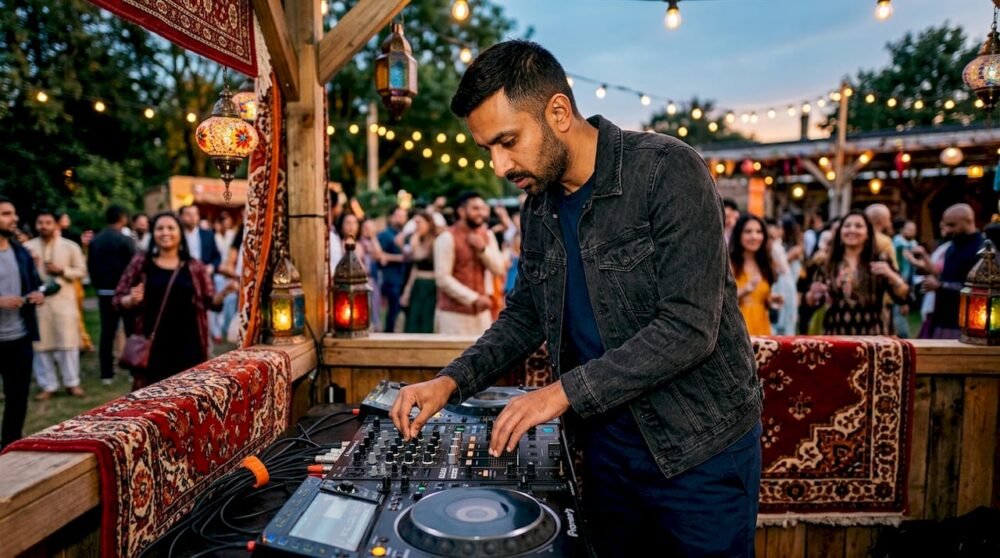
DJ cultural competence is defined as the ability to understand, respect, and authentically represent diverse cultural identities through music selection, performance style, and live audience interaction. At diverse events, this competence is the difference between a crowd that feels genuinely celebrated and one that feels like an afterthought. Event planners who prioritise DJ cultural awareness achieve significantly higher attendee engagement and satisfaction, yet planners spend less than 5% of their time on this factor. That gap is costly. The industry term for this skill set is intercultural competence, and it extends well beyond knowing which songs to play. It encompasses cultural respect, community consultation, and the artistry of reading a room shaped by multiple traditions at once.
Why DJ cultural competence matters at events: the engagement case
A culturally competent DJ does not simply play music. That DJ acts as a creative partner who shapes the emotional arc of an entire event. Human-curated DJ sets remain essential for authentic cultural storytelling and audience connection in ways that automated playlists cannot replicate. The distinction matters because guests from diverse backgrounds recognise, often immediately, whether their culture is being honoured or merely sampled for aesthetic effect.
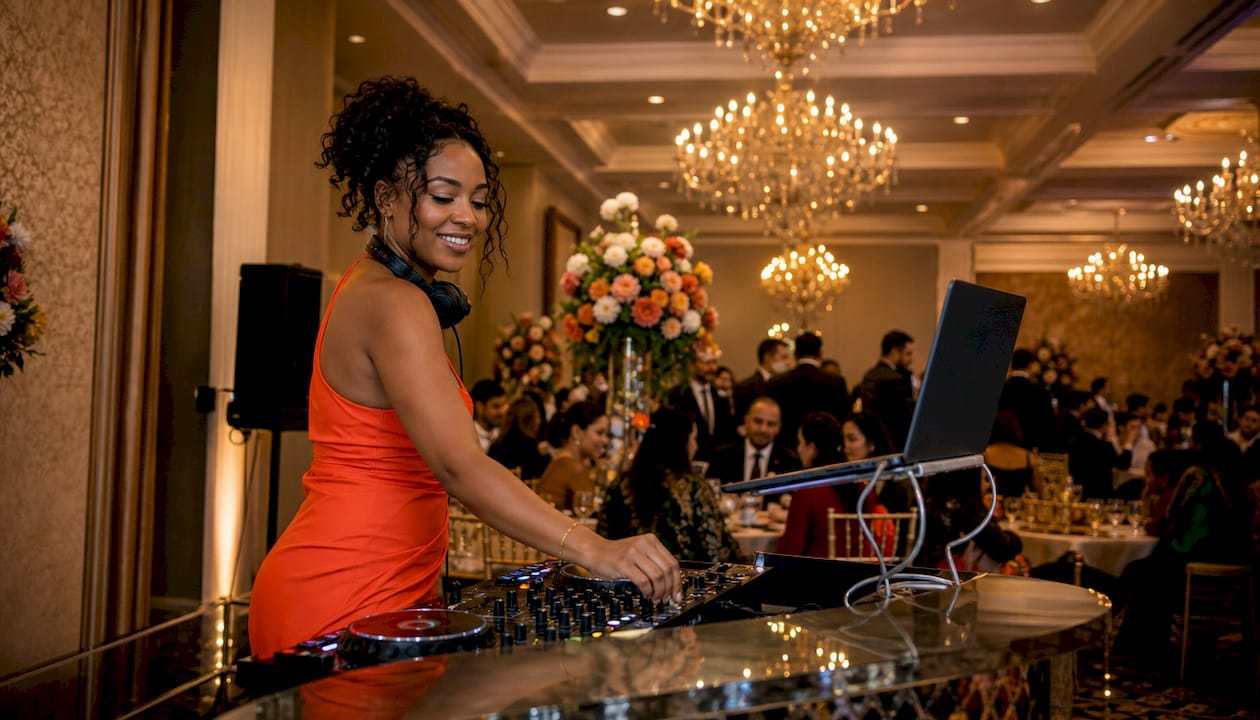
Cultural mismatch produces measurable harm. When a DJ plays music that misrepresents or trivialises a community’s traditions, the energy in the room shifts. Guests disengage, conversations stall, and the dance floor empties. Complaints and tokenism negatively affect brand reputation and future engagement, which means a single poor performance can damage an organisation’s standing within a community for years.
The reverse is equally true. Culturally competent events receive higher respect ratings and stronger community partnerships within three months post-event. That outcome reflects something deeper than guest satisfaction scores. It reflects trust, and trust is the foundation of every lasting client relationship in the events industry.
For corporate clients, the stakes are even higher. Dj-phoenix has performed for prestigious clients including Mercedes-Benz and FW Sports, where the audience profile spans multiple nationalities and professional backgrounds. In those settings, a DJ who cannot read cultural nuance risks undermining the brand’s own message of inclusion and excellence.
Pro Tip: Brief your DJ on the cultural backgrounds of key guests before the event, not just the general demographic. Specific knowledge produces specific results.
The importance of DJ cultural competence in corporate and multicultural settings has grown sharply since 2025, as event planners face higher expectations for demonstrating cultural sensitivity through transparent guest selection and ethical compensation.
What are the core elements of DJ cultural competence?
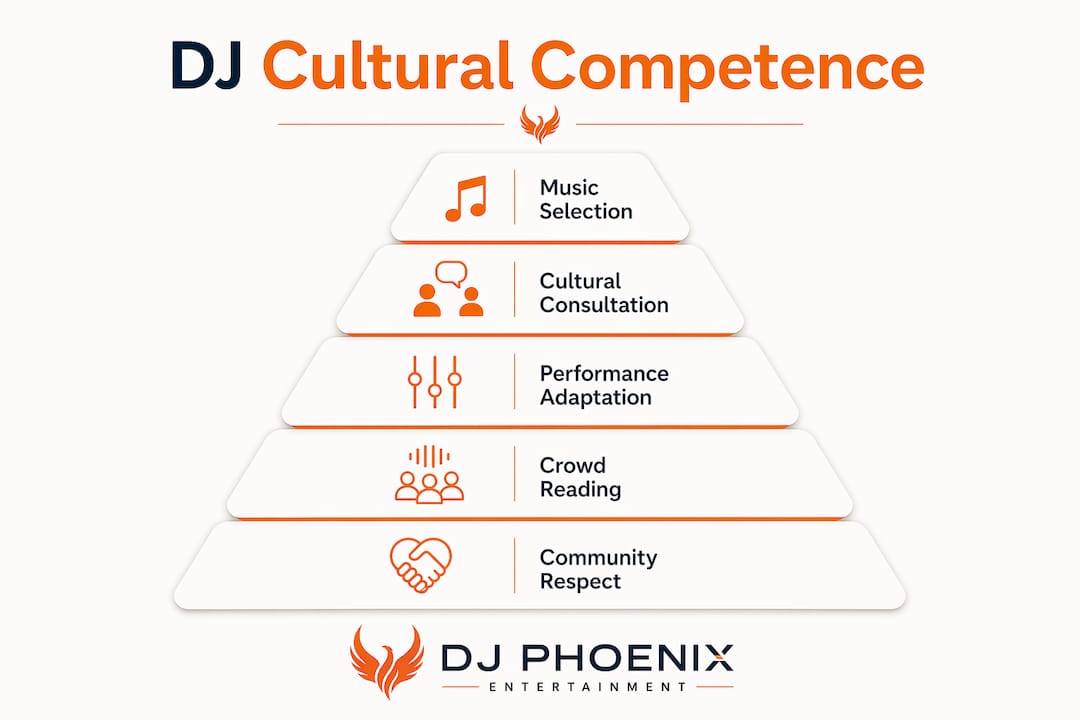
Cultural competence in DJing rests on three pillars: music selection, cultural consultation, and performance adaptation. Each pillar requires deliberate effort, not instinct alone.
Music selection rooted in cultural knowledge
Music selection goes beyond genre familiarity. A culturally competent DJ understands the origins of a track, the social context in which it was created, and the norms around its use. Playing a sacred ceremonial song as a background filler, for example, signals a fundamental lack of respect. Exoticising cultural markers damages community trust and event credibility. The goal is to honour a culture’s music on its own terms, not to reduce it to a novelty.
A study of 200 music educators found that high intercultural competence leads to enhanced interpretive ability across genres. That finding applies directly to DJs. The broader a DJ’s cultural knowledge, the more accurately they interpret what a diverse crowd needs in any given moment.
Cultural consultation before the event
- Identify community representatives. Current industry guidelines require consulting at least two community representatives when planning culturally specific events. These individuals provide context that no amount of online research can replace.
- Secure permissions for cultural elements. Some musical traditions carry protocols around who may perform or present them. Confirm these protocols in advance.
- Review promotional materials with community editors. Hiring community editors for promotional content prevents misrepresentation before it reaches the public.
- Budget for cultural consultants. Treating consultation as a line item, not an afterthought, signals genuine commitment. Organisers must budget honoraria to prevent tokenism and ensure authentic representation.
- Confirm music licensing. Event hosts must independently secure sync and master rights beyond venue blanket licences. Failure to do so creates legal exposure and reputational harm.
Performance adaptation and crowd reading
A skilled DJ adapts in real time. Cultural awareness in DJing means recognising when a particular style is landing and when it is not, then pivoting with grace. This skill is not purely technical. Neurodivergent DJs often demonstrate enhanced crowd-reading abilities through hyperfocus and heightened social sensitivity, which produces more attuned and inclusive performances. That insight challenges the assumption that crowd reading is a single, uniform skill. It is, in fact, a spectrum of perceptual abilities that diverse DJ talent brings to the table.
Pro Tip: Build a cultural playlist brief with your DJ at least three weeks before the event. Include must-play tracks, must-avoid tracks, and the cultural significance of each.
For multicultural wedding music specifically, this preparation phase is where the most meaningful decisions are made.
What are the most common pitfalls in DJ cultural competence?
Cultural insensitivity at events rarely comes from malice. It comes from gaps in preparation, consultation, and self-awareness. Recognising the most common pitfalls is the first step toward avoiding them.
- Surface-level aesthetics. Decorating an event with cultural symbols while ignoring the music, food, and community voices that give those symbols meaning is tokenism. It signals that the culture is a prop, not a presence.
- Lack of community involvement. Planning a culturally themed event without involving members of that community produces programming that feels hollow. Co-creating programming with cultural communities builds lasting relationships beyond one-off spectacles.
- Undercompensating cultural performers. Asking community musicians or performers to contribute for free, or below market rate, commodifies their artistry. Ethical compensation is a non-negotiable standard in 2026 event planning.
- Ignoring music licensing. Global music use carries complex legal obligations. Organisers must verify sync and master rights independently, especially for broadcast or streaming contexts.
- Chasing viral cultural trends without context. A trend on social media does not equal cultural permission. Moving quickly on a trend without community input is a reliable path to public criticism.
“Cultural competence transcends music choice. It demands respect for community narratives and shared power in event planning. When event teams treat culture as a resource to be consumed rather than a relationship to be built, they undermine the very communities they claim to celebrate.”
The cross-cultural event management field has formalised many of these principles into guidelines that event planners can adopt directly. Policies now require accountability mechanisms, accessibility provisions, and clear complaint processes for cultural events.
How do event planners and DJs integrate cultural competence into production?
Integrating cultural competence into event production requires a structured approach from conception through post-event review. The following framework applies to both event planners and the DJs they hire.
- Start with a cultural brief. Define the cultural communities represented at the event. Identify their musical traditions, performance norms, and any sensitivities around specific songs or styles.
- Engage cultural insiders early. Bring community representatives into the planning process before any bookings are confirmed. Their input shapes the entire entertainment programme.
- Vet your DJ’s cultural knowledge. Ask specific questions: Which genres from this community do you know well? Can you name three artists from this tradition? What would you avoid and why?
- Allocate budget transparently. Cultural consultation, community editors, and fair performer compensation all require dedicated budget lines. Transparent budgeting signals respect.
- Build a live feedback protocol. Designate a point of contact at the event who can relay real-time audience feedback to the DJ. This allows for mid-event adjustments without disruption.
- Conduct a post-event debrief. Gather feedback from community representatives and attendees within two weeks of the event. Use that input to refine the approach for future events.
The comparison below illustrates how event planning approaches differ when cultural competence is built in versus treated as optional.
| Planning element | Without cultural competence | With cultural competence |
|---|---|---|
| Music selection | Genre-based, DJ’s discretion | Community-informed, pre-approved brief |
| Community involvement | None or post-event | Active from conception |
| Compensation | Standard DJ fee only | Includes cultural consultant honoraria |
| Music licensing | Relies on venue blanket licence | Independently verified sync and master rights |
| Post-event review | Guest satisfaction survey | Community debrief and partnership follow-up |
Cultural fusion event planning at the highest level treats every element in the right-hand column as a baseline, not a bonus. Dj-phoenix applies this framework across weddings, corporate events, and private gatherings to deliver performances that resonate with every guest in the room.
Key takeaways
DJ cultural competence is the single most underinvested factor in diverse event planning, and closing that gap produces measurable gains in audience satisfaction, community trust, and brand reputation.
| Point | Details |
|---|---|
| Define cultural competence clearly | It covers music knowledge, community consultation, and real-time performance adaptation, not genre familiarity alone. |
| Consult community representatives | Industry guidelines require at least two community representatives in the planning process to prevent tokenism. |
| Secure music rights independently | Venue blanket licences do not cover sync and master rights; event hosts must verify these separately. |
| Budget for cultural consultation | Honoraria for community editors and cultural consultants are a professional standard, not an optional expense. |
| Measure outcomes post-event | Culturally competent events show stronger community partnerships and higher respect ratings within three months. |
What I have learned about cultural competence on the floor
Working across weddings, corporate galas, and community celebrations has taught me one thing above all else: the crowd always knows. Guests from a specific cultural background can tell within the first three songs whether the DJ has done the work or is improvising. That recognition is not subtle. It shows up in body language, in whether people move toward the floor or away from it, and in the conversations that happen at the bar.
The events industry has spent years treating cultural competence as a soft skill, something nice to have rather than a professional standard. That framing is wrong, and the data from 2026 confirms it. Planners who invest in cultural consultation and hire DJs with genuine intercultural knowledge produce events that communities talk about positively for months. Planners who skip that work produce events that communities remember for the wrong reasons.
What I find most compelling is the argument that DJs with curated cultural knowledge hold a unique intermediary role that no algorithm can fill. A playlist does not read the room. A culturally competent DJ does. That human capacity for interpretation and adaptation is the artistry that elevates a good event into a genuinely memorable one. The DJs who will lead this industry in the next decade are the ones building that competence now, through study, community relationships, and the humility to keep learning.
— Reza
Dj-phoenix: culturally attuned DJ services for every event
Dj-phoenix brings a pedigree of multicultural event experience to every performance, from intimate Persian weddings to high-profile corporate gatherings for clients like Mercedes-Benz. Every engagement begins with a cultural brief, community-informed playlist curation, and a performance style calibrated to the specific audience in the room.
For event planners and cultural organisers seeking a DJ who treats cultural competence as a professional standard, Dj-phoenix offers corporate event DJ services built around authentic representation and elite sound quality. Explore the DJ performance gallery to see cultural competence in action across a range of event formats, or connect directly to discuss your next event’s cultural brief and entertainment vision.
FAQ
What is DJ cultural competence?
DJ cultural competence is the ability to select, present, and adapt music in ways that authentically respect and represent the cultural identities of a diverse audience. It includes music knowledge, community consultation, and real-time crowd reading.
Why does cultural competence matter for event success?
Culturally competent events receive higher audience respect ratings and stronger community partnerships, while cultural missteps damage brand reputation and reduce future engagement. The impact is measurable within three months post-event.
How do DJs avoid cultural tokenism?
DJs avoid tokenism by consulting community representatives before the event, securing permissions for culturally specific music, and budgeting fairly for cultural expertise rather than treating it as a free resource.
What music licensing do event planners need for global music?
Event hosts must independently secure sync and master rights for global music use, as venue blanket licences do not cover these rights. Failure to do so creates legal and reputational exposure.
How can event planners assess a DJ’s cultural competence?
Ask the DJ to name specific artists and traditions from the communities represented at your event, request a sample cultural playlist brief, and check whether they have a process for community consultation before finalising their set.