The most reliable way to deliver excellent backyard party sound is to hire a professional DJ who supplies a properly scaled PA system, then pair that DJ with a sound technician once your guest count climbs past roughly 75 or your event involves multiple microphones and inputs. Confirm power access and walk the site two to three weeks before the event. Budget for equipment and labour as separate line items, and ask every prospective vendor for an itemized quote plus a stated backup plan.
TL;DR:
- A sound system suitable for under 200 guests typically includes a pair of powered speakers and a subwoofer, while larger crowds need more extensive setups with multiple speakers and subs.
- Outdoor sound setups cost approximately 20 to 40 percent more than indoor systems due to weatherproofing, throw distances, and low-end reinforcement challenges.
- Confirm the DJ has residential experience, a detailed equipment list, and a backup plan, including separate pricing for delivery, setup, and labor.
- Power issues are the most common problems, so ensure the venue provides a dedicated, properly sized circuit or generator, and prepare for backup power and cable spares.
- Check local noise rules, set clear end times, and inform neighbors upfront to avoid complaints while maintaining lively music without upsetting the neighborhood.
Table of Contents
- How do you choose the right DJ for backyard party sound?
- What size sound system does a backyard party actually need?
- What should you prepare at home before the DJ arrives?
- How do DJs keep backyard parties lively without upsetting neighbours?
- What permits and noise rules apply to backyard parties?
- A backyard party that almost went sideways
- Book backyard party sound with a scaled, technician-ready setup
- Sources
- FAQ
How do you choose the right DJ for backyard party sound?
The vetting process separates a smooth evening from a night of dead air and blown circuits. Start with the equipment itself, because vague answers here are the clearest warning sign a production company can give you.
- Ask for a specific equipment list. Get brand and model names for the tops, subs, mixer, and wireless microphones, along with expected setup time and physical footprint.
- Confirm residential experience. A DJ who has already worked backyard events understands local acoustics, fence lines, and neighbour sensitivities, which saves setup time and prevents day-of surprises.
- Ask about volume management and curfew handling. Has this DJ managed a hard end time before, and how do they adjust output as the night progresses?
- Get power requirements in amps. Ask which circuits the setup will draw from and whether the DJ brings their own power distribution or expects you to supply a generator.
- Press on contingency planning. Spare cables, a backup speaker, and technician availability for overtime all belong in the conversation before you sign anything.
- Demand itemized pricing. Delivery, setup, technician time, travel, teardown, and insurance should appear as separate lines, not buried in one flat number.
Many DJs also bundle extras like uplighting, fog, or a photo booth. Ask whether these require coordination with a venue’s own AV system or run into any restrictions, since some event vendor directories list exactly these kinds of add-ons and the logistics behind booking them.
Pro Tip: Ask the DJ to send you a photo or short clip from a past backyard event of similar size. It tells you more about real-world sound coverage than any spec sheet.
What size sound system does a backyard party actually need?
Sizing mistakes run in both directions. An underpowered rig leaves your dance floor flat by 9 p.m.; an oversized club PA in a suburban yard just annoys the block and eats your budget for no benefit.
- Under 200 guests: A pair of powered tops with an optional subwoofer covers most residential yards comfortably.
- 200 to 500 guests: Step up to a mid-size PA with two to four tops and dedicated subs for even coverage across a larger footprint.
- Very large outdoor events: Line arrays exist for this scale, but they’re rare for backyard settings and usually only relevant once you’re bordering on a small festival.
Outdoor gigs generally cost more than equivalent indoor jobs. Expect roughly 20 to 40 percent more for outdoor coverage compared with a similar indoor setup, since open-air throw distances and weatherproof gear both add cost. Outdoor sound also behaves differently at the low end: subwoofers lose punch in open space, so production guides recommend planning for extra low-end reinforcement if dancing is the goal.
On pricing, single-day rentals that include delivery, setup, and teardown typically fall into these bands:
A detailed breakdown of these tiers shows technician cost climbing with event length, not just system size. Confirm whether a technician and insurance are already folded into your quote, because plenty of vendors quote the gear alone and leave labour as a surprise add-on. Dj-phoenix’s own pricing analysis for backyard and wedding-scale events breaks down comparable sample packages if you want a second reference point.
What should you prepare at home before the DJ arrives?
Most day-of technical problems trace back to power, not the music. Residential circuits commonly run 15 to 20 amps, and combining audio gear with patio lighting or a neighbouring appliance is a fast way to trip a breaker mid-song. DJs generally prefer an isolated, dedicated circuit for their consoles and amplifiers for exactly this reason.
- Confirm whether a generator is needed, and if so, ask about quiet inverter models rather than standard construction-grade units that will fight the music for attention.
- Size any backup power at roughly 20 percent above the calculated draw to leave headroom for lighting or effects.
- Clear a minimum footprint of 6 by 4 feet, though 8 by 6 feet gives a DJ room to breathe with a booth and monitor.
- Route cables away from walkways and elevate speakers three to six feet off the ground for better throw and fewer trip hazards.
Pro Tip: Walk your yard at the time of day your party actually starts. Shade, sprinklers, and extension cord routes all look different at 6 p.m. than they do at noon.
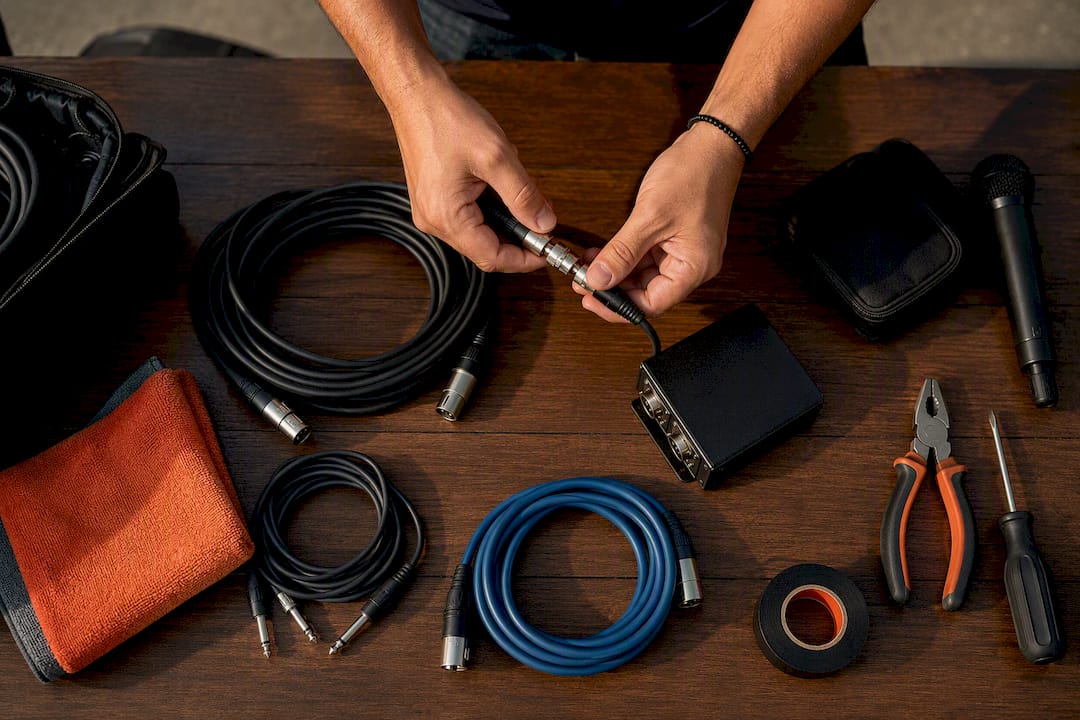
Insist your vendor brings on-site spares: extra cables, a DI box, a backup wireless mic, and basic tools. A five-minute fix with the right adapter beats a fifteen-minute scramble in front of your guests.
How do DJs keep backyard parties lively without upsetting neighbours?
Good playlist sequencing does double duty: it keeps energy climbing through the night and it keeps volume proportionate to the moment. Most experienced DJs open with lower-tempo, conversational music while guests arrive and mingle, then build gradually toward a peak dance segment once the crowd is ready for it.
- Keep a conversational zone physically separate from the dance zone, and ask your DJ how they’ll angle speakers to protect that separation.
- Set clear volume caps for each phase of the night rather than running everything at one flat level.
- Use a do-not-play list and a simple request policy up front so awkward moments don’t happen live at the booth.
- Save subwoofer-heavy segments for the true peak window, not the entire event.
Dj-phoenix’s tested adult birthday playlists show this kind of build in practice, moving from easy listening into full dance-floor energy without a jarring jump. Reading a crowd correctly, and adjusting on the fly, matters more than any fixed playlist ever could.
What permits and noise rules apply to backyard parties?
A few quick checks now save you an awkward conversation with a bylaw officer later.
- Check your municipality’s noise ordinance and quiet hours. Most residential zones have a defined cutoff, often in the evening.
- Set an agreed end time in writing with your DJ, including what happens if the event runs over.
- Notify immediate neighbours ahead of time with a brief note and a phone number they can call if something bothers them mid-event, rather than a stranger calling the city.
- Ask your DJ directly whether a permit applies to amplified outdoor sound in your area, since rules vary block to block in some cities.
- Put overtime rates and an emergency contact in the contract so nobody is negotiating fees at 11 p.m.
A backyard party that almost went sideways
A few summers back, a client’s Summer Party had a yard with a steep slope and thin party walls on both sides. Pre-event tuning and a slower opening set kept the energy climbing without pushing volume past what the neighbours could tolerate. Reading the crowd mattered more that night than any equipment spec. For real examples, browse Dj-phoenix’s playlist breakdowns and pricing pages, or request a site walkthrough before your date fills up.
— Reza
Book backyard party sound with a scaled, technician-ready setup
Backyard packages can be built around exactly the sizing and safety questions covered above: a scaled PA matched to your guest count, an optional on-site technician for larger or more complex setups, curated playlists built for mixed-age and multicultural crowds, and MC services when your event needs one voice guiding the night.

Rather than guessing at rental tiers on your own, request a site visit and an itemized quote before you commit to a date. Dj-phoenix has handled residential-scale sound for clients ranging from private backyard celebrations to corporate events for brands like Mercedes-Benz, and applies the same power, footprint, and volume-management planning to a yard party as to a ballroom. Browse the party packages built for backyard-scale events, or check realistic sound system rental costs to see what an itemized quote actually looks like before you request your own.
Sources
- 16 Essential Questions to Ask a DJ Before Hiring for Your Event
- How to Set Up a Portable DJ Sound System for Outdoor Parties – TechTaps
FAQ
Do I need both a DJ and a separate sound technician?
For yards under about 75 guests with straightforward music-only needs, a DJ with their own scaled PA is usually enough. Once you add multiple microphones, speeches, or a guest count above that, a dedicated technician reduces the risk of technical hiccups.
How much does backyard party sound rental typically cost?
Small PA rentals run $500 to $1,000 for a single day, mid-size outdoor setups fall between $1,000 and $2,500, and technician fees add another $300 to $800 depending on event length.
What size PA system fits a typical backyard party?
A pair of powered tops with an optional subwoofer suits gatherings under 200 people, while 200 to 500 guests generally call for two to four tops paired with dedicated subs.
How far in advance should I schedule a site walkthrough?
Book a walkthrough two to three weeks before your event so your DJ or technician can confirm power access, load-in routes, and any acoustic quirks specific to your yard.
Will loud backyard music get me in trouble with neighbours?
It can, if you skip basic groundwork. Checking local noise ordinances, agreeing on a firm end time, and giving neighbours a heads-up with a contact number all significantly cut the odds of a complaint or a shutdown.