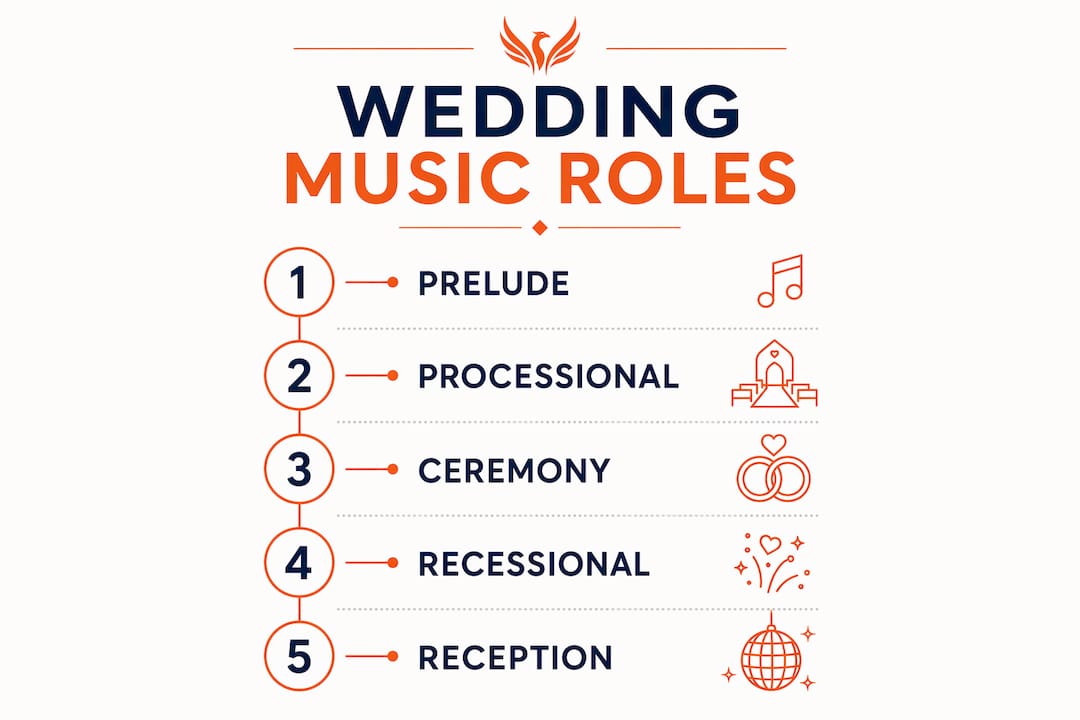
Wedding ceremony music roles are defined as the specific functions music serves at each distinct stage of your wedding day, from the ambient prelude as guests arrive to the celebratory recessional and beyond. These roles extend well past the ceremony itself, shaping the cocktail hour atmosphere and driving the energy of the reception. Getting them right is not a matter of taste alone. It is a matter of timing, pacing, and emotional intention. Couples who understand each music role before booking their performers make far better decisions about whether to hire live musicians, a professional DJ, or a combination of both.
What are the key music roles during the wedding ceremony?
Wedding ceremony music roles divide into four distinct segments, each serving a precise emotional purpose. Confusing these segments, or treating them as interchangeable, is the most common planning error couples make.
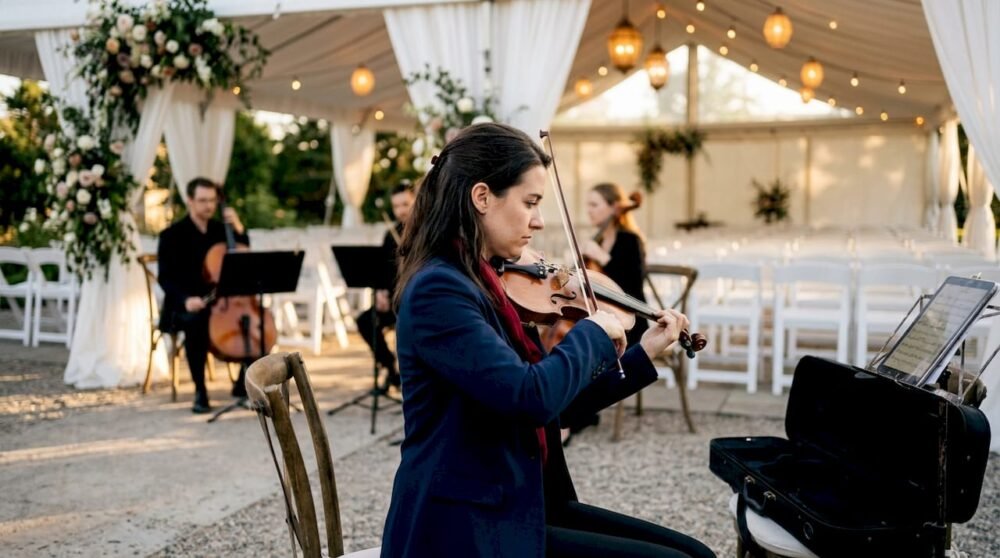
Prelude music sets the tone before the ceremony begins. It plays as guests arrive and find their seats, typically spanning 20–30 minutes. The goal is warmth and welcome, not excitement. Acoustic guitar, a string quartet, or soft piano works well here. The prelude signals to guests that something meaningful is about to begin.
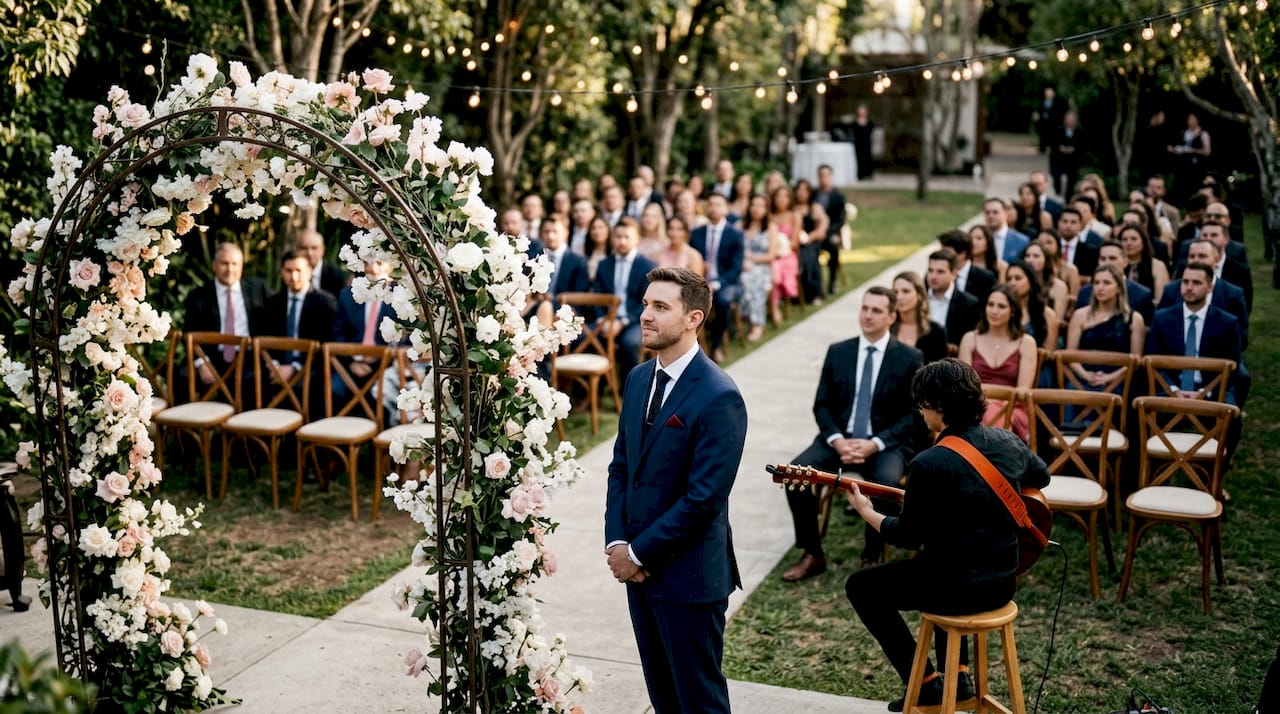
Processional music marks the entrance of the wedding party and, most significantly, the couple. This is the moment most guests remember most vividly. The music must match the walking pace of each person entering. Arrangement and pacing matter more than song popularity here. A beloved song played at the wrong tempo feels awkward rather than moving.
Ceremony interludes support readings, unity rituals, or moments of reflection. Not every ceremony includes them, but when they appear, they carry significant emotional weight. Soft instrumental music during a candle lighting or sand ceremony, for example, fills silence without competing with the officiant.
Recessional music celebrates the couple’s exit as a married pair. This is the moment for joy and energy. Upbeat classical pieces, contemporary pop, or even a brass fanfare all work, provided the tempo matches the couple’s stride and the mood they want to project.
- Prelude: ambient and welcoming, 20–30 minutes before the ceremony starts
- Processional: emotionally charged, paced to match the bridal party’s walk
- Interludes: soft and supportive, tied to specific ceremony rituals
- Recessional: celebratory and energetic, marking the couple’s new beginning
Pro Tip: Assign one person, either your wedding coordinator or a trusted guest, to give the musician or DJ a physical cue when the processional should begin. Assigning a cue person is one of the most overlooked steps in ceremony planning, and its absence causes the most visible timing errors.
Live musicians bring a particular artistry to ceremony music that recorded tracks cannot replicate. Live music provides real-time adaptation to timing shifts and emotional energy, adjusting tempo on the fly if the processional runs long or the officiant pauses unexpectedly. That responsiveness is the defining advantage of live performance at a ceremony.
How does music function during the cocktail hour and reception?
The cocktail hour and reception each carry their own distinct music duties, and treating them as one continuous phase is a mistake that flattens the energy arc of your entire event.
Cocktail hour music should provide smooth, unobtrusive background that supports socialising and atmosphere. Guests are greeting each other, finding drinks, and transitioning emotionally from the ceremony’s formality to the reception’s celebration. The music should feel present without demanding attention. Jazz standards, acoustic covers, or light bossa nova all serve this purpose well. A live duo or trio works beautifully here, as does a curated DJ playlist set at a conversational volume.
Reception music carries a fundamentally different mandate. Its role is to facilitate dancing, punctuate announcements, and sustain energy across a multi-hour event. The first dance, parent dances, and cake-cutting each require specific songs tied to precise moments. The open dance floor that follows demands crowd-reading skill and playlist flexibility.
- Cocktail hour: background ambience, conversational volume, smooth and unobtrusive
- First dance and parent dances: emotionally specific, tied to personal meaning
- Open dancing: high energy, crowd-responsive, genre-flexible
- Announcements and toasts: music paused or faded, then resumed with intention
The transition from ceremony to cocktail hour is where many couples lose musical coherence. The mood should shift gradually, not abruptly. A skilled DJ or live musician reads that transition and adjusts accordingly, carrying the emotional thread from the ceremony into the celebration without jarring the guests.
What options do couples have for fulfilling wedding music roles?
Couples have three primary formats to consider: live musicians, a professional DJ, or a hybrid of both. Each carries distinct advantages depending on the event phase.
Live musicians
Live musicians bring prestige and emotional depth to ceremonies. A string quartet for two hours typically costs between $800 and $2,000, making live performance a feasible option for the ceremony while a DJ handles the reception. The limitation of live musicians is repertoire. They require advance notice and preparation time. Musicians need at least one month of lead time to prepare sheet music, rehearse, and suggest adaptations to chosen songs.
Professional DJs
A professional DJ offers unmatched flexibility for receptions and cocktail hours. A skilled DJ reads the crowd in real time, shifting genres and tempos to maintain energy. Live music can boost guest engagement by up to 40% compared to fixed playlists, and a DJ with strong crowd-reading skills achieves comparable results through dynamic playlist management. DJs also handle all announcements, coordinate with the MC, and manage the audio system, consolidating several ceremony music duties into one professional.
Hybrid approaches
A hybrid approach pairs live musicians for the ceremony with a DJ for the reception. This is the format that delivers the highest calibre of experience across all wedding phases. The live performance carries the emotional weight of the ceremony, while the DJ sustains the energy and flexibility the reception demands. Dj-phoenix specialises in exactly this kind of integrated wedding entertainment, working alongside live performers to create a cohesive musical arc from prelude to last dance.
Pro Tip: Build a detailed music timeline that lists every song, its duration, and the exact cue for when it starts. A detailed music timeline specifying songs, durations, and cues is the single most effective tool for smooth coordination between musicians, DJs, and your ceremony coordinator.
| Format | Best suited for | Key advantage | Key limitation |
|---|---|---|---|
| Live musicians | Ceremony and cocktail hour | Emotional depth and real-time adaptation | Higher cost, advance preparation required |
| Professional DJ | Cocktail hour and reception | Flexibility, crowd-reading, full audio control | Less intimate feel for ceremony |
| Hybrid approach | Full wedding day coverage | Best of both formats across all phases | Requires careful coordination between performers |
What are the common mistakes couples make with wedding music roles?
Most music planning errors share a common root: couples treat music as a playlist rather than a performance with structure, timing, and intention.
- Failing to assign a cue person. Without someone designated to signal the start of the processional, musicians or DJs guess. Guessing leads to mistimed entrances that cannot be undone.
- Choosing recorded songs that do not fit the walking pace. The biggest mistake couples make is fitting the ceremony to a fixed recorded song rather than adapting the music to match the actual walking pace and timing of the ceremony.
- Neglecting rehearsal and coordination. A rehearsal that includes the musician or DJ is not optional. It is the only way to confirm that cues, volumes, and transitions work as planned.
- Underestimating the emotional influence of pacing. A song played too fast feels rushed. A song played too slowly loses its emotional impact. Pacing is as important as song selection.
- Losing the musical thread between ceremony and reception. Couples who choose ceremony music and reception music in isolation often end up with two disconnected sonic experiences. The cocktail hour is the bridge, and it needs deliberate musical attention.
Pro Tip: Share your full music timeline with your photographer and videographer as well as your performers. They need to anticipate musical cues to capture the right moments. A well-coordinated wedding timeline benefits every vendor at your event, not just the musicians.
Managing timing shifts on the wedding day requires a performer who can adapt without instruction. Live musicians and experienced DJs both carry this skill. A rigid recorded playlist does not.
Key takeaways
Assigning specific music roles to each wedding phase, from prelude through reception, is the most effective way to create a cohesive and emotionally resonant celebration.
| Point | Details |
|---|---|
| Define each music role | Assign distinct music to the prelude, processional, interludes, recessional, cocktail hour, and reception. |
| Prioritise pacing over popularity | Arrangement and tempo matter more than song choice alone, especially for the processional. |
| Assign a cue person | Designate someone to signal musicians or the DJ at each key moment to prevent timing errors. |
| Build a detailed timeline | List every song, its duration, and its cue point and share it with all performers and vendors. |
| Consider a hybrid format | Pairing live musicians for the ceremony with a professional DJ for the reception delivers the strongest overall experience. |
Music as the emotional architecture of your day
After years of working weddings across cultures and venues, I have come to believe that most couples underestimate what music actually does at a wedding. They think of it as a backdrop. It is not. Music is the emotional architecture of the day. It tells guests how to feel at every moment, and guests follow that lead whether they realise it or not.
The most common advice you will hear is to “choose songs that mean something to you.” That advice is not wrong, but it is incomplete. A song that means everything to you, played at the wrong tempo or in the wrong moment, lands flat. I have seen couples moved to tears by an unexpected instrumental arrangement of a song they had never considered, simply because the pacing and placement were perfect.
What I encourage couples to think about is mood and intention first, song title second. Ask yourself: what do you want guests to feel when the doors open? What energy should carry them from the ceremony to the cocktail hour? What is the emotional peak of your reception, and what music frames it? When you answer those questions first, the song choices become obvious.
The couples who leave their guests with the most lasting memories are not the ones with the most expensive bands or the longest playlists. They are the ones who treated music as storytelling, with a beginning, a middle, and an end that felt inevitable.
— Reza
How Dj-phoenix covers every wedding music role
Every phase of your wedding day deserves a performer who understands its specific music role, not just someone who can press play.
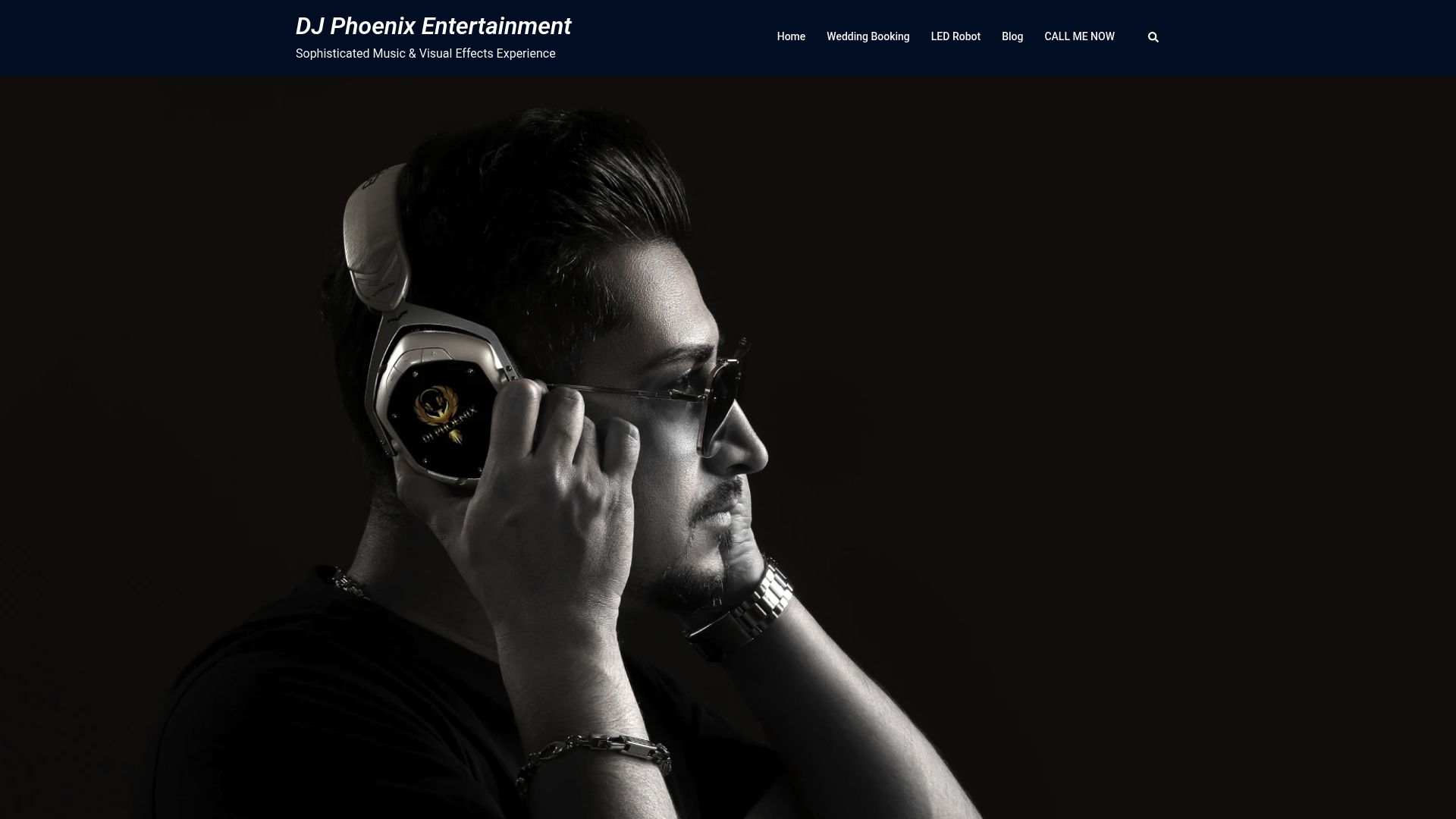
Dj-phoenix brings years of experience covering the full arc of wedding entertainment, from the quiet elegance of ceremony prelude music to the high-energy crowd-reading that keeps a reception dance floor alive. His multicultural expertise means he curates playlists that honour diverse traditions while maintaining the emotional flow your day deserves. Whether you need a professional wedding DJ for the full event or guidance on choosing the right entertainment for each phase, Dj-phoenix delivers the calibre of artistry that prestigious events demand. Explore his wedding packages and see how every music role can be covered with confidence.
FAQ
What are the main wedding ceremony music roles?
The four main roles are the prelude, processional, ceremony interludes, and recessional. Each serves a distinct emotional purpose and requires specific music selection and timing.
Who plays music at a wedding ceremony?
Live musicians such as a string quartet, solo instrumentalist, or vocal duo are common for ceremonies. A professional DJ can also cover ceremony music duties, particularly for outdoor or venue-restricted settings.
How far in advance should I book ceremony musicians?
Musicians need at least one month of lead time to prepare and rehearse. Booking three to six months in advance is the standard practice for securing availability and allowing adequate preparation.
What is the difference between cocktail hour and reception music?
Cocktail hour music is soft background sound designed to support conversation and socialising. Reception music is active and crowd-directed, built to sustain dancing and energy across several hours.
Do I need a separate musician for the ceremony and DJ for the reception?
A hybrid approach, pairing live musicians for the ceremony with a DJ for the reception, delivers the strongest experience across all phases. A skilled DJ can also cover the full day if budget or venue logistics require a single performer.