A well-planned wedding reception playlist covers seven distinct musical moments, requires 60 to 100 songs across a five-hour event, and demands both a ranked must-play list and a do-not-play list before your DJ can truly perform at their best. Get those fundamentals right, and the dance floor takes care of itself.
Here is the moment-by-moment checklist every couple needs:
- Cocktail hour: a moderate set of songs. Upbeat but conversational. Jazz standards, acoustic pop, bossa nova.
- Bridal party arrival / grand entrance: a couple of songs. High energy, instantly recognisable opening riff.
- First dance: a single song. Slow, romantic, emotionally anchored.
- Parent dances (father/daughter, mother/son): a few songs. Slow to moderate tempo.
- Dinner: a set of mellow background songs. Classic soul, soft rock, acoustic ballads.
- Cake cutting: 1 song. Upbeat and celebratory.
- Open dancing: many songs with high energy, mixed eras and genres.
- Last dance: 1 song. Slow or anthemic, announced by the DJ.
- Buffer songs: extra tracks for requests, encores, and unexpected extensions.
Genre and era variety are not optional courtesies. A playlist that spans Motown, 80s classics, 90s pop, and current hits keeps guests of every generation engaged. Cultural and traditional music deserves its own dedicated bucket, particularly for multicultural families where a Persian, South Asian, or Caribbean set can become the most memorable moment of the night. Your must-play list should be ranked by priority so your DJ knows which five songs are non-negotiable if time runs short.
Table of Contents
- How to choose songs for every reception moment
- How do you build a guest-friendly wedding reception playlist?
- How many songs do you need for a wedding reception?
- What Dj-phoenix knows about crafting a reception soundtrack
- How transition songs keep your reception flowing
- How to handle special requests during the reception
- Key takeaways
- Dj-phoenix brings your reception playlist to life
How to choose songs for every reception moment
The artistry of wedding reception song selection lies in matching musical energy to the emotional arc of each segment. Every phase of the evening calls for a distinct genre palette and tempo range.
Cocktail hour
The cocktail hour sets the tone without stealing the show. Guests are mingling, photographs are being taken, and the atmosphere should feel warm and celebratory without pulling anyone to a dance floor that is not yet open. Jazz standards, bossa nova, and acoustic pop all work beautifully across every age group. Classics like “Fly Me to the Moon” by Frank Sinatra, “L-O-V-E” by Nat King Cole, “Lovely Day” by Bill Withers, and “Come Away With Me” by Norah Jones create an elegant, welcoming atmosphere. Aim for 90% familiar tracks and 10% discovery.
Grand entrance and bridal party arrival
This is the highest-energy moment of the evening up to this point. The song needs a strong, instantly recognisable opening because the room must respond before the first person reaches the centre of the floor. “September” by Earth, Wind & Fire delivers on that count every single time. “Uptown Funk” by Mark Ronson ft. Bruno Mars works for the same reason. Choose one song per group if you want to differentiate the wedding party entrance from the couple’s entrance.
First dance
The first dance is a single song, watched by every guest in the room for three to four minutes. The most requested first dance songs in Canada and internationally in 2025–2026 include “Perfect” by Ed Sheeran, “All of Me” by John Legend, “A Thousand Years” by Christina Perri, and “Thinking Out Loud” by Ed Sheeran. One structural note: songs with a long, ambiguous fade-in create an uncomfortable walk to the dance floor. Choose a track with a clear, immediate identity.
Parent dances
Father/daughter and mother/son dances typically run 6–8 minutes combined. Classics like “My Girl” by The Temptations and “You Are So Beautiful” by Joe Cocker carry the father/daughter moment with grace. For mother/son, “What a Wonderful World” by Louis Armstrong and “You’ll Be in My Heart” by Phil Collins consistently land with warmth. These dances also serve a strategic purpose: they reset the room’s energy before open dancing begins.
Cake cutting
A brief, upbeat song works best here. “Sugar” by Maroon 5, “How Sweet It Is” by James Taylor, or “L-O-V-E” by Nat King Cole all fit the celebratory spirit without demanding the full attention of the room.
Open dancing
Build the energy gradually. Start with universally loved, high-recognition songs that pull all ages onto the floor:
- Cross-generational openers: “I Wanna Dance with Somebody” (Whitney Houston), “Dancing Queen” (ABBA), “September” (Earth, Wind & Fire), “Shout” (The Isley Brothers)
- Peak-hour bangers: “Uptown Funk,” “Mr. Brightside” (The Killers), “Yeah!” (Usher), “Don’t Stop Believin’” (Journey), “Livin’ on a Prayer” (Bon Jovi)
- Current hits: “Levitating” (Dua Lipa), “Blinding Lights” (The Weeknd), “Espresso” (Sabrina Carpenter), “APT.” (Rosé & Bruno Mars)
- Sing-along staples: “Sweet Caroline” (Neil Diamond), “Hey Jude” (The Beatles), “Bohemian Rhapsody” (Queen)
Last dance
The last dance is the memory the night ends on. Popular closing songs include “Last Dance” by Donna Summer, “Don’t Stop Believin’” by Journey for a high-energy close, “Closing Time” by Semisonic, and “We Are the Champions” by Queen. Choose one, brief your DJ on the exact version, and let the moment carry its own weight.
How do you build a guest-friendly wedding reception playlist?
The most common playlist mistake couples make is treating the reception as a personal concert rather than a shared celebration. Your taste absolutely belongs in the mix, but a multi-generational crowd of 100 to 150 people needs variety to stay on the floor.
A proven genre split for Canadian weddings looks like this: roughly 40% current and recent pop hits for younger guests, 35% classics from the 80s, 90s, and 2000s for the 30–50 age group, 15% Motown and 60s/70s soul to keep parents and grandparents dancing, and 10% slow songs and sing-alongs for emotional peaks and group bonding. Mixing current pop, Motown, 70s hits, and slow sing-alongs is the formula professional DJs return to repeatedly because it works across every demographic.
Playlist pacing is where most self-managed playlists fall apart. The most effective reception follows a natural arc: mellow music during cocktail hour and dinner, building to energetic dancing, with the peak arriving roughly 90 minutes into the open dancing segment. Getting the older guests onto the floor early matters because they tend to leave first. Once they are dancing, the younger crowd follows.
Pro Tip: Spread your biggest floor-fillers across the entire evening rather than front-loading them. A dance floor that peaks at 8:30 PM and empties by 10:00 PM is a pacing failure, not a song selection failure. Save at least two or three of your highest-energy tracks for the final hour.
Work with your DJ well in advance. Share your must-play list ranked by priority, your do-not-play list, and clear notes on each moment’s song cues. Clear communication about must-play and do-not-play songs significantly improves music cohesion and crowd satisfaction. A professional DJ who knows which ten songs matter most to you will deliver a better night than one working from a 200-song list with no indication of priorities.
How many songs do you need for a wedding reception?
A standard five-hour reception requires 60 to 100 songs across all segments. Planning a buffer is prudent: gaps are worse than surplus, and a self-managed Spotify playlist for a five-hour reception should carry 60 to 100 songs, plus 10–15 extra tracks organised by segment.
| Reception segment | Duration | Songs needed | Tempo/energy |
|---|---|---|---|
| Cocktail hour | 60–90 min | 15–20 songs | Upbeat, conversational |
| Dinner | 60–90 min | 20 songs | Mellow, background |
| Grand entrance + formal dances | 15–20 min | 5–6 songs | Varied, moment-specific |
| Open dancing | 90 min | 35 songs | High energy, mixed genres |
| Last dance | 3–5 min | 1 song | Slow or anthemic |
| Buffer | Ongoing | 10–15 songs | Flexible, request-ready |
Each song averages 3–4 minutes, which means you need roughly 12–15 songs per hour of active dancing. A buffer of 10–15 extra songs gives your DJ the flexibility to handle requests, extend the party if energy is high, and adapt to unexpected shifts in crowd preference. For a DJ-managed reception, the full prepared library should sit at 60 to 100 songs, of which you personally select and prioritise 40–55.
For self-managed setups using Spotify, designate a specific person to manage transitions throughout the evening. This person is not a guest. Their role is to be present and attentive for the entire reception, adjusting volume, skipping songs that run long, and making sure the playlist does not end mid-dance.
What Dj-phoenix knows about crafting a reception soundtrack
Professional wedding DJs organise playlists not as rigid setlists but as flexible “anchor buckets” grouped by vibe. Rather than one long list, a seasoned DJ builds five or six buckets of 6–10 songs each: cross-generational sing-alongs, current bangers, throwback heat, slow-dance staples, and cultural or regional essentials. This structure allows real-time lane changes without killing momentum.
At Dj-phoenix, the approach to must-play lists follows a tiered framework. Tier 1 holds 8–12 non-negotiable songs that will be played regardless of how the night unfolds. These include all moment-specific tracks (first dance, last dance, entrance) and any dance floor song whose absence would be genuinely disappointing. Tier 2 holds 10–15 strong preferences that a skilled DJ plays when the moment is right and the floor is receptive. Tier 3 holds 15–20 “nice to have” tracks that communicate taste without creating obligation.
Dj-phoenix’s experience with multicultural weddings, including Persian, South Asian, and Middle Eastern celebrations, adds a layer of cultural fluency that shapes every playlist. Culturally diverse, energy-balanced playlists that adapt dynamically to different crowd profiles are a hallmark of this approach. A Persian wedding, for example, may call for a dedicated set of traditional music before transitioning into Western pop, and the timing of that transition requires reading the room with precision.
Pro Tip: Share your cultural music priorities with your DJ at least three weeks before the wedding. A DJ who has not been briefed on the cultural segment cannot source the right tracks, confirm the correct versions, or plan the transition timing.
Reading the crowd and adjusting in real time is central to a successful wedding DJ experience. The most technically perfect playlist still requires a skilled hand at the controls.
How transition songs keep your reception flowing
Transitions between reception segments are where amateur playlists stumble and professional ones shine. The shift from dinner to open dancing is the most critical: the room needs to move from a relaxed, conversational energy to a full dance floor without a jarring jump in tempo or volume.
The most effective technique is a tempo bridge: end the dinner set with a song that sits at the upper edge of background music (something like “No One” by Alicia Keys or “Signed, Sealed, Delivered” by Stevie Wonder), then open the dance floor with a universally loved, high-recognition track rather than an immediate peak-energy banger. This gives guests a moment to register the shift and move to the floor naturally.
Between formal dances and open dancing, the DJ should transition directly without a gap. Dead air after the last parent dance is one of the most common momentum killers at receptions. Brief your DJ explicitly on this: the open dancing set begins the moment the parent dance ends, with no announcement and no pause.
For the wind-down in the final 20–30 minutes, weave in two or three slower songs between the high-energy tracks. This gives tired guests a graceful exit while keeping the remaining crowd engaged. The last dance should be announced clearly by the DJ, signalling to everyone still on the floor that this is the final song of the night.
How to handle special requests during the reception
Special requests are inevitable, and a well-prepared DJ treats them as opportunities rather than interruptions. The key is establishing a clear protocol before the event.
Give your DJ a short “emergency set” of 8–10 foolproof songs that work for your crowd. When a request comes in that fits the vibe and the moment, a skilled DJ can weave it in naturally. When a request conflicts with the do-not-play list or would kill the current energy, the DJ declines graciously and redirects.
A useful middle ground is the “do-not-play-yet” concept: songs you like but only at the right moment. Framing a restriction as “not before 10 PM” or “only if requested by immediate family” preserves your vision without creating an awkward refusal. Share these nuances with your DJ in writing before the wedding.
For requests from guests during the reception itself, the DJ should be the single point of contact. Guests approaching the DJ directly is normal and manageable. Guests approaching the couple to lobby for songs is a distraction you do not need on your wedding night. Brief your wedding party to redirect any music requests to the DJ.
Consulting your DJ well before the event about request-handling protocols is one of the most overlooked steps in wedding planning. A brief conversation about boundaries and preferences before the day eliminates the vast majority of in-the-moment friction.
Key takeaways
A complete wedding reception playlist requires 60–100 songs across all segments, plus a buffer of 10–15 extra tracks for requests, a ranked must-play list, and a do-not-play list shared with your DJ at least three weeks before the event.
| Point | Details |
|---|---|
| Total songs needed | A five-hour reception requires 60–100 songs, plus a buffer of 10–15 extra tracks for requests. |
| Segment planning | Cocktail hour needs 15–20 songs; dinner 20; open dancing 35; last dance 1 song. |
| Genre diversity | Mix current pop, 80s/90s classics, Motown, and cultural music to keep every generation on the floor. |
| Must-play structure | Rank your must-play list in three tiers so your DJ knows which 8–12 songs are non-negotiable. |
| Dj-phoenix expertise | Dj-phoenix specialises in culturally diverse, crowd-adaptive playlists for multicultural Canadian weddings. |
Dj-phoenix brings your reception playlist to life
Planning a wedding reception playlist is one thing. Executing it in real time, reading a room of 150 guests, navigating cultural transitions, and knowing exactly when to drop the floor-filler that saves a flagging dance floor — that is a different discipline entirely.
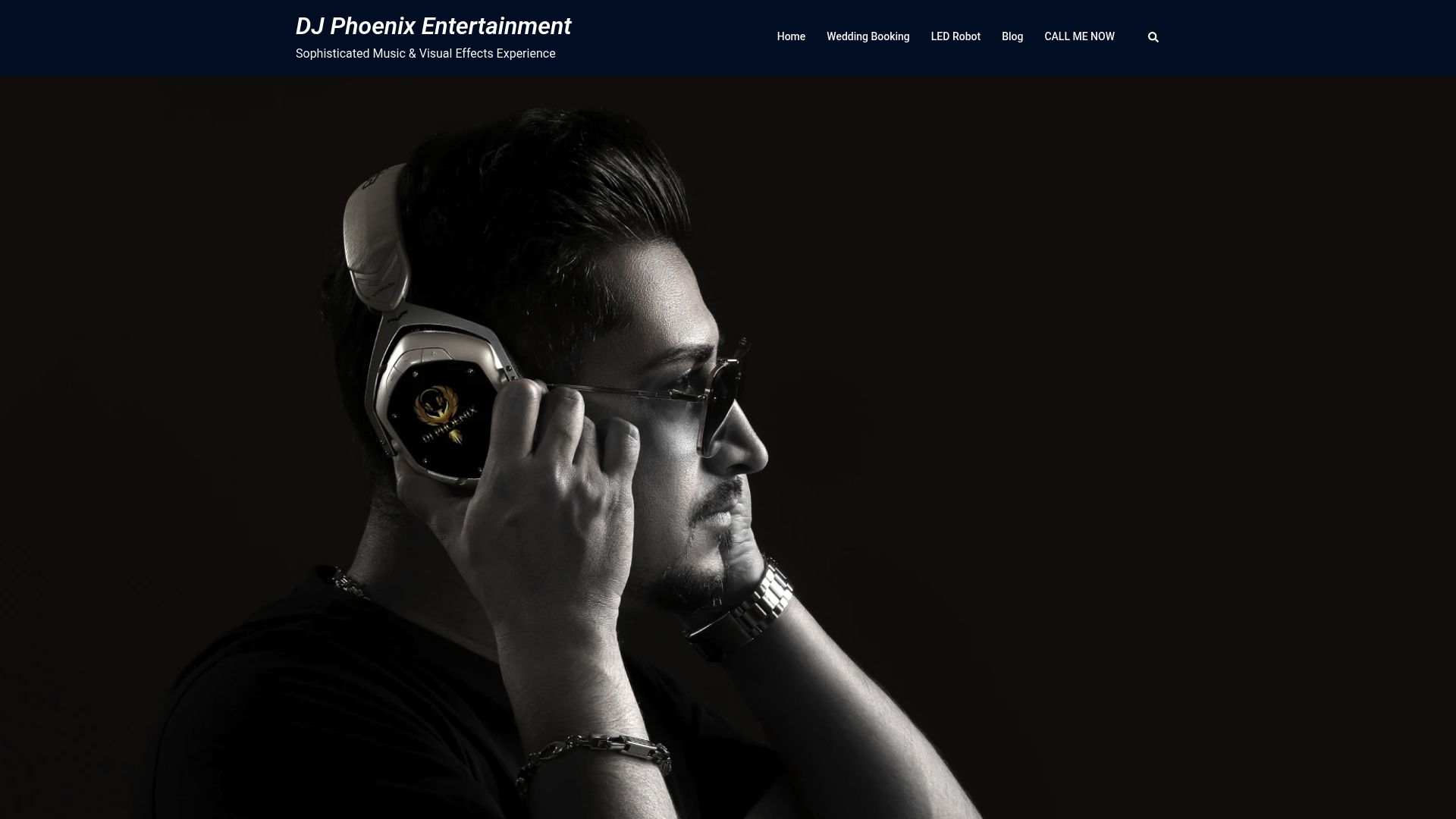
Dj-phoenix brings over a decade of elite wedding entertainment experience to every event, with a particular pedigree in multicultural celebrations across Toronto, Montreal, and Ottawa. The approach is built on meticulous pre-event consultation, a tiered must-play framework, and the real-time crowd-reading artistry that has earned the trust of clients ranging from intimate Persian weddings to large-scale corporate galas for Mercedes-Benz. Every playlist is calibrated to the couple’s vision and the crowd’s energy, not a generic template. If you are ready to build a reception soundtrack worthy of the occasion, book your consultation with Dj-phoenix today and experience the difference that genuine expertise makes.