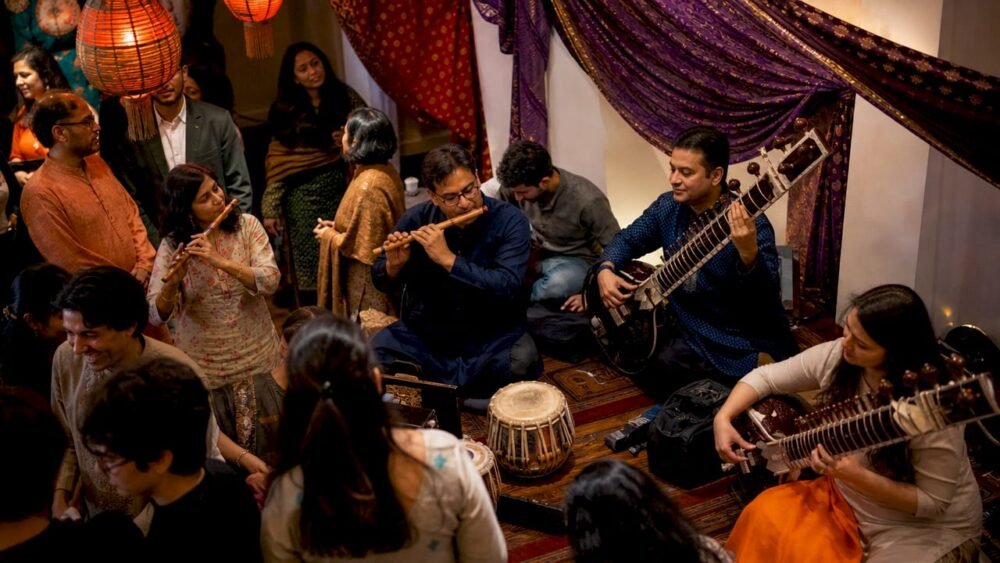
Music is defined as the primary vehicle through which communities express collective identity, preserve heritage, and create shared emotional experiences during cultural celebrations. The role of music in cultural celebrations extends far beyond entertainment. It is the connective tissue that holds rituals, festivals, and ceremonies together across generations. From Romanian wedding songs to Kerala’s sacred temple chants, music functions as both a social bond and a living archive of cultural memory. Recent 2026 research confirms that this function is not merely traditional but is rooted in human biology and social psychology, making music indispensable to how communities mark the moments that matter most.
How does music enhance social cohesion during cultural celebrations?
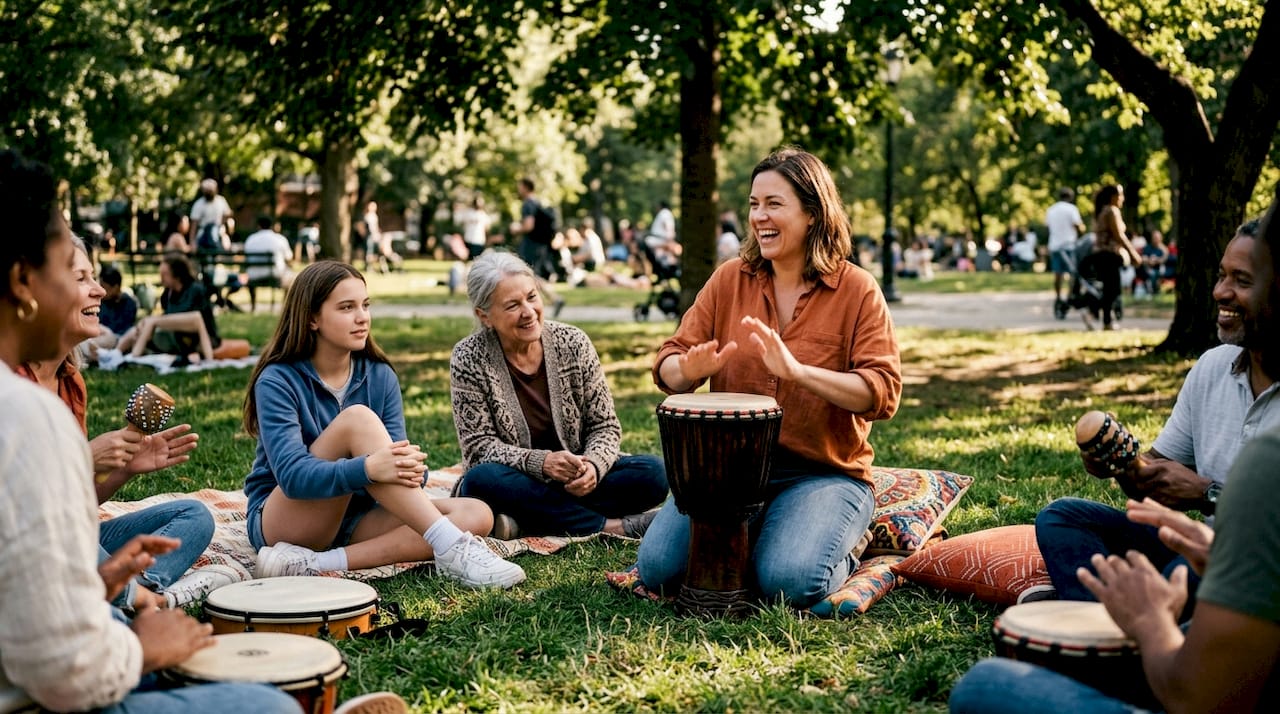
Music participation significantly increases prosocial behaviour and collective belonging in communities. This finding is not incidental. When people sing, dance, or play together, they synchronise their movements and emotions, which builds trust and psychological safety among participants.
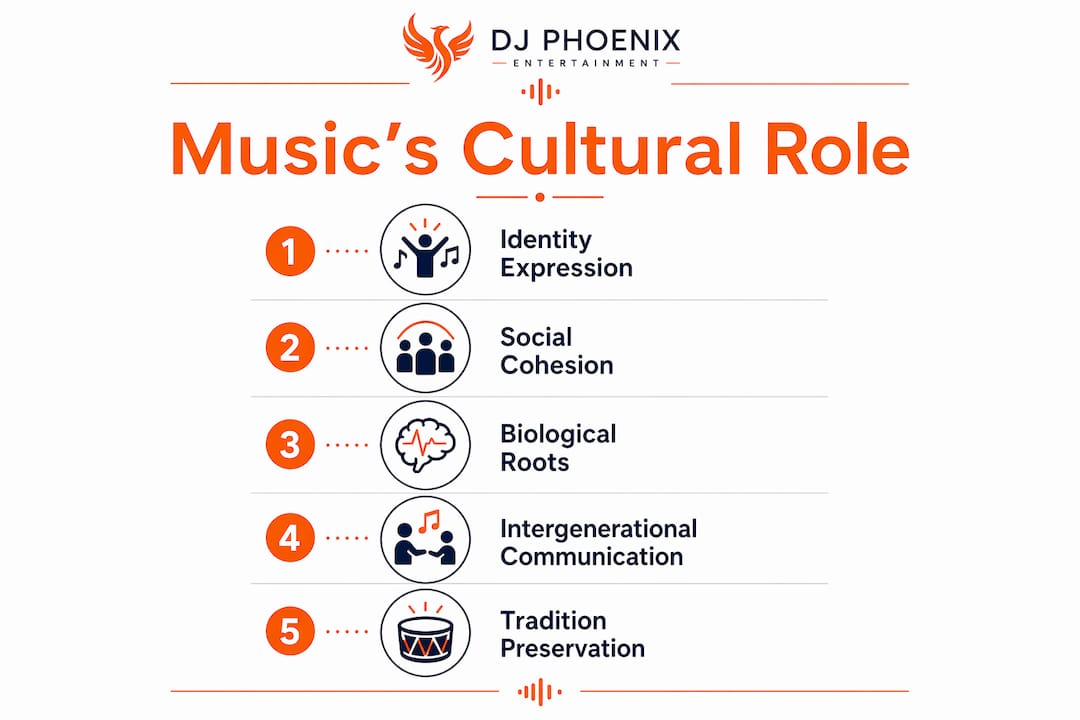
The cultural significance of music in this context operates through several well-documented mechanisms:
- Synchronised movement during communal music creates a sense of shared purpose, reducing social barriers between strangers.
- Ritual songs and anthems anchor collective memory, giving communities a shared emotional reference point that persists across decades.
- Call-and-response patterns, common in West African and Indigenous North American traditions, actively require participation, making every attendee a contributor rather than a spectator.
- Repetition of familiar melodies at recurring festivals reinforces group identity each time the celebration returns.
Anthropologist Michael Di Giovine notes that songs like anthems sustain collective memory across generations, functioning as emotional anchors for communities navigating change. This is why national anthems produce visceral reactions even in people who rarely think about patriotism. The music does the remembering on behalf of the group.
“Music is an affective emotional tool that anchors shared cultural memory and identity, sustaining communities across time and social disruption.”
The significance of music in traditions is also visible in how communities use it to manage social transitions. Weddings, funerals, harvests, and new year celebrations all rely on specific musical forms to signal that a threshold is being crossed. The music does not merely accompany the event. It completes it.
Pro Tip: When planning a multicultural event, identify the specific songs or musical forms tied to key ritual moments in each culture represented. Playing the right piece at the right moment signals respect and cultural literacy to your guests.
What are the biological roots that make music central to ritual?
Music is a fundamental biological capacity distinct from language, with brain studies revealing partly separate neural pathways for music and speech. This distinction matters enormously. It means that music accesses emotional and social processing centres in the brain through routes that spoken language cannot replicate. A eulogy can describe grief. A slow, repetitive melody can produce it.
This neurological reality explains why music appears in every known human culture and why its presence in ritual is not optional. Communities across history have intuitively understood what neuroscience now confirms: music regulates emotion in ways that speech alone cannot achieve.
| Musical function | Neurological mechanism | Cultural application |
|---|---|---|
| Emotional regulation | Activates limbic system and dopamine pathways | Grief rituals, healing ceremonies |
| Social bonding | Triggers oxytocin release during synchronised performance | Wedding dances, communal singing |
| Memory encoding | Engages hippocampus through melodic repetition | Anthems, seasonal festival songs |
| Spiritual connection | Alters brainwave states through rhythm and repetition | Temple chants, sacred drumming |
The therapeutic dimension of this biological capacity is well documented. Rambu Solo’ ceremonies in Toraja, Indonesia, use slow repetitive melodies to support grieving processes, creating a safe emotional space for psychological recovery. The music is not decorative. It is the mechanism through which healing occurs.
Pro Tip: For events that honour loss or transition, such as memorial gatherings or retirement celebrations, select music with slower tempos and familiar melodic structures. These qualities activate the neural pathways associated with emotional processing and comfort.
How does music communicate cultural meaning across generations?
Music is a form of negotiated symbolic communication created through public performance and reinterpretation. Meaning arises from active community participation rather than being inherent in the music itself. This is a critical distinction. A wedding song does not carry meaning because of its notes. It carries meaning because generations of families have performed it at the same threshold moment, loading it with accumulated significance.
This process of meaning-making through music operates on two levels simultaneously. At the individual level, music allows personal emotional expression within a socially sanctioned framework. At the collective level, musical behaviour balances personal emotional expression and the maintenance of group identity. A mourner at a funeral can weep freely because the music gives everyone permission to feel. A celebrant at a harvest festival can express joy because the music defines the emotional register of the moment.
Intergenerational transmission of culture through music works precisely because of this dual function. Children absorb not just melodies but the emotional and social rules attached to them. They learn when to be solemn, when to be joyful, and what those states mean to their community. Music is, in this sense, a vehicle for identity that no written text can fully replace.
Musical traditions also evolve through intergenerational negotiation, balancing preservation and reinterpretation. A traditional song performed at a contemporary multicultural festival may incorporate new instruments or tempos while retaining its core melodic identity. This flexibility is a strength, not a compromise. It allows communities to maintain cultural continuity while remaining relevant to younger generations. Understanding this dynamic is central to appreciating music’s impact on festivals and community events today.
What are examples of traditional music practices in cultural ceremonies?
Concrete examples from global traditions illustrate how deeply music is woven into the structure of cultural life. These are not peripheral additions to ceremonies. They are load-bearing elements without which the ritual would be considered incomplete.
Romanian traditional music and life-cycle rites. In Romanian culture, traditional music is integrated into life-cycle rites where its presence is mandatory to complete rituals. Weddings, funerals, and calendar feasts each have defined musical forms with specific timing and social functions. A Romanian wedding without its prescribed musical sequences is not merely less festive. It is, by community standards, unfinished.
Kerala’s Brahmanippattu ritual system. Brahmanippattu is a sacred ritual musical system in Kerala synchronised with temple worship cycles. Songs are performed in segmented time units matching puja schedules, linking music directly to spiritual and life-cycle events. The music does not accompany worship. It constitutes worship.
Gondang Sabangunan in Batak Toba death rituals. Among the Batak Toba people of Indonesia, sacred music serves as a liturgical medium facilitating communication with ancestors during the Saur Matua death ceremony. The music is not entertainment. It is the channel through which the living address the dead.
West African drumming traditions. Across West African cultures, specific drum patterns signal specific ritual states, from the opening of a ceremony to the moment of spiritual possession. Participants recognise these patterns and respond accordingly, demonstrating how music functions as a precise communicative code within cultural events.
Indigenous Canadian powwow music. Drumming and song at powwows serve simultaneously as spiritual practice, historical record, and community gathering. Each song belongs to a specific nation or family, and its performance is an act of cultural sovereignty as much as celebration.
Pro Tip: When working with communities whose musical traditions carry ritual weight, consult cultural advisors or community elders before selecting or sequencing music. The wrong song at the wrong moment can signal disrespect, even when the intention is celebratory.
For event planners seeking to honour these traditions with the calibre they deserve, a planner’s guide to traditional music at events offers practical frameworks for integrating cultural musical practices with professional production standards.
Key takeaways
Music is the most universal and biologically grounded tool communities possess for building cohesion, transmitting identity, and completing the rituals that define cultural life.
| Point | Details |
|---|---|
| Music builds social trust | Communal music participation increases prosocial behaviour and psychological safety among participants. |
| Biology underpins music’s power | Separate neural pathways for music and speech give music unique access to emotional and social processing. |
| Music encodes cultural memory | Ritual songs and anthems anchor collective identity across generations through repeated performance. |
| Ritual music is mandatory, not decorative | In traditions like Romanian rites and Kerala’s Brahmanippattu, music’s presence is required to complete the ceremony. |
| Meaning is created through participation | Musical meaning arises from community performance and reinterpretation, not from the notes themselves. |
Music as a living force: reflections from the floor
After years of performing at weddings, corporate galas, and multicultural celebrations across Canada, I have come to one firm conclusion: most people underestimate what music actually does at a cultural event. They think of it as atmosphere. It is not atmosphere. It is architecture.
I have watched a room of three hundred people from six different cultural backgrounds become a single, unified crowd the moment a familiar melody begins. Not because the song was popular. Because it was right. It carried the weight of a shared moment, a shared memory, or a shared identity that the guests recognised before they could articulate why. That recognition is not sentimental. It is biological and social, as the research confirms.
What I find most compelling, and what I think most event planners miss, is that music’s power in cultural celebrations is not about volume or production quality alone. It is about precision. The right song at the right moment in a ceremony does something no speech or decoration can replicate. It signals to every person in the room that this moment is real, that it counts, and that they are part of something larger than themselves.
The traditions I have had the privilege of serving, from Persian weddings to corporate events for clients like Mercedes-Benz, have taught me that cultural music is never static. It evolves. But its core function, to unite, to honour, and to mark the moments that matter, remains constant. Preserving that function while adapting to contemporary contexts is the artistry that separates a skilled music professional from someone who simply plays songs.
— Reza
Dj-phoenix and the art of cultural celebration
Dj-phoenix brings the same depth of cultural understanding described in this article to every event he performs. His expertise spans weddings, corporate gatherings, and multicultural celebrations, with a particular pedigree in curating playlists that honour the ritual weight of cultural music while maintaining the energy a live event demands. Clients like Mercedes-Benz and FW Sports have trusted Dj-phoenix to deliver sophisticated, high-calibre experiences where music does exactly what it is meant to do.
Explore Dj-phoenix’s performance gallery to see the range of cultural celebrations he has served, or visit the multicultural event planning guide to begin building a music programme worthy of your community’s traditions.
FAQ
What is the primary role of music in cultural celebrations?
Music’s primary role in cultural celebrations is to build social cohesion and express collective identity. Research confirms that communal music participation increases prosocial behaviour and psychological safety among participants.
Why is music considered biologically essential to human ritual?
Brain studies reveal that music and speech use partly separate neural pathways, giving music unique access to emotional regulation and social bonding. This biological foundation explains why music appears in every known human culture’s ritual practices.
How does traditional music preserve cultural identity across generations?
Traditional music transmits cultural values, emotional norms, and social rules through repeated performance at key life events. Children absorb not just melodies but the meaning and social context attached to them, ensuring cultural continuity.
Is music’s presence in ceremonies ever considered mandatory?
In Romanian traditional culture and Kerala’s Brahmanippattu ritual system, music’s presence is required to complete the ceremony. Its absence renders the ritual incomplete by community standards, not merely less festive.
How does music create meaning in cultural events?
Musical meaning arises from active community participation and reinterpretation rather than from the music itself. Each performance at a cultural event adds a layer of shared experience that accumulates into lasting cultural significance.