The essential dj contract terms come down to ten clauses: event details, scope of services, pricing and deposit, cancellation policy, force majeure, liability and insurance, venue and technical requirements, music preferences, substitution provisions, and overtime rates. Below, we break down each clause with sample language, negotiation guidance, and a checklist you can apply to any agreement, whether you’re drafting one or reviewing one a DJ sent you.
TL;DR:
- A cancellation policy should specify a tiered refund schedule, with full forfeiture within 30 days and partial refunds up to 90 days before the event.
- Liability caps must apply to both parties with a certificate of insurance obtained at least 14 days prior to the event.
- The contract must clearly list the segments covered, including ceremony, cocktail hour, reception, and MC duties, to prevent misunderstandings.
- Overtime should be explicitly billed in 30-minute increments at a rate of 1.5 to 2 times the base hourly fee, with fees due immediately after the event if applicable.
- Keep all signed contracts, insurance certificates, receipts, and communication records organized for at least three years to ensure enforceability.
Table of Contents
- A quick DJ contract checklist to audit before you sign
- What each essential clause means and how to word it
- Red flags to catch before signing, and how to fix them
- Field-tested clauses and templates from Dj-phoenix
- How to make signatures and recordkeeping bulletproof
- How an experienced DJ frames contract conversations
- Book a contract review with Dj-phoenix
- Where to find templates and legal guidance
- Sources
A quick DJ contract checklist to audit before you sign
A contract missing even one of these clauses leaves room for disagreement on the day that matters most. Run through this list before you sign anything, or before you send your own agreement out for a client’s signature.
- Event details — exact date, start and end times, venue name and address.
- Scope of services — which segments (ceremony, cocktail hour, reception) and duties (MC work, announcements) are covered.
- Equipment list — speakers, microphones, lighting, and backup gear included in the fee.
- Pricing and payment schedule — total fee, retainer amount, and due dates.
- Cancellation and refund policy — a sliding scale tied to how far ahead the cancellation happens.
- Force majeure clause — what happens if a hurricane, blackout, or public health order derails the date.
- Liability and insurance — certificate of insurance (COI) and who carries the risk.
- Indemnification language — who covers legal costs if a third party makes a claim.
- Venue and technical requirements — power access, load-in time, and noise limits.
- Music preferences — must-play, do-not-play, and how guest requests get handled.
- Substitution clause — what happens if the booked DJ can’t perform.
- Overtime terms — the rate and how extra time gets authorized.
Pricing structure, overtime rates, and the retainer percentage tend to be the most negotiable items on this list. Three red flags to fix immediately: a contract with no stated cancellation policy at all, a liability section that caps the DJ’s responsibility but says nothing about the venue’s, and a “services provided” line so vague it doesn’t specify ceremony versus reception coverage. Any of those three should stop you before you sign.
What each essential clause means and how to word it
Contract law requires three things to hold up: an offer, an acceptance, and consideration (something of value exchanged). Entertainment agreements that leave key terms vague have been challenged in court under the indefiniteness doctrine, which is a formal way of saying a judge won’t enforce a promise nobody bothered to define. That’s the legal backbone behind why every clause below needs specifics, not gestures.
Event details and performance windows. State the exact date, start time, end time, and full venue address, including the specific room or outdoor space if the property has more than one. “Approximately 6 to 11 PM” is not a performance window. “6:00 PM to 11:00 PM, with load-in beginning at 4:00 PM” is. Precision here protects both sides from a dispute over whether the DJ arrived late or the reception simply ran behind schedule.
Scope of services. List every segment the DJ covers: ceremony, cocktail hour, reception, and any MC duties like announcing the wedding party or coordinating with the venue’s catering team. Mobile DJ roles vary considerably by event type, so naming exactly which parts are included avoids the awkward moment when a client assumes ceremony music was part of the package and the DJ assumed it wasn’t. Attach an equipment list too: speaker count, wireless microphones, uplighting, and any backup units on-site.
Pricing, deposit, and payment schedule. Standard practice calls for a non-refundable retainer of 20% to 50% of the total fee, with the balance due somewhere between 7 and 30 days before the event. Spell out accepted payment methods (e-transfer, cheque, credit card) and whether a late fee applies if the balance arrives after the due date.
Sample language: “A retainer of 30% of the total fee is due upon signing to reserve the date and is non-refundable. The remaining balance is due no later than 14 days prior to the event date, payable by e-transfer or cheque.”
Cancellation, rescheduling, and substitution. A tiered refund structure is the industry standard: full retainer forfeited inside 30 days, partial refund of the remaining balance between 30 and 90 days, and closer to a full refund outside 90 days. Templates also recommend a sliding scale rather than an all-or-nothing policy, since it’s fairer to both sides. The contract should also address what happens if the DJ cancels, not just the client, and what remedy the client gets in that case (full refund plus a qualified replacement, typically).
Force majeure. This clause covers events nobody can control: severe weather, government shutdowns, venue closures. The strongest versions set out rescheduling or credit options rather than an automatic refund, which protects the DJ’s booked time while still giving the client a fair path forward.
Liability, insurance, and indemnification. Ask for a certificate of insurance and, if the venue requires it, confirmation that the venue will be named as an additional insured. Indemnification language allocates who pays if a third party sues over an injury or property damage tied to the DJ’s equipment. Liability caps, often set at the total contract value, protect the DJ from open-ended exposure.
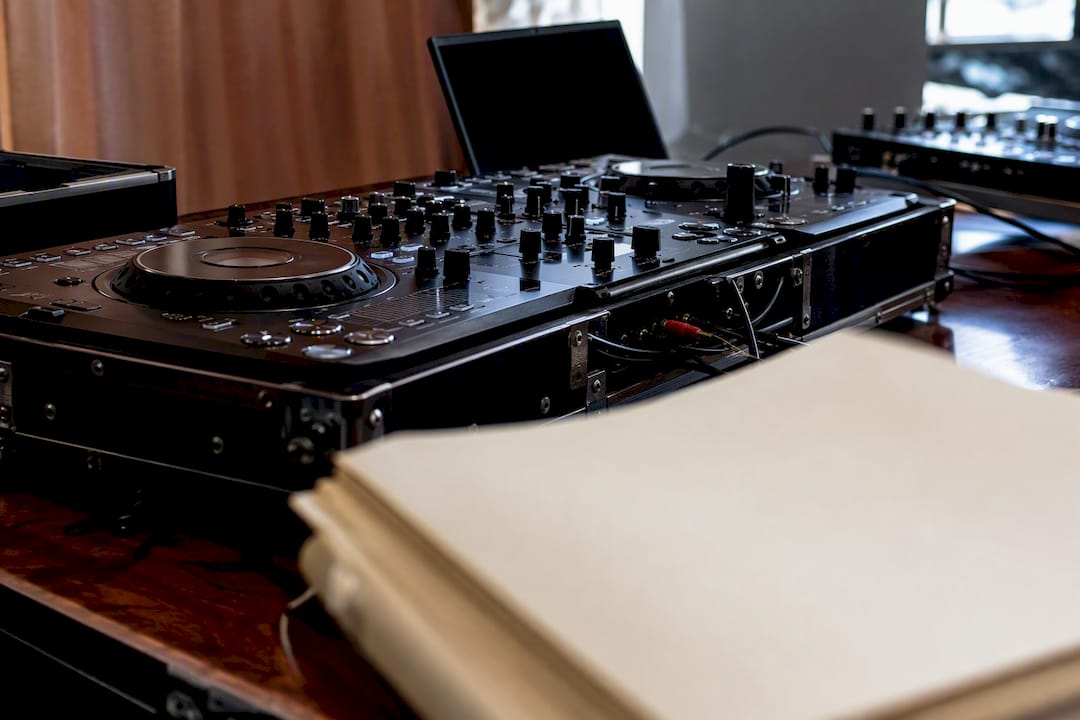
Statistic Callout: Certificates of insurance and vendor confirmations are best gathered at least 14 days before the event, well ahead of the week-of scramble when venues suddenly ask for paperwork nobody budgeted time for.
Venue and technical rider. Attach a rider or equipment checklist covering power specifications, load-in access, and space requirements. Note any noise curfews the municipality or venue enforces, and build a weather contingency into outdoor bookings.
Overtime, setup, and teardown. Define what triggers overtime (the reception running past the contracted end time), the billing increment (often 30-minute blocks), and the rate, commonly 1.5 to 2 times the base hourly rate. Setup and breakdown windows should be stated separately so they’re not confused with billable performance time.
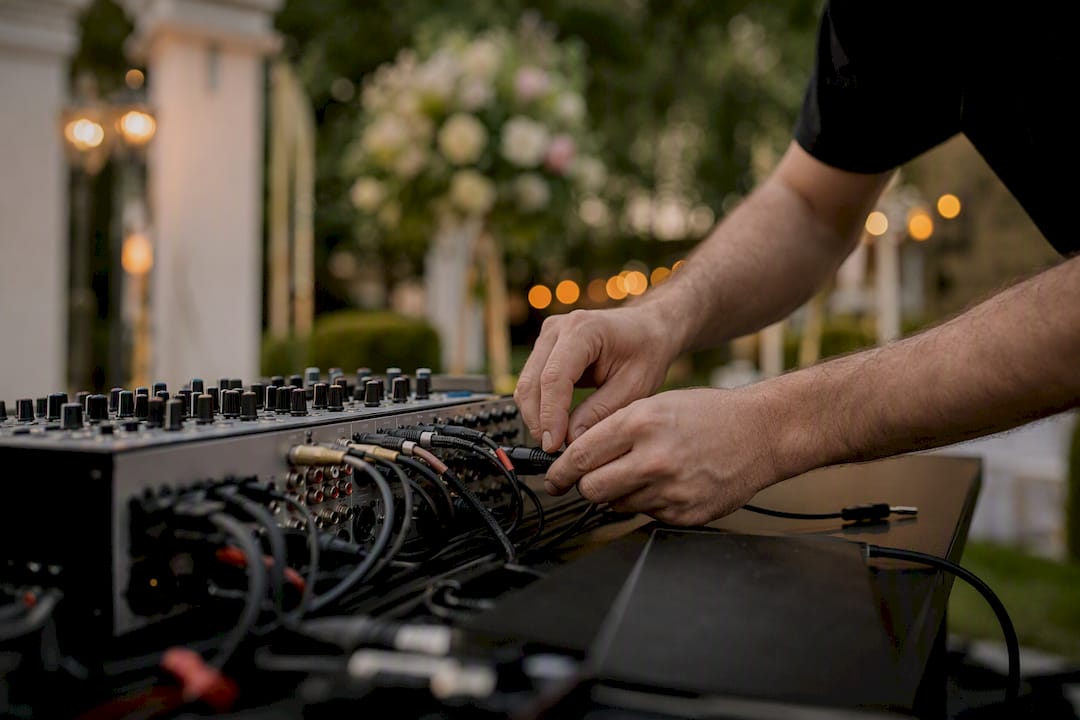
Music and content terms. Include must-play and do-not-play lists, a policy for handling guest requests during the event, and whether explicit content is permitted. Sourcing matters too: reputable DJs pull tracks from licensed download platforms rather than questionable rips, which keeps the performance both legal and higher quality.
Photo, video, and marketing permissions. A short opt-in or opt-out clause covers whether the DJ can use event photos or video clips for promotional purposes. Sample: “Client grants DJ permission to use photographs and video from the event for marketing purposes unless Client opts out in writing prior to the event date.”
Signatures and e-sign validity. Electronic signatures are legally binding across the United States under the federal E-SIGN Act, so a digital signature carries the same weight as a wet-ink one.
Pro Tip: Before you sign anything, read the cancellation and force majeure clauses back to back. If one gives the client a refund path but the other doesn’t mirror it for the DJ’s side, that imbalance is worth raising before, not after, you commit.
Red flags to catch before signing, and how to fix them
Some contract language looks standard but quietly shifts risk onto one party. Here’s what to watch for and how to push back without souring the relationship.
- No cancellation policy at all. Ask for a tiered schedule instead: “Please add a sliding-scale cancellation policy, for example, full retainer forfeited inside 30 days, 50% refund of the balance between 30 and 90 days.”
- A liability cap only on the DJ’s side. Request mutual limits, or a mirrored indemnification clause covering both parties equally.
- Vague scope language like “DJ services as agreed.” Ask for specifics: “Please list which segments are covered (ceremony, cocktail hour, reception) and confirm MC duties are included.”
- No substitution clause. A reasonable counter-offer is a guarantee of a replacement DJ of equal or greater experience if the booked DJ becomes unavailable, which protects the client without locking the DJ into an unworkable promise.
- Overtime left undefined. Request a stated rate and billing increment rather than “to be determined at the time.”
A short email works well here: “Thanks for sending the contract over. Before I sign, could we add a cancellation schedule tied to how far ahead notice is given, and clarify the overtime rate per half hour? Happy to hop on a call if easier.” Most professional DJs will accept reasonable requests like these without pushback, since a clearer contract protects them too.
Field-tested clauses and templates from Dj-phoenix
Years of booking weddings, corporate events, and multicultural celebrations across diverse audiences has shaped how Dj-phoenix structures these clauses. A few pieces of language worth borrowing directly:
- Deposit: “A 30% non-refundable retainer secures your date. Remaining balance due 14 days prior via e-transfer.”
- Overtime: “Additional performance time is billed in 30-minute increments at 1.5x the standard hourly rate, payable via e-transfer on the event night.”
- Substitution: “In the rare event DJ Phoenix cannot perform, a qualified replacement DJ of equal or greater experience will be provided at no additional cost.”
- Force majeure: “In cases of severe weather, venue closure, or government order, the event will be rescheduled to a mutually agreed date or credited toward a future booking.”
For music planning, request must-play and do-not-play lists 30 days out and lock the final event timeline 14 days before the date, giving enough runway to prep transitions between ceremony, cocktail hour, and reception without last-minute guesswork. Space and power needs vary by venue, but a workable minimum is a 6×6-foot footprint with two dedicated 15-amp circuits; recommended setups add extra circuits for lighting and backup gear. Full specifications appear in Dj-phoenix’s equipment space guide.
Pro Tip: Separate the playlist deadline from the timeline sign-off into two distinct fields with their own due dates in the contract. Bundling them together is how “I thought you already had that” conversations happen two days before the wedding.
How to make signatures and recordkeeping bulletproof
A signed contract only protects you if you can find it, along with everything attached to it, when a question comes up eight months later.
- Sign electronically without hesitation. The federal E-SIGN Act makes electronic signatures legally binding across all fifty states, so a signed PDF or e-signature platform carries the same weight as a signature in pen.
- Keep the certificate of insurance with the contract, not in a separate inbox folder you’ll forget about.
- Save payment receipts for the retainer and final balance as proof of the payment schedule being honoured.
- File the approved timeline and playlist sign-off alongside the contract, since these documents show what both parties actually agreed to.
- Archive email or text communications that modify any contract term in writing, even informally.
- Use a consistent folder structure: one folder per event, named by date and client surname, with the contract, COI, receipts, and timeline all inside.
- Retain everything for at least three years past the event date, which covers most standard limitation periods for contract disputes.
How an experienced DJ frames contract conversations
A vague contract cost a colleague of mine a client relationship once: the agreement said “reception coverage” with no end time, the party ran two hours past what everyone assumed was included, and neither side could agree on what “included” meant. That’s the entire argument for specificity, condensed into one bad night.
When I explain deposit terms to clients now, I keep it simple: “The retainer holds your date exclusively. No one else can book it once it’s paid.” For overtime, I say plainly what the rate is and when it kicks in, before anyone’s asking mid-reception. For equipment needs, I walk through the power and space requirements early, because surprising a venue coordinator at load-in helps nobody.
Clear contract conversations aren’t adversarial. They’re how two professionals make sure the event goes well.
— Reza
Book a contract review with Dj-phoenix
Dj-phoenix reviews contract language every week across weddings, corporate bookings, private parties, and multicultural celebrations for clients ranging from intimate family gatherings to brand activations for names like Mercedes-Benz and FW Sports. The advantage of working directly with an experienced DJ instead of piecing together a template alone is simple: you get contract language that’s already been tested against real venues, real overtime disputes, and real force majeure situations, not boilerplate copied from a generic form.

A consultation includes a walkthrough of your event’s scope, equipment needs, and technical rider, plus sample clause language you can adapt for deposit, overtime, and substitution terms. Whether you’re planning a Persian wedding celebration, a corporate gala, or a multicultural event with varied musical traditions, Dj-phoenix’s wedding packages show how services and pricing structures typically come together. Ready to see what a properly scoped agreement looks like for your date? Visit Dj-phoenix to check availability and start the conversation.
Where to find templates and legal guidance
For a downloadable starting point, Dochives’ wedding DJ contract template covers scope and event-detail clauses in plain language. EverSet’s contract guide offers sample cancellation and force majeure wording. ConsumerShield’s DJ service agreement template walks through liability and indemnification language in more depth. For venue-specific technical considerations, this guide on rustic barn events covers noise curfews and outdoor logistics worth folding into your technical rider. If your event carries a high contract value or spans multiple jurisdictions, a local attorney’s review is worth the fee before you sign.
Sources
- Free Wedding DJ Contract Template | Dochives
- Free DJ Contract Template USA (2026) | PDF & Word
- Free Wedding DJ Contract Template (2026 PDF + Clauses) | EverSet
- DJ Service Agreement Template — Free Professional Contract