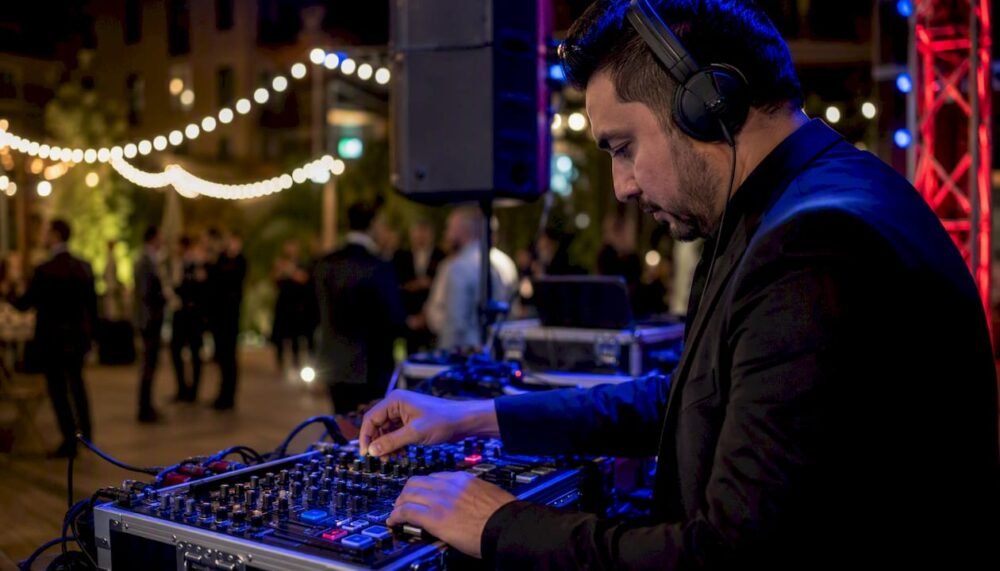
Music is not decoration at a networking event. It is infrastructure. When chosen and delivered with precision, it lowers social friction at arrival, sustains conversational energy during open networking, and signals transitions without a single formal announcement. Research from the University of Maribor confirms that participants prefer music at arrival, breaks, networking phases, and closing, while expecting silence during formal presentations. That finding alone should reshape how you structure your event programme.
Three immediate actions for any planner:
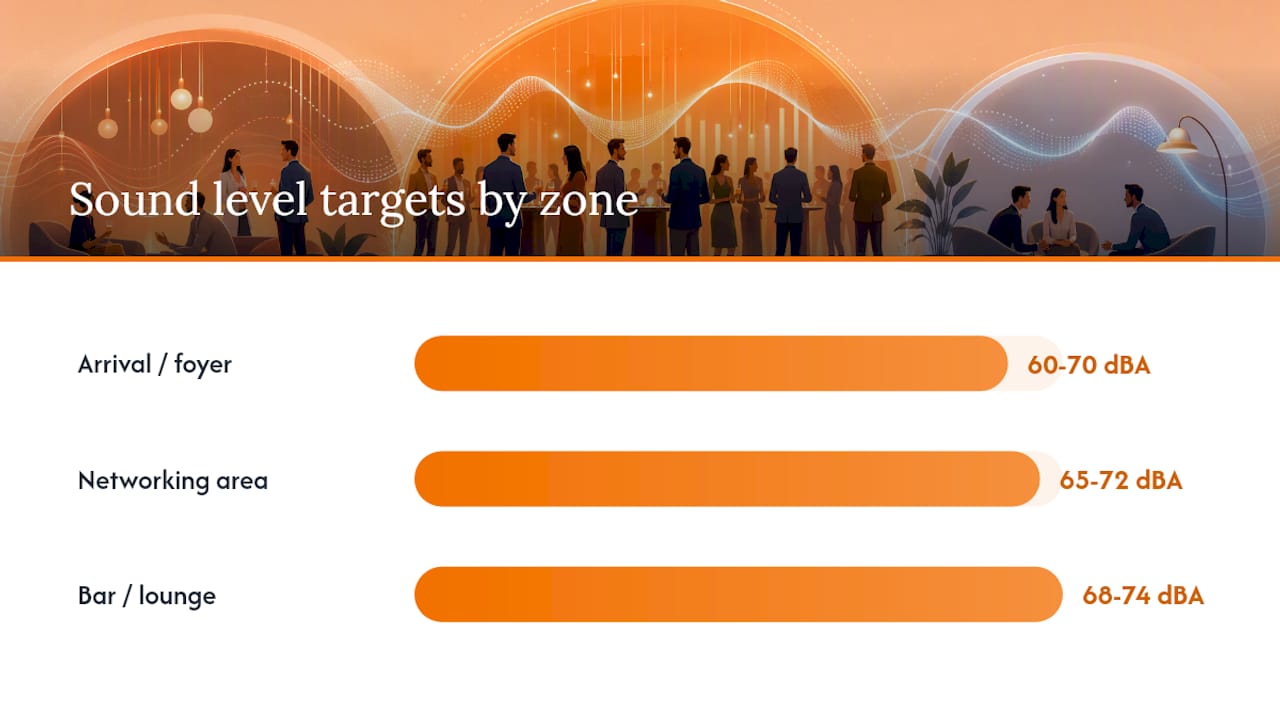
- Keep networking-area volume between 65–72 dBA measured at ear height so guests can speak without raising their voices.
- Default to instrumental or low-vocal mixes during open networking; lyrics compete directly with speech for cognitive processing.
- Brief your DJ on the three or four agenda transitions that matter most, not just the playlist.
Table of Contents
- When should you use music at a networking event?
- What music actually works for networking?
- What skills should you expect from a professional DJ?
- Technical checklist: sound zones and volume targets
- How to brief your DJ: a one-page template
- Sample playlists and timing for three event types
- How do you know if the music is working?
- Key takeaways
- What most planners underestimate about music at networking events
- Dj-phoenix brings precision and cultural artistry to your networking events
- Useful sources
When should you use music at a networking event?
Timing determines whether music supports your objectives or undermines them. The phase-based framework below maps music to event structure with precision.
| Event phase | Music role | Recommended approach |
|---|---|---|
| Arrival / registration | Relax guests, create shared atmosphere | Low-volume instrumental; 60–70 dBA |
| Open networking / breaks | Encourage lingering and conversation | Warm textures, steady 90–110 BPM; 65–72 dBA |
| Presentations / speeches | Avoid competition with speaker | Silence or near-inaudible underscoring only |
| Closing / exit | Signal natural ending, leave positive impression | Slightly warmer, familiar tracks; gradual fade |
Arrival music carries more weight than most planners assign it. A guest who walks into silence feels exposed; one who walks into a well-chosen ambient track feels welcomed into something already in motion. That psychological shift lowers the activation energy required to approach a stranger.
During presentations, music should disappear almost entirely. A DJ can use a brief musical cue, three to five seconds of a recognisable motif, to signal a speech is starting or ending. Beyond that, the speaker owns the room.
Pro Tip: Brief your DJ to bring arrival music up two to three minutes before doors open, not at the moment the first guest arrives. The room should already feel alive.
What music actually works for networking?
Industry guidance from Social Tables is clear: down-tempo music encourages lingering while up-tempo accelerates turnover. For networking, you want guests to linger, so the default tempo target during open networking is 90–110 BPM, with a gradual nudge toward 115–120 BPM as you approach the closing phase to signal the natural end of the event.
Instrumental tracks are the professional standard for networking phases. Lyrics activate the brain’s language-processing centres, which directly compete with conversation. Jazz piano, bossa nova guitar, lo-fi hip-hop instrumentals, and ambient electronic textures all work because they provide rhythmic and harmonic interest without demanding linguistic attention.
Genre choices mapped to event type:
- Multicultural reception: World music instrumentals, fusion arrangements, and culturally specific ambient tracks chosen in consultation with the host. DJ cultural competence is not optional here; it is a professional requirement.
Do-not-play list for networking phases: high-lyric anthems guests feel compelled to sing, aggressive bass-heavy EDM, tracks with abrupt dynamic swings, and any song so recognisable it pulls attention away from conversation.
Pro Tip: Ask your DJ to prepare a “B-list” of three to five instrumental alternatives for each phase. If one track lands poorly with a specific cultural group, the pivot is immediate.
What skills should you expect from a professional DJ?
A DJ at a networking event is not a jukebox operator. The calibre of skill required is closer to a live conductor reading an audience in real time. Live musicians and skilled DJs alike adjust tempo and dynamics continuously, reducing awkward silences and maintaining conversational levels without a single guest noticing the intervention.
| DJ skill | What it looks like in practice |
|---|---|
| Room reading | Adjusting tempo and volume as guest clusters form or thin |
| Transition cueing | A three-second musical cue signals a speech; no announcement needed |
| Emcee restraint | Speaking only when the planner requests it; never filling silence with chatter |
| Cultural competence | Rotating repertoire to reflect the audience’s backgrounds respectfully |
| Backup readiness | A second playback source ready for immediate use in any technical failure |
Music shapes trust and connection at live events precisely because it operates below conscious attention. A DJ who understands this treats every volume adjustment and every track selection as a deliberate act of hospitality.
Pro Tip: During your pre-event consultation, ask the DJ to describe one specific moment where they pivoted their set based on what they observed in the room. The answer tells you everything about their professional calibre.
Technical checklist: sound zones and volume targets
Sound design for a networking event requires zoning, not a single PA pointed at the room. Each zone serves a different function and demands a different acoustic approach.
- Arrival / foyer: Ceiling speakers or compact line-array at 60–70 dBA; even coverage, no hotspots near registration desks.
- Networking area: Distributed speakers at ear height, 65–72 dBA; the goal is presence without projection.
- Bar / lounge: Slightly warmer, 68–74 dBA; guests expect a livelier feel here and tolerate slightly higher levels.
- Stage / presentation zone: PA pointed at the audience, not the networking floor; DJ monitor positioned so the DJ can hear without bleeding into the networking area.
Essential kit for a professional networking event setup:
- Main PA (left/right) sized to the room’s square footage
- Distributed ambient speakers for networking zones
- DJ monitor or in-ear monitoring
- Mixer with at least two independent output channels for zone control
- DI box for any live instrument inputs
- Wireless handheld and lapel microphones
- Backup playback device (tablet or secondary laptop) loaded with the full playlist
Proper equipment selection is what separates a technically sound event from one where guests spend the evening leaning in and asking each other to repeat themselves.
Statistic callout: Participants in professional event research preferred quiet instrumental or ambient music as the least disruptive format, with music most valued during arrival, breaks, and networking phases rather than during formal content delivery.
How to brief your DJ: a one-page template
A well-structured brief is the single highest-leverage document you produce before the event. A thorough DJ consultation covers objectives, cultural needs, and logistics in one conversation, eliminating the most common day-of failures.
| Brief field | What to include |
|---|---|
| Event objective | Networking, celebration, brand activation, or mixed |
| Attendee profile | Age range, cultural backgrounds, industry, formality level |
| Key moments to cue | Arrival, speech starts/ends, networking open, closing |
| Inclusions / exclusions | Confirmed tracks, do-not-play list, cultural restrictions |
| Volume policy | dBA targets per zone; who has authority to adjust on the day |
| Contact points | Planner’s on-site number; secondary contact if planner is unavailable |
Questions to ask during the DJ consultation:
- What is your backup playback system if your primary laptop fails?
- How do you handle a cultural music request you are not familiar with?
- Can you provide references from corporate or multicultural events of similar scale?
- What is your load-in time requirement and stage footprint?
- Are you insured for the venue’s liability requirements?
- How do you handle a do-not-play request made by a guest on the night?
For multicultural events specifically, the multicultural event DJ brief process should include a pre-event call with a cultural stakeholder, not just the planner, to confirm repertoire appropriateness.
Sample playlists and timing for three event types
| Event type | Arrival | Open networking (60–90 min) | Closing (20 min) |
|---|---|---|---|
| Corporate mixer | Modern jazz instrumentals, 80–90 BPM | Lo-fi hip-hop, acoustic covers, 95–110 BPM | Upbeat acoustic pop, 110–120 BPM |
| Wedding cocktail hour | Bossa nova, light classical, 80–95 BPM | Acoustic pop instrumentals, 90–110 BPM | Warm familiar melodies, 115–120 BPM |
| Multicultural reception | World music instrumentals, culturally curated | Fusion arrangements, 90–110 BPM | Celebratory cultural tracks, 110–120 BPM |
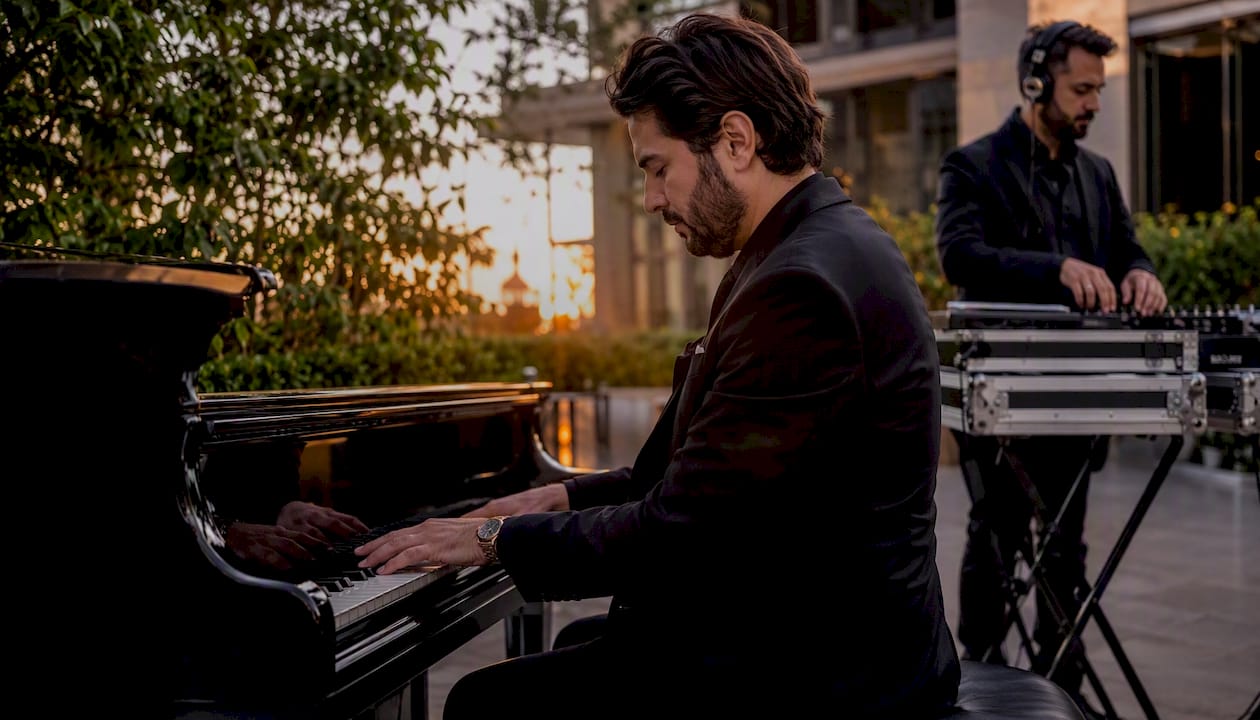
Blending live elements with DJ playback delivers a perceived sophistication that a static playlist cannot match. A pianist or acoustic guitarist performing during arrival, then handing off to a DJ for open networking, preserves momentum while giving the event a distinctive character. The transition works best when the live performer and DJ share a key and tempo reference in advance.
For the BPM arc: start at 80–90 BPM during arrival, hold 95–110 BPM through open networking, and allow a gradual climb to 115–120 BPM in the final 20 minutes. Guests read the energy shift instinctively and begin natural exit behaviour without any announcement.
How do you know if the music is working?
Real-time indicators are visible within the first 15 minutes. Guest clusters forming and sustaining, conversation volume rising steadily, and guests lingering at networking stations rather than retreating to walls all signal that the acoustic environment is doing its job. Guests shouting to be heard is the clearest sign that volume or bass is too high.
| Symptom | Likely cause | Quick fix |
|---|---|---|
| Guests shouting | Volume or bass too high | Lower bass EQ first; reduce overall level by 3–5 dB |
| Guests clustering near exits | Music feels unfamiliar or unwelcoming | Shift to more neutral, familiar instrumental tracks |
| Room feels flat / no mingling | Volume too low or tempo too slow | Raise level slightly; introduce a percussive texture |
| Cultural friction visible | Repertoire mismatch | Pause, consult stakeholder, pivot to neutral world instrumentals |
Post-event, three survey questions capture music’s effect with precision:
- “Did the music make it easier or harder to have conversations?”
- “Did the atmosphere feel welcoming to your cultural background?”
- “Would you describe the event’s energy as appropriate for the occasion?”
Audience engagement metrics from corporate events consistently show that music-related feedback correlates with overall event satisfaction scores, making it one of the most cost-effective variables a planner can control.
Key takeaways
Music functions as event infrastructure: brief your DJ on phase transitions, set dBA targets per zone, and default to instrumental mixes during open networking to protect conversation quality.
| Point | Details |
|---|---|
| Phase-based music planning | Use music at arrival, networking, and closing; silence during presentations. |
| Instrumental default | Lyrics compete with speech; instrumental or ambient tracks protect conversation. |
| Volume targets by zone | Networking areas: 65–72 dBA; bar/lounge: 68–74 dBA; arrival: 60–70 dBA. |
| Cultural competence | Brief your DJ on attendee backgrounds and confirm repertoire with a cultural stakeholder. |
| Dj-phoenix for Canadian events | Dj-phoenix provides multicultural curation, sound-system rental, and on-site room reading for corporate, wedding, and private networking events across Canada. |
What most planners underestimate about music at networking events
The conventional wisdom treats music selection as a playlist problem. Choose the right genre, hit play, and the atmosphere takes care of itself. After working events ranging from intimate corporate mixers to large multicultural receptions, the reality is more precise than that.
The most consequential decisions are not about genre at all. They are about volume architecture and transition timing. A beautifully curated playlist delivered at the wrong level, or held too long past the moment when the room’s energy has shifted, actively works against the networking objective. Guests do not consciously register that the music is too loud; they simply find themselves talking less and moving toward the edges of the room.
The second underestimated variable is cultural familiarity. At a multicultural event, a track that feels neutral to one group can feel alienating to another. The solution is not to default to the blandest possible music; it is to work with a DJ who has the pedigree and the cultural literacy to navigate that complexity with artistry. That skill is not common, and it is worth asking for evidence of it before you book.
The planners who get the best outcomes treat the DJ brief as seriously as the catering brief. Both shape the guest experience at a fundamental level. One just happens to be invisible until it goes wrong.
Dj-phoenix brings precision and cultural artistry to your networking events
Dj-phoenix delivers the full spectrum of what a networking event demands: a pre-event consultation that produces a structured brief, multicultural playlist curation refined across corporate, wedding, and private events in Canada, professional sound-system rental with zone-specific speaker placement, and on-site room reading that adjusts tempo and volume in real time as your event evolves. Prestigious clients including Mercedes-Benz and FW Sports have trusted that calibre of execution, and the same artistry is available for your next event.
For corporate planners, the corporate DJ services page outlines packages designed specifically for networking-style formats. To discuss your event’s objectives, cultural requirements, and technical specifications directly, contact Dj-phoenix to confirm availability and begin your consultation.
Useful sources
| Source | What it supports |
|---|---|
| University of Maribor Press: Impact of Music on Networking and Education | Phase-based music planning; participant preferences for arrival, breaks, networking, closing |
| Social Tables: Event Background Music | Tempo and linger time; instrumental tracks for networking; genre guidance |
| Celebrity Land International: Music, Trust and Memory | Music as infrastructure; trust and emotional memory at live events |
| JamDuo: Corporate Drinks Reception Music | Live musician room reading; reducing awkward silences; conversational levels |
| The Hit Men Trio: Strategic Benefits of Live Music | Blending live elements with DJ playback; boutique acts and setup efficiency |
| Dj-phoenix: DJ Cultural Competence | Multicultural repertoire; respectful song handling; inclusive event planning |
| Dj-phoenix: DJ Consultation Before Parties | One-page brief structure; consultation questions; logistics confirmation |