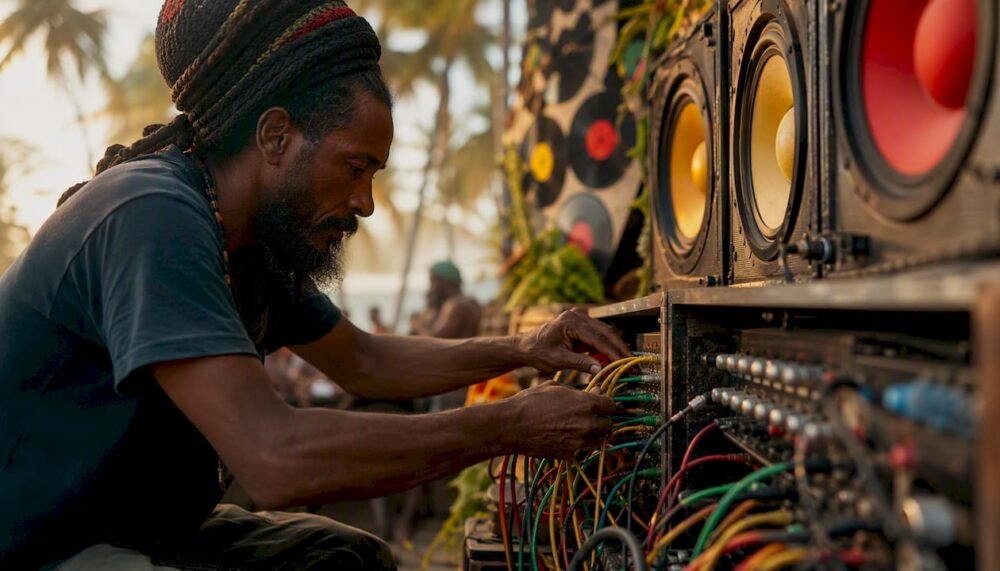
Reggae functions as a sonic affirmation of identity, a vehicle for social commentary, and a unifying force at multicultural events — three roles that UNESCO formally recognised when it inscribed reggae music of Jamaica on its Representative List of Intangible Cultural Heritage of Humanity. That inscription is not ceremonial. It signals that reggae carries the weight of diasporic history, spiritual expression, and collective memory — precisely the qualities that give it singular power on a multicultural stage.
For organisers, the practical case is equally compelling:
- Audience engagement: reggae’s bass-driven rhythms and singable choruses create an immediate physical and emotional response across demographics.
- Cultural storytelling: the genre’s lyrical tradition of protest, praise, and community memory adds narrative depth no playlist of generic pop can replicate.
- Cultural legitimacy: programming reggae with intention signals genuine acknowledgement of Caribbean contributions to Canadian society.
Key takeaways
Reggae’s role at multicultural events is most powerful when organisers treat it as living cultural heritage rather than genre decoration, combining community consultation, technical fidelity, and educational framing.
| Point | Details |
|---|---|
| UNESCO-backed heritage | Reggae’s inscription as intangible cultural heritage gives organisers a credible framework for respectful programming. |
| Three core social functions | Social commentary, spiritual praise, and catharsis make reggae uniquely suited to events that honour Caribbean and diasporic communities. |
| Community consultation first | Engage local Caribbean cultural organisations before finalising artist selection, programme notes, and staging. |
| Bass fidelity is non-negotiable | Sound-system culture demands proper low-end reproduction; negotiate PA specifications with the venue in advance. |
| Education amplifies impact | Short programme notes or MC context moments transform entertainment into cultural transmission. |
Table of Contents
- How reggae’s origins shape its role at multicultural events
- Reggae’s core social roles: protest, praise, and communal memory
- Where reggae appears in multicultural events globally and in Canada
- Why event organisers benefit from programming reggae
- How to programme reggae respectfully at multicultural events
- Canadian case studies: reggae as a tool for unity
- A DJ’s practical checklist for running reggae at multicultural events
- What reggae at multicultural events has taught me
- Sources
How reggae’s origins shape its role at multicultural events
Reggae emerged in Western Kingston, Jamaica, in the late 1960s, evolving from ska and rocksteady while absorbing North American R&B and soul. That synthesis was never purely musical. As the UNESCO nomination documents, reggae developed as a language of justice, resistance, and unity — a genre shaped by communities navigating poverty, colonial legacies, and spiritual aspiration simultaneously.
The genre’s timeline matters for event programmers because each phase carries distinct cultural weight:
Ska arrived in the late 1950s, rocksteady followed in the mid-1960s, and reggae crystallised around 1968. Bob Marley’s international breakthrough in the 1970s carried the genre to every continent, but it was sound-system culture — mobile speaker rigs that brought music to communities without access to clubs or concert halls — that drove reggae’s global diffusion through Caribbean diasporas. That same sound-system pedigree informs how the genre should be presented live today: with fidelity to low-end reproduction and a respect for the communal listening experience it was built around.
Reggae’s core social roles: protest, praise, and communal memory
Reggae’s lyrical architecture rests on three pillars that translate directly into event programming value.
Social commentary and protest sit at the genre’s foundation. Roots reggae tracks addressed racial injustice, anti-imperialism, and economic inequality with a directness that few popular genres matched. The Smithsonian Folklife research on roots reggae documents how songs like Bob Marley’s “War” — drawn from Haile Selassie’s 1963 address to the United Nations — and “Zimbabwe” were deployed internationally to support liberation movements and articulate diasporic African identity. At multicultural events, this tradition gives reggae a gravitas that transforms a stage into a site of collective recognition.
Spiritual expression runs equally deep. Rastafari theology permeates roots reggae, with the recurring invocation of “Jah” as a motif of divine connection and resistance to oppression. Organisers do not need to prescribe any belief system; the spiritual register simply signals that this music carries meaning beyond entertainment.
Catharsis and storytelling complete the triad. Songs by Peter Tosh, Burning Spear, and Marley function as community memory carriers — they hold histories of migration, struggle, and resilience that resonate with audiences whose own communities have navigated similar arcs. The United Nations has framed reggae as a force for dialogue that broadcasts socio-political messages and promotes intercultural exchange, a characterisation that positions it as one of the most purposeful genres an organiser can programme.
- Social commentary: protest and racial justice narratives that resonate across marginalised communities.
- Spiritual praise: Rastafari-informed motifs that add reverence and depth to celebratory settings.
- Catharsis: songs as shared emotional release, particularly at events marking historical or cultural milestones.
Where reggae appears in multicultural events globally and in Canada
Globally, reggae has anchored diaspora-driven sound-system events, political rallies, and major festivals. Jamaica’s own Reggae Sumfest and Rebel Salute function as annual transmission outlets and training grounds for emerging musicians, contributing to both cultural continuity and local economic life, as the UNESCO inscription notes. The Bournemouth Reggae Weekender in the United Kingdom demonstrates how a heritage-focused seaside festival can build community spirit and promote inclusive programming by centring the music’s history rather than treating it as background ambience.
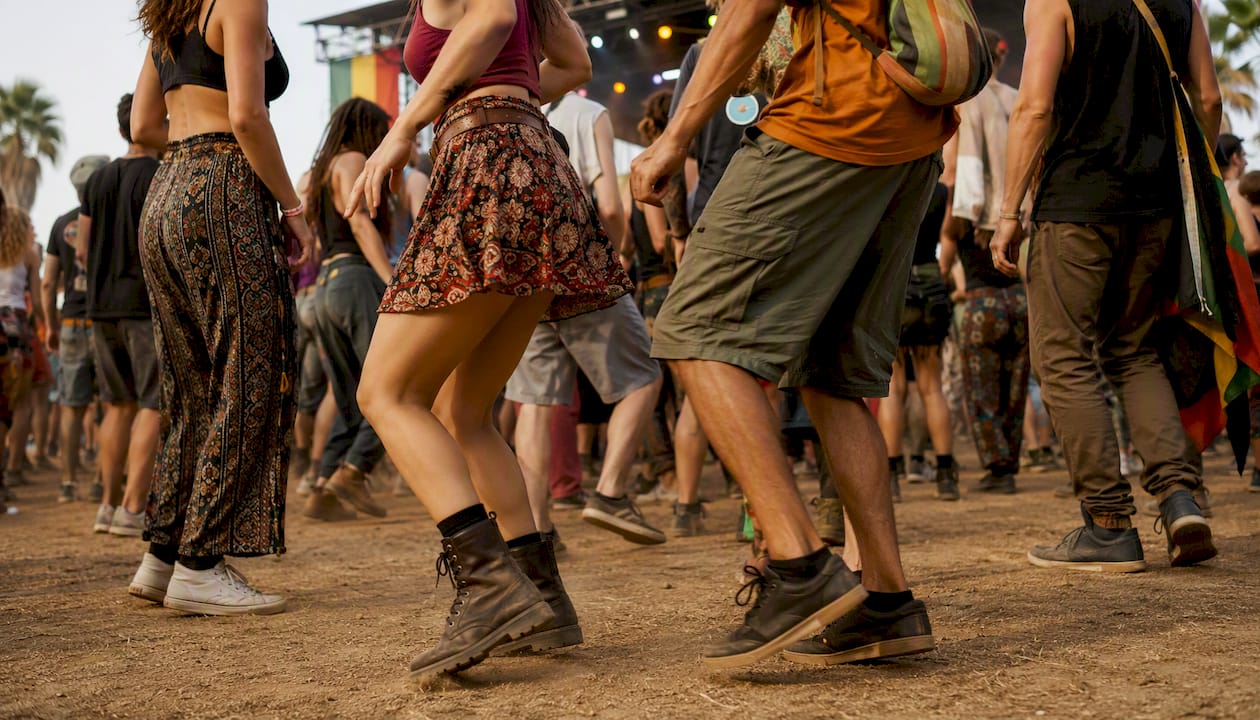
In Canada, reggae’s presence at multicultural events reflects the country’s Caribbean diaspora communities, concentrated in cities such as Toronto, Montreal, and Ottawa. Black History Month programming regularly features reggae stages as both entertainment and educational framing. Toronto’s Caribana (now the Toronto Caribbean Carnival) has long incorporated reggae alongside soca and calypso, with sound-system culture providing the technical backbone. City-run multicultural festivals in Vancouver and Ottawa have similarly used reggae programming to acknowledge Caribbean heritage within broader cultural mosaic narratives.
Cultural historians, including Mykaell Riley, point to post-war Caribbean migration as the engine of reggae’s global spread — a history that organisers in Canada should treat as context, not footnote, when planning multicultural event entertainment.
| Context | Programming approach | Community outcome |
|---|---|---|
| Black History Month events | Curated roots reggae sets with programme notes | Educational framing; cross-demographic attendance |
| City multicultural festivals | Reggae stage alongside other Caribbean genres | Caribbean community visibility; broader cultural exchange |
| Heritage-focused seaside festivals | Full-day reggae programming with artist talks | Community cohesion; economic activity for local vendors |
| Diaspora community events | Sound-system format with community selectors | Cultural transmission to younger generations |
Festivals also serve an economic function. When reggae stages draw dedicated audiences, vendor revenue, ticketing, and local hospitality all benefit — a practical argument for programmers working with municipal funders who require demonstrated community impact.
Why event organisers benefit from programming reggae
The role of music in cultural celebrations is well-documented, and reggae occupies a distinctive position within that broader argument. Its bass-driven rhythms produce a physical response that encourages movement and sustained engagement on the dance floor — a measurable benefit for any organiser tracking crowd energy and dwell time.
- Cross-demographic appeal: reggae’s melodic accessibility draws audiences who may not share Caribbean heritage but respond to its emotional directness.
- Cultural representation: programming reggae signals to Caribbean-Canadian attendees that their heritage is centred, not merely tolerated.
- Narrative depth: a well-curated reggae set tells a story — from protest to praise to celebration — giving an event an arc that generic pop playlists cannot provide.
- Economic uplift: heritage-focused reggae programming tends to attract dedicated communities who travel specifically for the experience, increasing attendance and vendor revenue.
Academic analysis cautions, however, that commercialisation risks diluting reggae’s cultural identity when marketing reduces the genre to consumer imagery. The distinction between authentic programming and surface-level inclusion is visible to the communities whose heritage is at stake.
Pro Tip: Brief your DJ on the event’s cultural context before the booking is confirmed, not after. A DJ who understands why reggae is on the programme will curate with intention rather than simply filling time.
How to programme reggae respectfully at multicultural events
Respectful programming is not a checklist to complete once and forget. It is an ongoing commitment to the communities whose heritage the music carries.
- Consult the community first. Engage local Caribbean cultural organisations, community councils, or reggae studies groups before finalising the programme. Their input shapes artist selection, set framing, and educational content.
- Book authentic practitioners. Prioritise artists and sound-system crews with genuine genre credentials. Community curators — selectors who have grown up within the tradition — bring an authority that no amount of playlist research can replicate.
- Credit sources in programme notes. Include a short paragraph in printed or digital programmes explaining reggae’s origins, UNESCO recognition, and the specific communities being honoured. This transforms entertainment into education.
- Preserve bass fidelity. Sound-system culture is inseparable from low-end reproduction. Cutting bass to appease a venue’s noise policy strips the music of its essential character; negotiate PA specifications in advance.
- Use appropriate MC language. Hosts and emcees should avoid trivialising spiritual motifs (such as Rastafari references) for comedic effect. Brief your MC on the cultural register the music demands.
- Avoid reducing reggae to imagery. Decorative use of Rastafari colours or iconography without substantive musical and educational content is the form of appropriation that academic critics specifically warn against.
Pro Tip: Contact a local Caribbean cultural association or a university reggae studies unit — such as those affiliated with cultural historians like Mykaell Riley — to co-curate the programme. Their involvement lends credibility and opens access to artists and community networks you would not reach through standard booking channels. For a practical DJ brief template tailored to multicultural events, Dj-phoenix offers a detailed guide.
Canadian case studies: reggae as a tool for unity
City multicultural festival, Toronto model. A multicultural city festival that dedicated a full stage to Caribbean heritage programming — anchored by a roots reggae headliner and supported by sound-system selectors from the local community — observed notably stronger cross-cultural attendance compared to years when Caribbean music was folded into a general world-music stage. The deliberate framing of the stage as a heritage space, with programme notes explaining reggae’s history and UNESCO recognition, gave non-Caribbean attendees a point of entry beyond the music itself.
Black History Month event, Ottawa model. An organiser running a Black History Month commemoration used a curated roots reggae set as the centrepiece of an evening programme, pairing the music with a short spoken-word segment drawing on the dub poetry tradition. The combination of lyrical protest and communal listening created a reflective atmosphere that attendees described as both educational and emotionally resonant. The organiser subsequently built reggae programming into the annual event structure.
- What worked: community consultation before booking; programme notes that contextualised the music; pairing music with spoken-word or dub poetry.
- What organisers adjusted: moving the reggae stage earlier in the evening to capture families before the crowd skewed older; adding a youth selector set to address generational transmission.
- Actionable takeaways: treat the reggae stage as a heritage space, not a genre slot; brief all staff and hosts on the cultural context; plan for intergenerational programming within the same set.
A DJ’s practical checklist for running reggae at multicultural events
Programming reggae with the artistry it deserves requires preparation that begins well before the first track plays. The following framework reflects the calibre of preparation Dj-phoenix brings to every multicultural engagement.
- Pre-event consultation. Meet with the organiser to understand the event’s cultural mandate, the demographic composition of the expected audience, and any specific communities being honoured. This conversation shapes every subsequent decision.
- Demographic read and set structure. Map the audience’s generational and cultural range, then build a set that moves from accessible, melodic openers through consciousness-raising roots tracks to a celebratory peak, with a reflective close if the event’s tone warrants it.
- Sound and equipment priorities. For outdoor multicultural events, subwoofer placement and PA coverage are as critical as playlist selection. Sound-system culture, as the UNESCO inscription documents, is built on low-frequency impact; negotiate bass management with the venue before load-in. For guidance on outdoor PA specifications, event rental partners can advise on staging and speaker placement.
- Set segmentation framework. Open with lovers rock or upbeat dancehall to welcome the crowd; transition into roots and conscious tracks at peak engagement; close with anthemic, widely recognised material that unites the room.
- Crowd-reading cues. Watch for energy dips and adjust tempo or sub-genre accordingly. Blending lovers rock with roots reggae maintains celebratory energy while honouring the music’s depth — a balance that separates a skilled multicultural DJ from a playlist operator.
- MC and hosting language. Brief the emcee on cultural context, spiritual motifs, and the specific communities represented. The MC’s language sets the register for the entire room.
Pro Tip: Build a short “education moment” into the set — 60 to 90 seconds where the MC contextualises the next track’s history or significance. Audiences at multicultural events respond to this with genuine appreciation; it signals that the programming is intentional, not incidental. Dj-phoenix integrates this approach as standard practice for culturally competent event entertainment.
| Set phase | Track type | Purpose |
|---|---|---|
| Opening | Lovers rock, upbeat roots | Welcome and warm the crowd |
| Build | Conscious roots, classic anthems | Deepen engagement; introduce cultural narrative |
| Peak | High-energy roots, dancehall crossovers | Maximum floor energy |
| Reflective close | Acoustic or stripped roots | Honour the music’s depth; close with meaning |
What reggae at multicultural events has taught me
There is a moment — and every experienced multicultural-event DJ knows it — when a room of strangers becomes a community. At a multicultural celebration where the audience ranged from first-generation Caribbean Canadians to attendees with no prior connection to the music, a well-placed roots track produced exactly that shift. The bass settled into the room, the chorus landed, and people who had been standing apart began moving together. That is not a metaphor. It is what reggae does when it is programmed with the respect and intentionality the genre’s pedigree demands.
If you are planning a multicultural event and want programming that honours that pedigree, Dj-phoenix brings the cultural competence, technical artistry, and curatorial depth to deliver it. Explore the event organiser services or review the inclusive event entertainment checklist to begin the conversation.

Sources
The sources below underpin the claims in this article and offer organisers a credible starting point for deeper research.
- Reggae music of Jamaica
- Reggae, A Force for Dialogue | United Nations
- Black history in roots reggae music
- OAJAA academic paper on reggae’s cultural identity and marketing
- Harnessing Community Spirit: The Social Impact of Heritage-Focused Seaside Festivals – Bournemouth Reggae Weekender