Afrobeats wedding music works best when it is planned as a journey rather than a single playlist: warm, melodic tracks for the ceremony and dinner, a bold arrival for the entrance, a romantic choice for the first dance, and a full-percussion run for the dance floor. Below, we set out song ideas for each moment, the way we brief a set with a couple, and how to blend Afrobeats with the other music your guests love.
TL;DR
- Divide Afrobeats by moment: soft and melodic for the ceremony and dinner, high energy for the entrance, intimate for the first dance, unfiltered for the reception.
- Classics such as P-Square’s “No One Like You” bridge generations, while newer hits from Rema, Burna Boy, Davido and Asake fill the floor.
- Give your DJ a short list of must-plays, favourite artists and a do-not-play list, then allow room for the DJ to read the crowd.
- Diaspora weddings need a cultural bridge: the set should speak to your family’s roots and to guests who are hearing these songs for the first time.
- Hire a DJ who has handled multicultural rooms before, and ask how the set moves between styles.
Table of Contents
- What Afrobeats means for a wedding
- A moment-by-moment map for your day
- Songs for the ceremony and cocktail hour
- Afrobeats entrance songs
- First dance: choosing intimacy without losing the groove
- Reception dance floor: what keeps people moving
- Choosing songs that reflect your background and your guests
- Blending Afrobeats with other traditions
- Sound, lighting and the extras that make the music land
- Our perspective on Afrobeats at weddings
- Book DJ Phoenix for your Afrobeats wedding
- FAQ
- Sources
What Afrobeats means for a wedding
Afrobeats is a popular style of West African music that emerged in the 2000s. Billboard describes it as built on polyrhythms and syncopation, with influences from hip-hop and R&B and lyrics that are often romantic and celebratory. In a separate guide, Billboard adds that the lyrics are sung in Yoruba, Nigerian Pidgin and English, and that it launched a U.S. Afrobeats Songs chart in 2022 to rank the 50 most popular tracks in the country.
That description explains why the genre suits weddings. The rhythm invites movement from the first bar, the lyrics speak about love, gratitude and celebration, and the range is wide. A stripped-back ballad and a full party anthem can both sit under the same label, so you can match a track to the emotional register of each moment instead of playing one tempo all night.
It also explains why a single “Afrobeats” playlist can fail. A set that opens at full intensity has nowhere left to go, and a set that never leaves the mid-tempo groove loses the dance floor after the cake. The work is in the sequencing.

A moment-by-moment map for your day
The table below is a starting framework, not a script. Song names are examples of what couples commonly choose; swap in your own favourites.
| Moment | Energy | Example directions |
|---|---|---|
| Ceremony and processional | Soft, melodic | Tems ballads, an acoustic take on CKay’s “Love Nwantiti” |
| Cocktail hour | Warm, mid-tempo | Smoother Rema and Burna Boy cuts, Ayra Starr |
| Grand entrance | High to intimate | Flavour, Davido, a bold percussion-led track |
| First dance | Intimate | Wizkid and Tems, Omah Lay, a Fireboy DML love song |
| Dinner | Conversational | Instrumental or low-volume P-Square classics |
| Peak reception | Unfiltered | Rema, Burna Boy, Kizz Daniel, Asake |
| Last dance | Shared, singalong | A classic everyone knows the chorus to |
Inawo Magazine’s wedding music blueprint groups the grand entrance and first dance as moving from high energy to intimate, and the peak reception and after-party as unfiltered energy. That is close to how we structure an evening: let the room warm up, give the couple their spotlight, then open the floor.
Songs for the ceremony and cocktail hour
Before the dancing starts, the music should frame the occasion without competing with it. Melodic Afrobeats and Afro-fusion work well here because they feel celebratory without demanding a response. Tems’ vocals, gentle Wizkid cuts and acoustic arrangements of well-known songs give guests something familiar and warm as they find their seats.
For cocktail hour, a mid-tempo groove helps conversation happen. If your guest list mixes families who have not met, this is the hour where the music does quiet work: it signals the cultural tone of the day while leaving room for introductions. For more on keeping the meal itself comfortable, see our wedding dinner music blueprint, which covers pacing songs so people can still talk.
Afrobeats entrance songs
The entrance is the first moment the whole room is looking at you, and in many Nigerian and Ghanaian celebrations it is a dance in its own right. A curated list of reception entrance tracks on Iludio’s entrance category includes Flavour’s “Ada Ada” and Davido’s “Assurance”, both rhythmic choices with an obvious pulse to walk and dance to.
The Guardian Nigeria makes a point that applies well beyond Igbo ceremonies: songs that blend traditional rhythms with contemporary beats, such as Flavour’s, suit culturally rich celebrations. If your families come from different traditions, choose an entrance track that honours one side and edit in a moment that welcomes the other.
Practical advice from our booth:
- Choose a section of the song, not the whole track. Ninety seconds is usually enough for an entrance.
- Tell your DJ where the drop is, so the introduction lands exactly as the doors open.
- Rehearse the walk once if you plan choreography, since the beat can feel faster in a full room.
- Ask your MC to hold the announcement until the first big percussion hit, so the energy builds before names are spoken.
First dance: choosing intimacy without losing the groove
Afrobeats can deliver a first dance that feels romantic without turning into a slow ballad. Billboard calls Wizkid featuring Tems’ “Essence” a prime example of how good Afrobeats can get, and its unhurried feel makes it a frequent pick for couples who want to sway rather than perform. Another option is Omah Lay featuring Justin Bieber’s “Attention”, which Music Industry How To describes as smooth and laid-back with a slow-paced melody about wanting a lover’s attention.
Two cautions. First, read the lyrics in full. Several love songs have lines that sound lovely at a distance but carry a different meaning in context, and some are in Yoruba, Igbo or Pidgin, so ask someone from your family to confirm the sentiment. Second, think about edits. A three-and-a-half-minute first dance can feel long when every eye is on you; a DJ can trim to the strongest two minutes and bring in the full band-style groove for the guests to join.
Reception dance floor: what keeps people moving
Once the formalities are done, the reception is where Afrobeats earns its place. A wedding-song guide on My Wedding Songs lists high-energy reception tracks including Davido’s “Unavailable”, Rema’s “Calm Down”, Burna Boy’s “Last Last”, Kizz Daniel’s “Buga (Lo Lo Lo)” and hits by Asake. Many of these are now familiar well beyond West African communities, which makes them useful for mixed guest lists.
The older generation needs its moment too. Harmattan Rain calls P-Square’s “No One Like You”, released in 2011, a wedding classic that gets people singing along. The same article also lists Joey B’s “Sweetie Pie” with King Promise, Patoranking’s “My Woman My Everything” with Wande Coal, Medikal’s “Ayekoo” with King Promise and CKay’s “Love Nwantiti” with Joeboy and Kuami Eugene as wedding-playlist selections. These are the songs that make aunts, uncles and cousins reach for the floor together.
Building a floor that lasts three hours
A useful pattern is to alternate generations rather than separate them:
- Open with a crowd-pleaser from the last decade that most guests know.
- Follow with a classic that draws in parents and elders.
- Move to a high-energy current track once the floor is full.
- Bring in a singalong chorus every fifteen to twenty minutes, so people who need a break have a reason to return.
- Step briefly into another genre when the room needs a reset, then return to Afrobeats.
That last step matters. Even a wedding devoted to Afrobeats benefits from a short bridge into highlife, amapiano, soca, dancehall or hip-hop. For ideas on what a DJ keeps ready, this guide to plug-and-play hip hop party songs shows how a prepared shortlist makes it easier to adapt on the night, and the same logic applies to your Afrobeats brief.
Choosing songs that reflect your background and your guests
This is where many couples feel pressure. You want the music to honour your heritage, but you also want the guest who has never heard “Last Last” to be dancing by the second chorus.
A Welsh-Nigerian wedding blog makes a practical suggestion: share a curated list of songs and artists with your DJ so they understand your preferences and cultural context, while allowing them to adapt the playlist to keep guests of all ages engaged. OkayAfrica has quoted DJ Fawzi saying that diaspora weddings call for a cultural bridge. We see this in our own rooms, where the dance floor depends on how well a set connects what one side of the family knows with what the other side is discovering.
A simple brief to send your DJ
Keep it to one page. Include:
- Ten must-play songs, with the moment each belongs to.
- Five artists you love, so the DJ can choose similar tracks.
- A short do-not-play list, including songs with associations you want to avoid.
- Names and pronunciations of family members, elders and honoured guests for the MC.
- Any traditions that need a specific song, such as a money dance, a parents’ dance or a cultural procession.
- A note on ages and languages in the room.
If you want to collect suggestions from guests without losing control of the night, our guide to collecting wedding song requests with RSVP and QR codes shows how to gather them in one place. For the complete picture of how music, speeches and dancing fit together, our wedding DJ timeline guide is a good companion, and our wedding reception song selection guide goes deeper on choosing each track.
We have also published a 25-track Afrobeats wedding playlist with a copyable DJ brief, which you can adapt directly.
Blending Afrobeats with other traditions
Many weddings we play are not purely one culture. A Nigerian bride may marry a groom whose family loves Latin music, Bollywood or Motown, and the guest list may include friends from five different backgrounds. In those rooms, Afrobeats is a thread, not the whole cloth.
A few approaches that work:
- Assign blocks. Give each tradition a clear 20 to 30 minute block, so no group feels like an afterthought.
- Find shared rhythms. Afrobeats sits comfortably beside dancehall, R&B and hip-hop, which makes transitions natural.
- Mark ceremonial moments. Reserve specific songs for rituals, then return to the mix.
- Let the DJ listen. The strongest sets respond to the room rather than a printed order.
If your celebration includes other traditions, our guides to a Jewish wedding playlist and same-sex wedding music show how we structure sets for other communities, and our inclusive entertainment checklist is useful when the guest list is very varied.
Sound, lighting and the extras that make the music land
Afrobeats depends on percussion and bass, so the sound system matters as much as the playlist. Thin speakers flatten the rhythm, and an overloaded system will distort at the moments you want most. Position matters too: a DJ placed in a corner can leave dead zones on the floor. Our guide to DJ placement layouts walks through five options, and our note on lighting in wedding DJ sets explains how light shapes the energy of a room.
Some couples also add live elements to the entrance and the peak of the night, such as a drum player, sparklers or dry ice fog. The right choice depends on the venue and its fire rules, so confirm what is permitted before you commit.
Our perspective on Afrobeats at weddings
We have played for guests from every corner of the world, and the lesson is consistent: a dance floor is built from trust. When a couple tells us which songs carry meaning for their families, we can place them where they will matter most, and when we are free to read the room, we can decide whether the next track is the classic that unites the generations or the newer hit that brings the younger guests in.

Afrobeats rewards that approach more than almost any genre we play. Its rhythm is a language that crosses borders, and a well-sequenced set becomes a fusion of heritage and celebration in which every guest has a place. Our work with prestigious clients such as Mercedes-Benz and FW Sports has taught us how to hold a room with polish, and we bring that same caliber to a family wedding where the stakes are far more personal.
Our advice is simple: be generous with your brief, be honest about your guests, and trust your DJ with the moments in between.
— Reza
Book DJ Phoenix for your Afrobeats wedding
We design wedding sets around multicultural tastes, with premium sound equipment, emcee skills and a firm sense of pacing. Our wedding packages are published at dj-phoenix.com/wedding-packages: Bronze at $1,500, Silver at $2,200 and Gold at $3,500, each one-off per event.
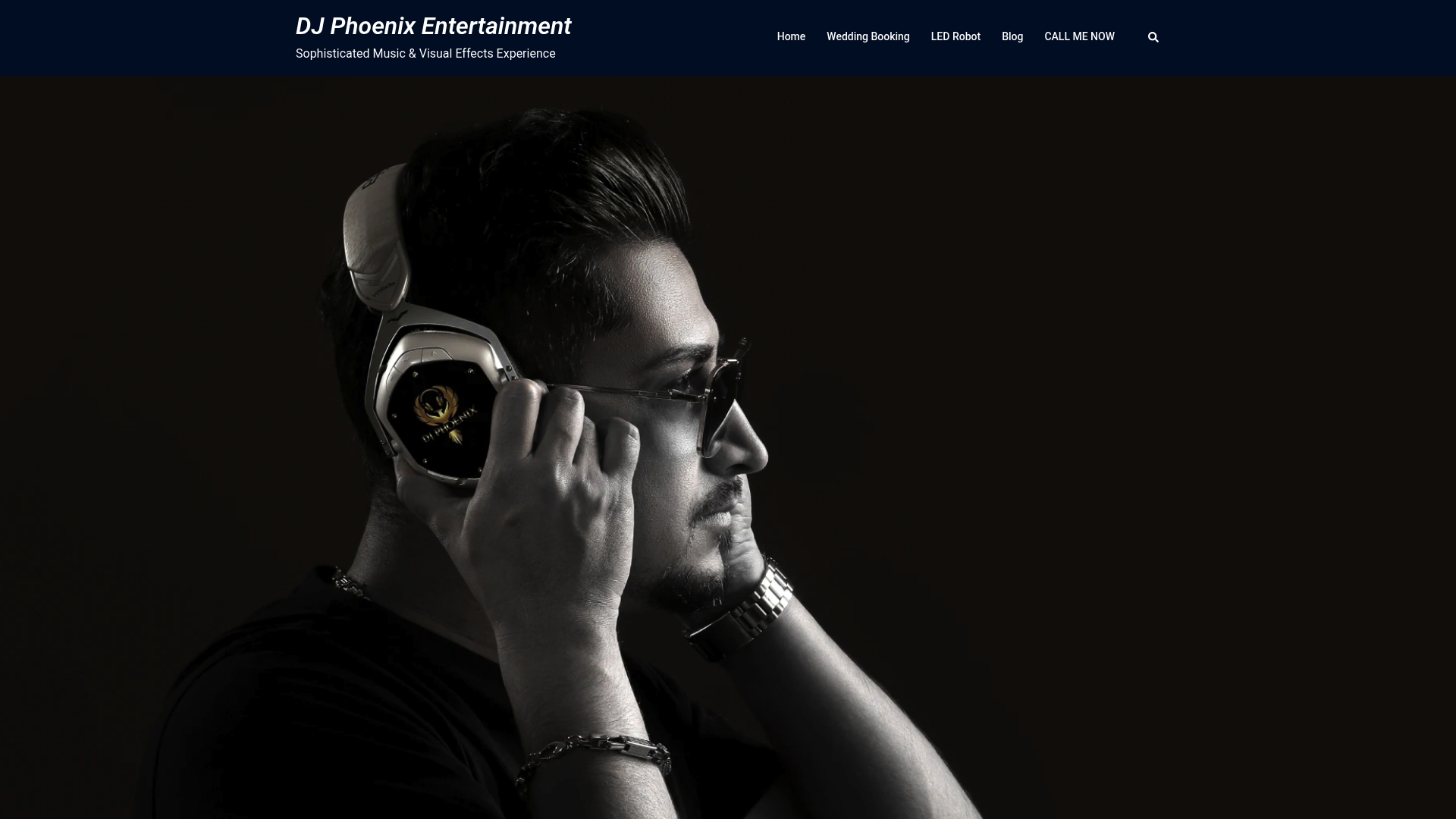
You can also add an MC for $500 or a drum player for $600, or explore LED robot dancers and dry ice fog for an unforgettable entrance. Tell us about your guests and your favourite songs, and we will shape the evening with you through our DJ services for weddings.
FAQ
What are the best Afrobeats songs for a Nigerian wedding?
Common choices include P-Square’s “No One Like You” for its multigenerational appeal, plus Davido, Burna Boy, Wizkid, Rema and Asake for the dance floor. Add songs that carry personal meaning for your families, since those often get the strongest reaction.
Can I play Afrobeats for the first dance?
Yes. Choose a smooth, mid-tempo track, such as Wizkid and Tems’ “Essence”, and check that the lyrics fit the moment. Ask your DJ to edit the song to the strongest section so it stays intimate rather than long.
How many Afrobeats songs should I request?
A focused list of about ten must-plays, a handful of favourite artists and a short do-not-play list is enough. It gives your DJ direction while leaving room to respond to the crowd.
What if only part of my guest list knows Afrobeats?
Ask your DJ to alternate familiar crowd-pleasers with classics and brief steps into other genres. A balanced set lets guests discover the music without feeling excluded, and it keeps the floor busy through the whole evening.
Sources
- Billboard: Best Afrobeats Songs
- Billboard: Tems, Women in Music Breakthrough
- Inawo Magazine: Sound and Sanctuary
- Iludio: Reception Entrance Songs
- The Guardian Nigeria: Elevate Your Igbo Wedding Introduction
- Music Industry How To: 27 Best Afrobeats Songs
- My Wedding Songs: Afrobeat Wedding Songs
- Harmattan Rain: Top 7 African Wedding Songs
- Teacups and Glitter: Afrobeats Wedding Playlist
- OkayAfrica: African Wedding DJs on Love, Culture and Timeless Songs